Core Reasons Why One Piece Toilets Are So Heavy
Here is exactly why these units pack so many extra pounds:
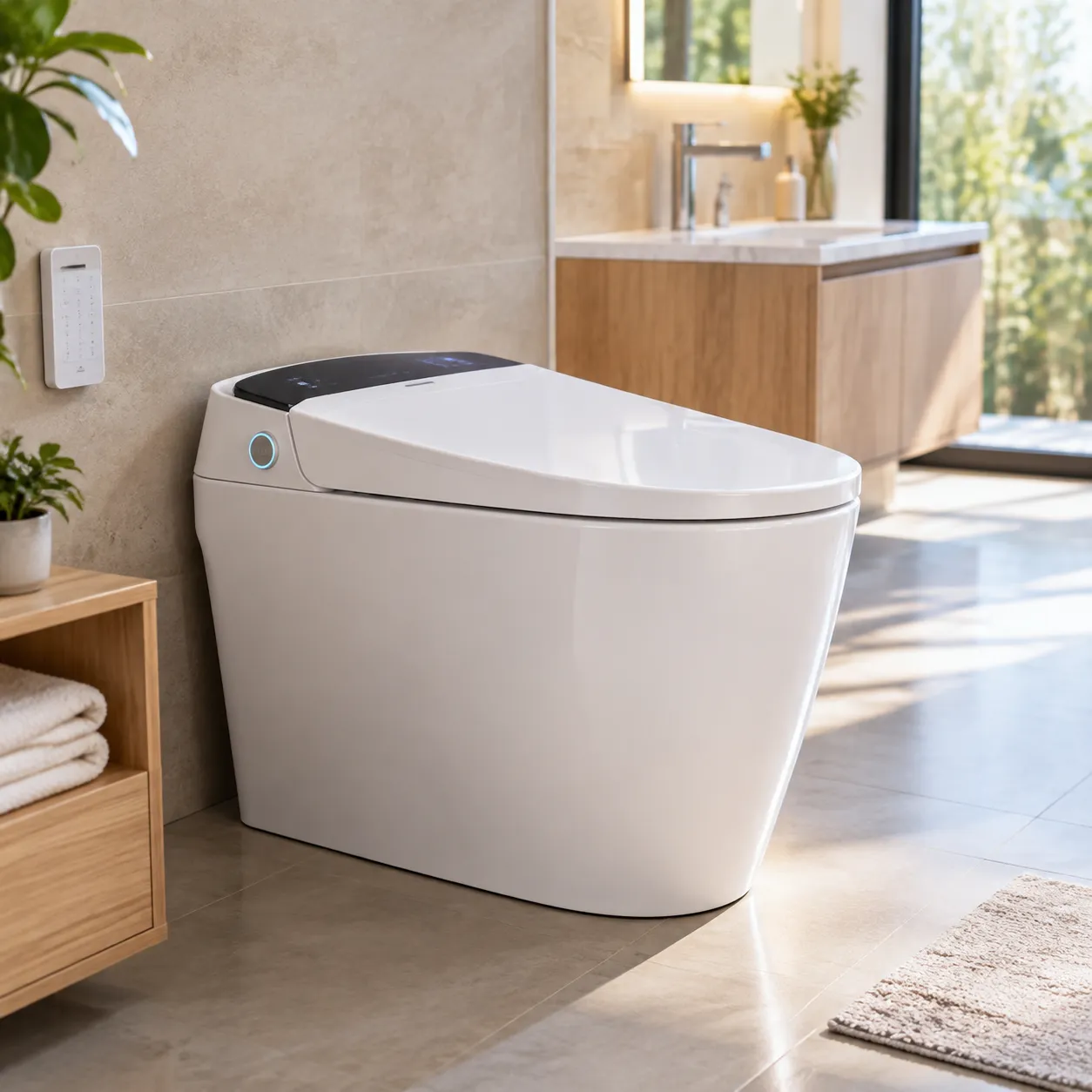
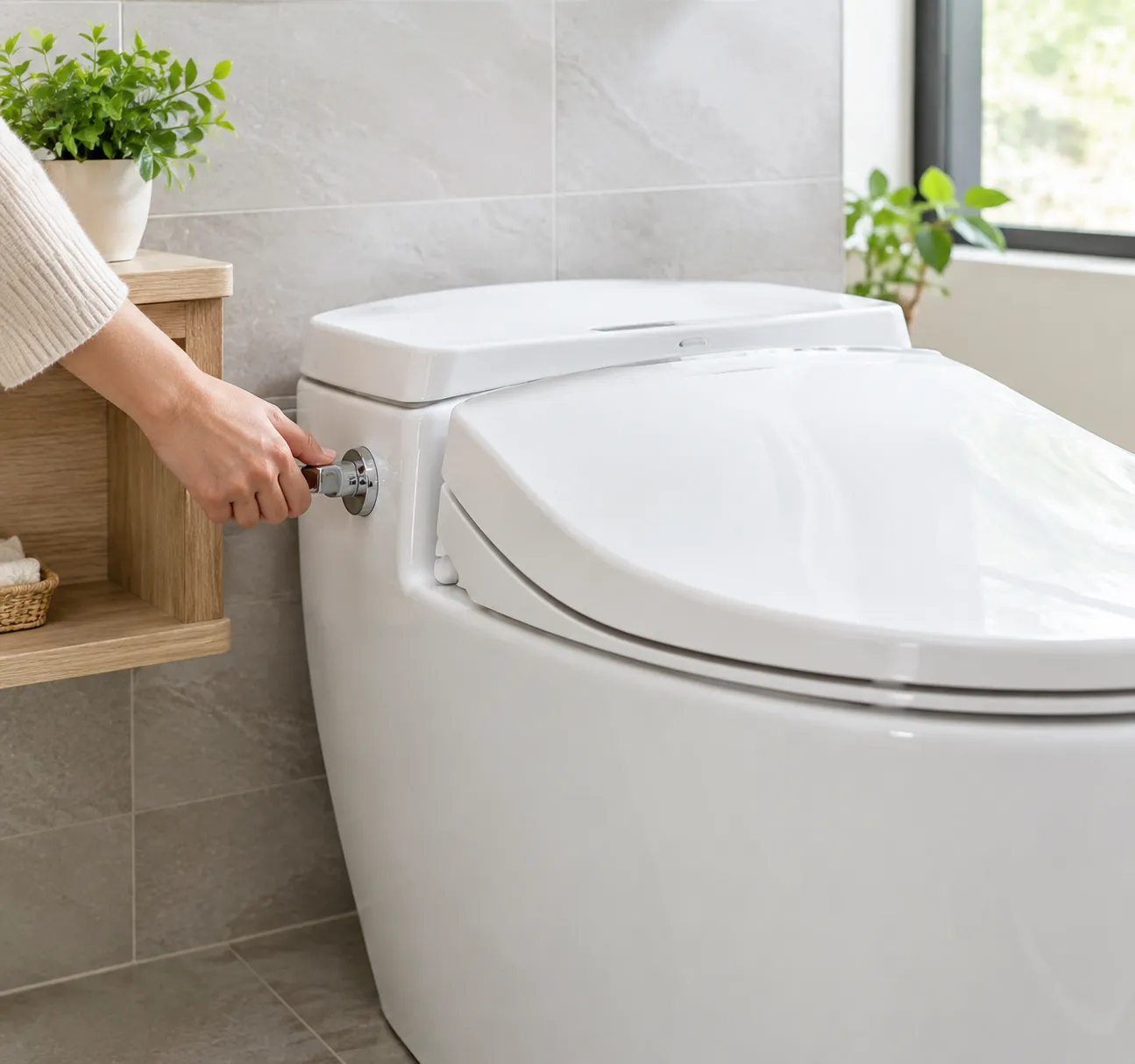
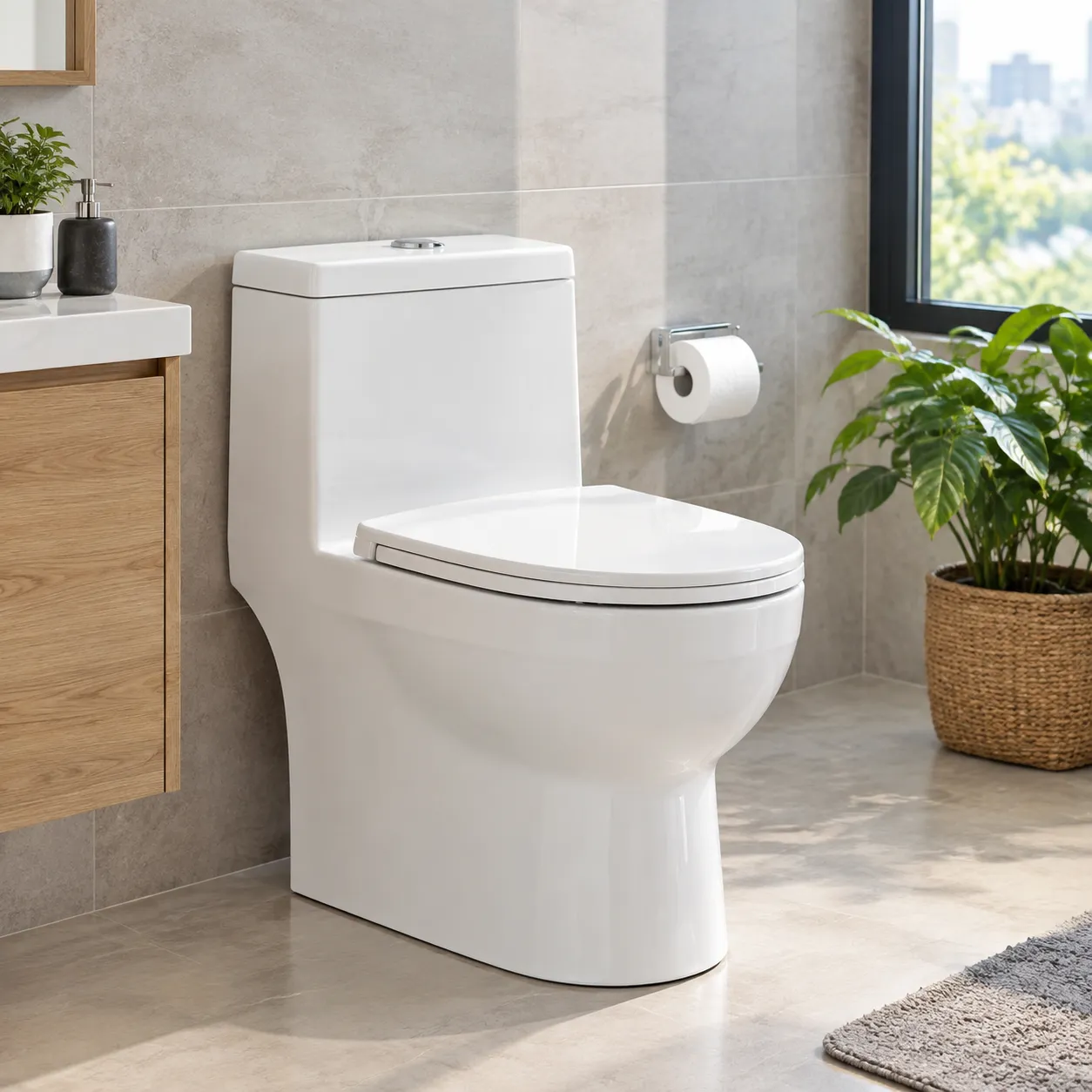
- Single-Mold Ceramic Casting: Unlike traditional modular toilets, a one-piece unit fuses the tank and bowl into a single continuous pour of vitreous china. This integrated tank and bowl design eliminates the gap between components, replacing empty air space with dense, solid ceramic clay.
- Thicker Porcelain Walls for Structural Integrity: Without separate mounting bolts to flex and absorb movement, the entire unit must support its own structural tension. Manufacturers use significantly thicker porcelain walls throughout the base, neck, and tank to prevent warping and cracking during high-temperature kiln firing.
- Solid Skirted Trapways: Most one-piece designs feature a full skirt that conceals the winding trapway pipe behind sleek, flat side panels. These smooth exterior walls require substantial extra ceramic mass compared to the exposed, contoured outlines of standard bowls.
- Absence of Hollow Connection Points: Traditional two-piece models utilize lightweight gaskets, hollow mounting channels, and thin porcelain flanges to connect the upper and lower sections. A molded unit completely fills those transition zones with solid, high-density clay to ensure a leak-proof, unified structure.
One-Piece vs. Two-Piece Toilet Weight Breakdown
When we compare standard fixtures, the numbers tell a clear story about one-piece vs two-piece toilet weight. The difference is not just on the scale—it is also about how you manage that weight during transport and installation.
Average Weight of a One-Piece Toilet (85 to 120+ lbs)
A single molded unit typically weighs between 85 and 120+ lbs (38 to 55 kg). Higher-end models with thick vitreous china, fully skirted trapways, or integrated bidet mechanisms can easily push past the 120-pound mark. Because the tank and bowl are fused into a single solid piece, you must carry every pound of that ceramic mass simultaneously.
Average Weight of a Two-Piece Toilet (50 to 80 lbs Total)
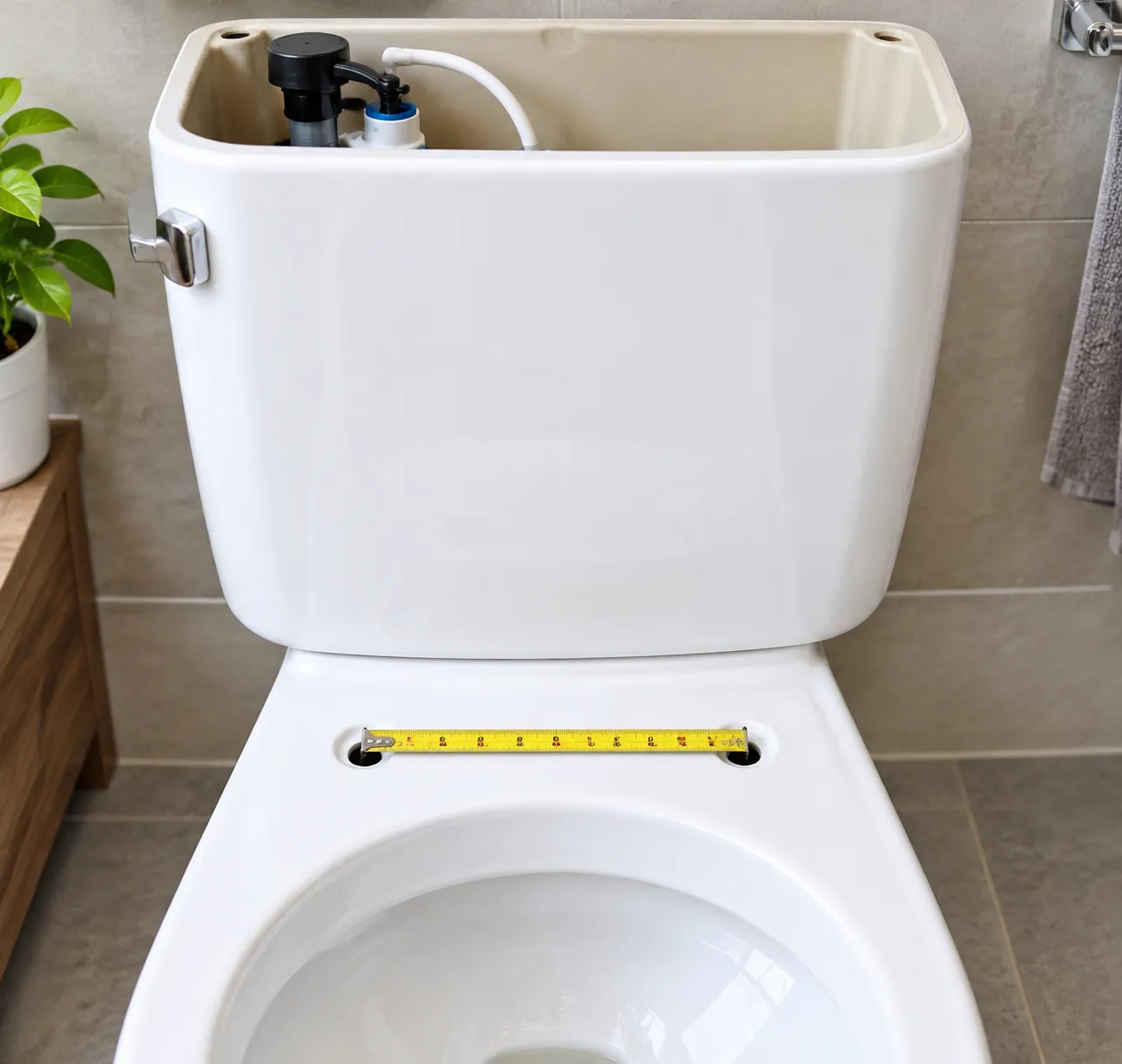
A standard two-piece model generally totals 50 to 80 lbs (23 to 36 kg) combined. Crucially, this total is split across uncoupled components: Toilet Tank: 20 to 30 lbs (9 to 14 kg) Toilet Bowl: 30 to 50 lbs (14 to 23 kg)
Handling Comparison: Single Mass vs. Separate Components
The main reason people ask why are one piece toilets heavy comes down to leverage and handling:
- Two-Piece Units: You carry the lighter bowl first, bolt it down, align the wax ring effortlessly, and then mount the tank separately. Each lift stays under 50 lbs, making it manageable for one person.
- One-Piece Units: You must lift, balance, and align 90 to 120+ lbs of awkward, slippery porcelain all at once over the closet bolts and wax ring without dropping or cracking it.
Weight Comparison Chart Across Popular Configurations
| Toilet Style & Configuration | Average Total Weight | Box / Handling Setup | Single-Person Lift Safety |
|---|---|---|---|
| Standard Two-Piece (Exposed Trapway) | 55 – 70 lbs | 2 separate boxes (~30 lbs each) | Safe for one person |
| Chair-Height Two-Piece (Elongated) | 65 – 80 lbs | 2 separate boxes (~35-45 lbs each) | Manageable for one person |
| Standard One-Piece (Exposed Trapway) | 85 – 100 lbs | 1 single heavy box | Difficult; requires care |
| Fully Skirted One-Piece (Compact/Round) | 95 – 115 lbs | 1 single heavy box | Two-person lift recommended |
| Fully Skirted One-Piece (Elongated/Smart) | 110 – 130+ lbs | 1 single palletized crate/box | Two-person lift required |
Design Features That Add Extra Pounds to One-Piece Units
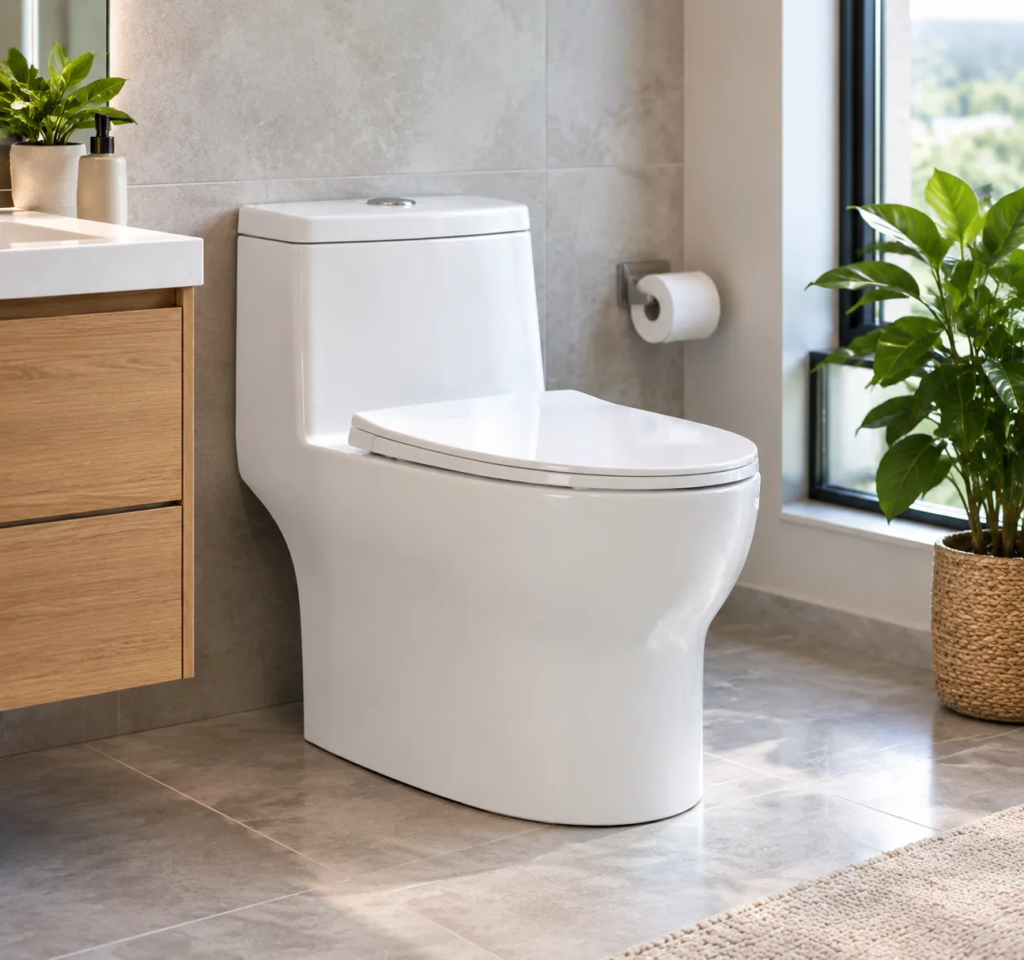
When we look at why one piece toilets are heavy, the physical design choices explain most of the bulk. Upgrading from a basic fixture to a modern one-piece model means adding thicker materials, aesthetic coverings, and built-in mechanics that drive up the overall scale.
Vitreous China and Fireclay Material Density
We rely on heavy-duty vitreous china and fireclay to guarantee non-porous, crack-resistant surfaces. Fireclay is particularly dense, fired at extreme heat to create thick, rock-solid walls. This dense ceramic mixture ensures structural stability and long-term durability, but that thickness directly increases the ceramic toilet bowl mass.
Concealed and Fully Skirted Trapways
Standard toilets leave the snaking outline of the plumbing pipe exposed on the sides. In contrast, modern one-piece designs feature smooth, flat porcelain skirts that run from the bowl straight down to the floor: Aesthetic appeal: Conceals messy outline grooves for effortless wipe-down cleaning. Material penalty: Enclosing the sides requires solid ceramic panels, easily adding 15 to 25 extra pounds of dead weight compared to an exposed trapway.
Elongated Bowl Profile vs. Compact Round Bowl Mass
An elongated bowl extends roughly two inches further forward than a standard round bowl. While this delivers far better ergonomic seating, that extra length requires: Extended clay rim walls A larger, heavier internal water trapway A wider supporting base to maintain balance
Integrated Electronic Bidet Seats and Motorized Flushing Systems
Luxury one-piece units often skip standard gravity flush valves entirely. In their place, manufacturers pack the rear chassis with: High-pressure motorized booster pumps Instant ceramic water heaters Dual-action bidet spray wands and motorized seat lifters
These internal mechanical components and electrical housings push smart one-piece units well past standard weight limits.
Weight Impact by Design Feature
| Design Feature | Typical Weight Increase | Key Reason for Added Weight |
|---|---|---|
| High-Density Fireclay | +10 to +20 lbs | Thicker wall casting and denser clay composition |
| Fully Skirted Trapway | +15 to +25 lbs | Extended ceramic exterior skirts enclosing the piping |
| Elongated Bowl Shape | +5 to +10 lbs | Extended rim length and expanded internal trapway |
| Smart Bidet / Motorized Flush | +15 to +30 lbs | Built-in pumps, heating cores, and motorized mechanics |
DIY Installation Challenges Caused by Heavy Toilets
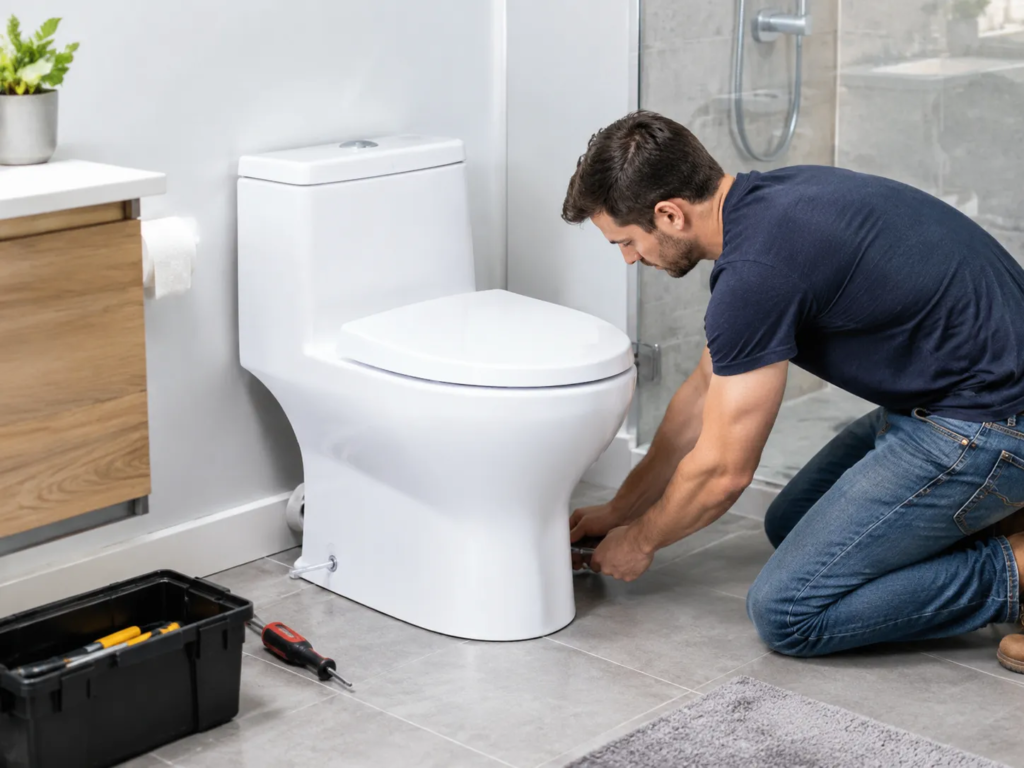
Installing a heavy one-piece toilet isn't just about lifting strength; it is about balance and precision in tight quarters. When handling a heavy porcelain toilet installation, the combined weight and bulky shape create distinct challenges that make the process trickier than installing a standard modular unit.
1. Blind Wax Ring Alignment
- Zero line of sight: The solid skirted base and integrated tank block your view of the closet bolts and the drain flange as you lower the fixture.
- One-shot seal: Dropping a 90-to-120-pound unit off-center crushes the wax ring unevenly. If the seal fails to compress correctly on the first try, you must lift the entire fixture off, scrape the ruined wax clean, and start over.
2. Navigating Tight Spaces and Stairs
- Unbalanced mass: Because the solid ceramic tank concentrates most of the weight at the back, the toilet is naturally awkward to balance while walking.
- Tight clearances: Maneuvering past narrow bathroom doors, tight vanity corners, and shower enclosures requires steady grip strength without bumping and chipping the vitreous china.
3. Preventing Tile and Flange Damage
- Cracked flooring: Lowering a heavy ceramic base too quickly onto uneven tiles can easily crack the floor or fracture the toilet's bottom edge.
- Broken closet flanges: If the full weight shifts onto a single closet bolt during positioning, it can easily snap a plastic or cast-iron toilet flange, leading to costly subfloor repairs.
Why It Is Usually a Two-Person Job
We always recommend installing a one-piece toilet with two people. Having one person support the mass while a second person checks alignment at floor level ensures: Accurate bolt placement directly into the mounting holes without dragging the base across the floor. Even downward pressure that sets the wax gasket securely on the first attempt. Safer handling that prevents back strain and avoids dropped porcelain.
Does Your Bathroom Subfloor Need Extra Support?
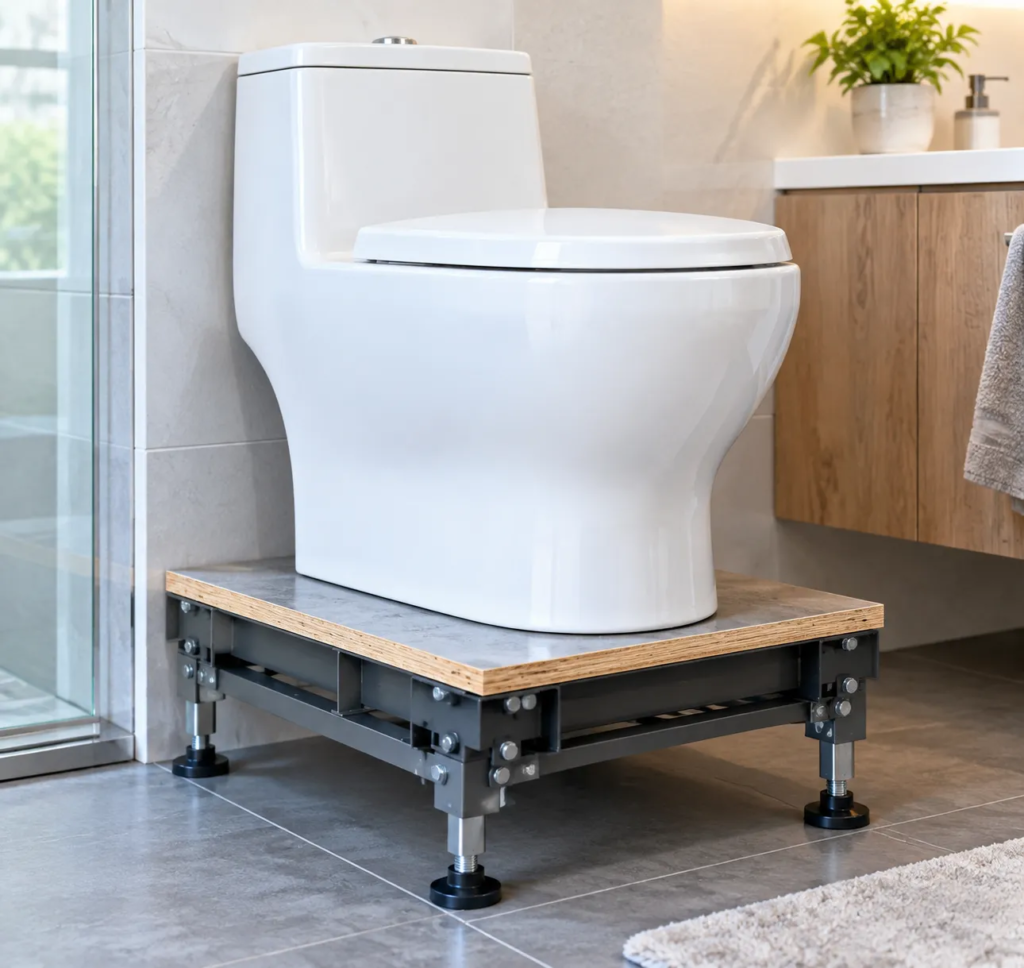
When we install a heavy one-piece toilet, we often get asked if the bathroom floor can handle the mass. A high-density ceramic fixture adds considerable load to a concentrated area, but a sound subfloor rarely needs structural redesign unless previous moisture issues exist.
Calculating Total Load: Toilet, Water, and User Weight
To understand the stress placed on your floor framing, we calculate the total operational load rather than just the dry weight of the porcelain:
| Load Component | Average Weight Range | Notes |
|---|---|---|
| Dry One-Piece Toilet | 85 – 120+ lbs | Solid vitreous china with skirted base |
| Water in Tank & Bowl | 10 – 15 lbs | Based on standard 1.28 to 1.6 GPF capacity |
| Active User Weight | 150 – 350+ lbs | Dynamic downward force during regular use |
| Total Working Load | 245 – 485+ lbs | Concentrated over roughly 1.5 to 2 sq. ft. |
Standard Residential Joist Capacity and Subfloor Requirements
Standard residential building codes design bathroom floors to carry substantial loads:
- Joist Spacing & Sizing: Standard 2x8 or 2x10 floor joists spaced 16 inches on center support a minimum live load of 30 to 40 pounds per square foot.
- Subfloor Thickness: A standard 3/4-inch exterior-grade plywood or OSB subfloor provides adequate stiffness to support a one-piece toilet without sagging.
- Span Deflection: Tile installations require minimal subfloor deflection (typically L/360 or stiffer) to prevent grout cracking under the combined weight.
Checking for Water Damage, Rot, and Subfloor Flex
Before setting a heavy unit down, we always inspect the bare floor around the closet flange. A heavy toilet placed on a compromised subfloor will quickly lead to failed wax rings and leaking drain lines.
- Test for Sponginess: Press firmly around the flange area. Any soft spots or vertical bounce indicate delaminated plywood or compromised joists.
- Inspect for Dark Stains: Blackened wood around the waste pipe signals long-term moisture penetration from previous ring failures.
- Verify Flange Height: Ensure the flange sits flat on top of the finished floor and is anchored solidly into the subfloor with stainless steel screws.
- Reinforce When Necessary: If we find rot or excessive flex, we replace the damaged subfloor section and sister an extra joist underneath before mounting the toilet.
Frequently Asked Questions About One-Piece Toilet Weight
How Much Does an Average One-Piece Toilet Weigh?
Most standard one-piece toilets weigh between 85 and 120 pounds (38 to 55 kg). Premium models featuring solid skirted trapways, high vitreous china density, or integrated bidet systems can easily push past 120 to 140 pounds. This is roughly 30% to 50% heavier than a standard two-piece bowl.
Can One Person Safely Install a One-Piece Toilet Alone?
We strongly advise against solo installation. While lifting 90+ pounds might seem manageable, the challenge comes from balancing an awkward, top-heavy ceramic mass while trying to align closet bolts blind onto a fragile wax ring. A two-person lift ensures: Accurate placement without crushing the wax seal unevenly. Zero accidental drops that could shatter floor tiles or crack the toilet base. Better back safety and control in tight bathroom layouts.
Are Heavier One-Piece Toilets Better Quality Than Lighter Models?
In most cases, yes. When understanding why are one piece toilets so heavy, weight is directly linked to build quality: Thicker ceramic walls: Thicker vitreous china reduces structural flexing and the risk of hairline cracks. Higher firing density: Denser porcelain absorbs less moisture, preventing odors and long-term surface crazing. Full skirted construction: Concealing the trapway adds substantial ceramic material, resulting in a sleeker look and easier cleaning.
Does the Water Inside the Tank Make the Toilet Significantly Heavier?
Water adds a noticeable amount of weight once the fixture is in service, but not during setup: Water weighs approximately 8.34 pounds per gallon (1 kg per liter). A standard modern tank holding 1.28 to 1.6 gallons adds about 10 to 13 extra pounds of active operating weight. Always drain the tank completely before moving or servicing an existing one-piece fixture to avoid unnecessary strain.