Average Weight of a Two Piece Toilet
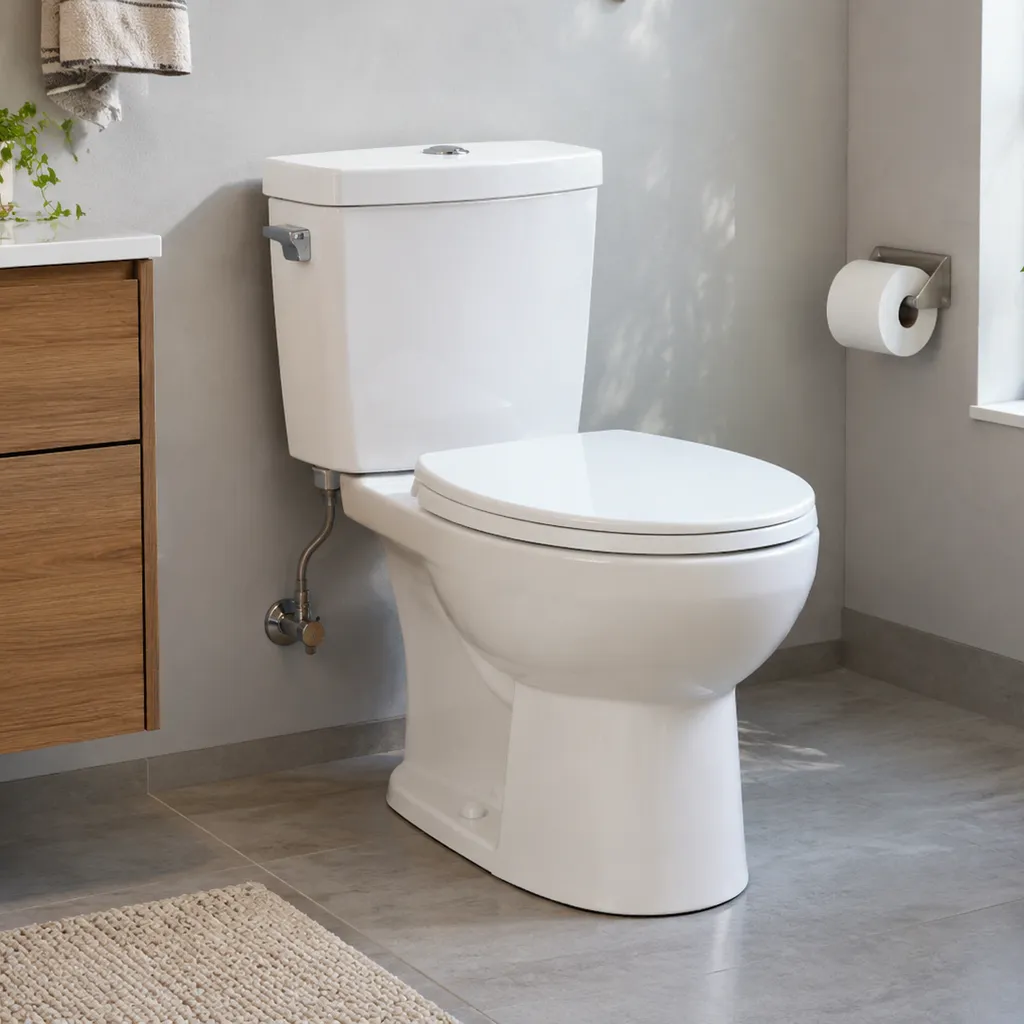
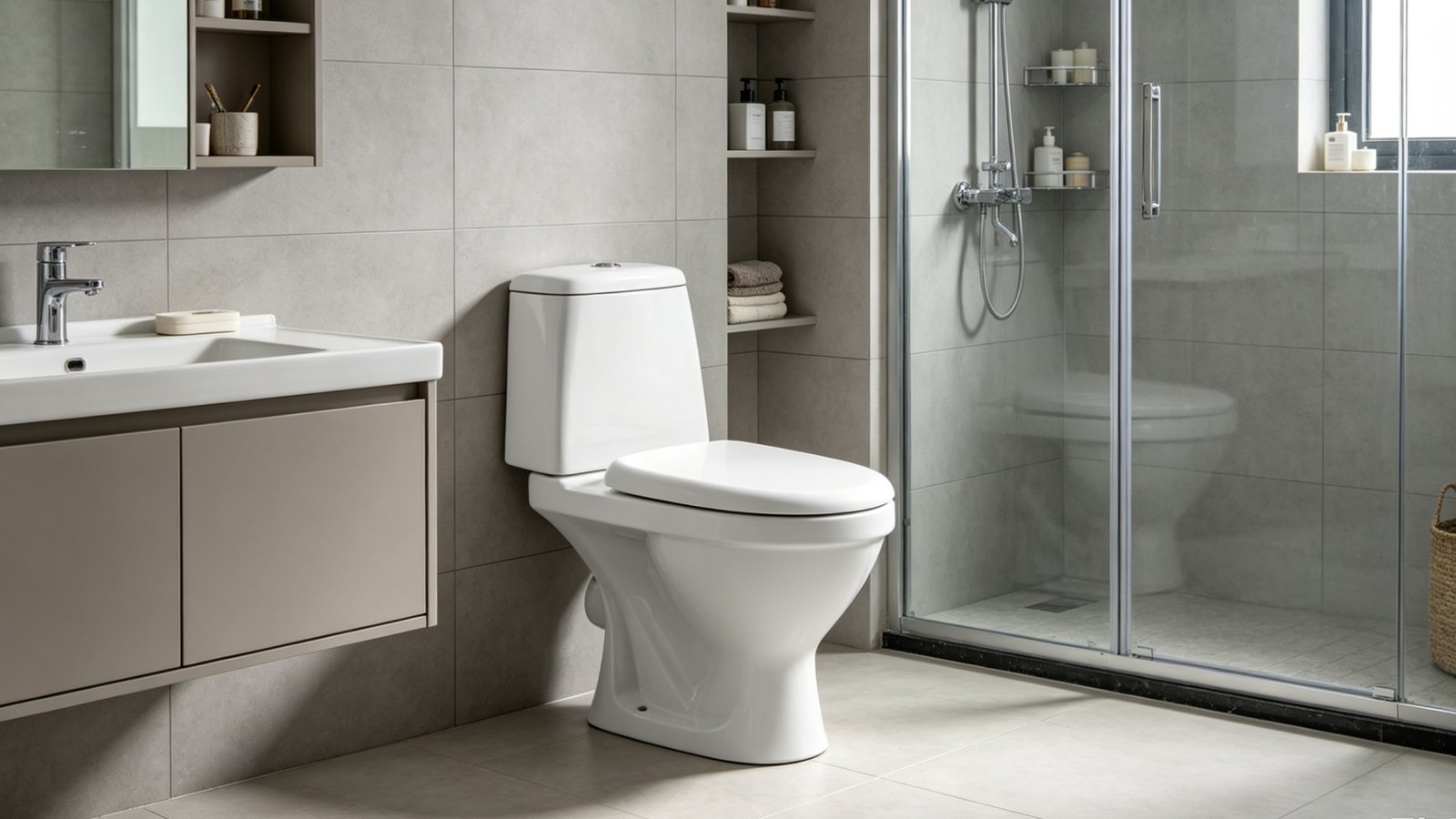
A standard two-piece toilet generally weighs between 55 and 90 lbs (25 to 41 kg) when fully assembled, making it manageable for most DIY projects.
Standard Weight Range
- Lightweight Models: 50 – 60 lbs (23 – 27 kg)
- Standard Residential Toilets: 65 – 80 lbs (29 – 36 kg)
- Heavy-Duty & Commercial Models: 85 – 100+ lbs (38 – 45+ kg)
Breakdown: Toilet Tank vs Toilet Bowl
The primary benefit of a split-type toilet design is that the overall load is divided into two separate components:
- Toilet Bowl Weight: 35 to 60 lbs (16 to 27 kg). The bowl carries most of the mass because of its thick base and integrated porcelain trapway.
- Toilet Tank Weight: 20 to 35 lbs (9 to 16 kg). The tank is lighter and easier to maneuver on its own.
Two-Piece vs One-Piece Toilet Weight
| Toilet Type | Average Weight Range (lbs) | Average Weight Range (kg) | Handling Difficulty |
|---|---|---|---|
| Two-Piece Toilet | 55 – 90 lbs | 25 – 41 kg | Easy (Carried in 2 separate pieces) |
| One-Piece Toilet | 88 – 120 lbs | 40 – 54 kg | Moderate to Hard (Heavy single unit) |
Two-piece units are significantly easier to move up stairs and position in tight bathrooms compared to heavy, single-mold one-piece designs.
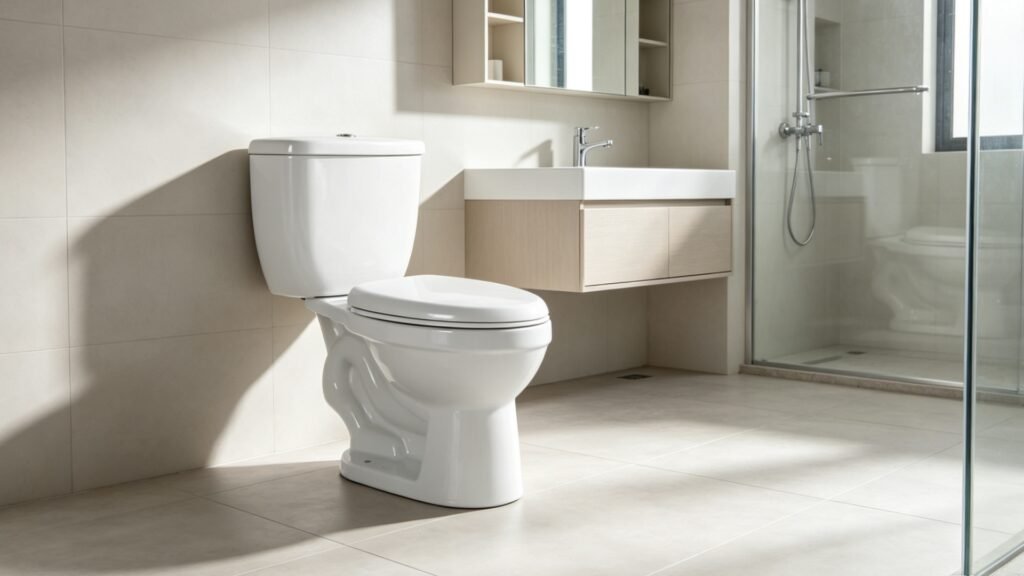
Key Factors That Impact Two Piece Toilet Weight
When I inspect fixtures for our global supply line, I notice homeowners often assume every split type toilet feels identical when lifting. In reality, the weight of a two piece toilet varies significantly based on three core manufacturing choices.
Material Composition: Vitreous China vs. Ceramic
- Vitreous China: Our primary material choice for heavy-duty fixtures. It uses dense clay coated with an enamel glaze fired at high temperatures. This vitreous china toilet weight runs higher because the material is compact, non-porous, and extremely durable.
- Standard Porcelain/Ceramic: Traditional porcelain toilet weight is slightly lighter per cubic inch, but manufacturers often make the walls thicker to compensate for strength, balancing out the total mass.
Bowl Shape: Elongated vs. Round
- Elongated Bowls: Feature an extended front rim that adds roughly 2 inches of length. This extra material increases the elongated vs round toilet weight difference by 3 to 5 lbs (1.4 to 2.3 kg).
- Round Bowls: Feature a compact circular rim requiring less clay, which lowers the overall bowl weight for tight floor plans.
Flushing Systems and Trapway Size
- Skirted Bases: A concealed trapway creates a smooth exterior wall that hides the pipe outline, adding up to 10 to 15 lbs (4.5 to 6.8 kg) of extra ceramic mass.
- Large Glazed Trapways: Broader 2-inch or 3-inch internal passages require thicker internal walls, increasing porcelain mass inside the bowl.
- Dual-Flush Valves: Tower-style flushing valves inside the tank add minor mechanical weight compared to simple flapper setups.
| Weight Factor | Options | Weight Difference |
|---|---|---|
| Material | Vitreous China vs. Standard Ceramic | Vitreous china adds 10% to 15% more mass per volume |
| Bowl Profile | Elongated vs. Round Bowl | Elongated adds 3 to 5 lbs (1.4 to 2.3 kg) |
| Base Design | Skirted Base vs. Exposed Trapway | Skirted walls add 10 to 15 lbs (4.5 to 6.8 kg) |
How to Safely Transport and Carry a Two Piece Toilet
Managing heavy porcelain requires balancing bulk, awkward weight distribution, and fragile materials to keep yourself and your workspace safe.
Why Separating the Tank and Bowl Makes Lifting Easier
Never try to transport a fully assembled unit. Separating the sub-assemblies cuts the overall weight of two piece toilet fixtures into two easily manageable loads.
- Better Weight Distribution: A standard toilet tank weight runs between 30 to 45 pounds, while the toilet bowl weight sits between 50 to 65 pounds. Moving them separately lowers your center of gravity and gives you complete control over each piece.
- Prevents Porcelain Damage: Carrying the unit whole puts immense stress on the mounting bolts and rubber gaskets, which frequently cracks the vitreous china base or causes hidden seal leaks later.
- Easier Grip: Individual pieces offer clear, natural handholds. A combined unit is top-heavy, slippery, and difficult to maneuver through narrow bathroom doorways.
Step-by-Step Lifting Technique to Avoid Back Strain
When handling heavy porcelain toilet weight, using your legs instead of your lower back protects you from injury and keeps the material secure.
- Clear the Pathway: Clear bath mats, trash cans, and door jams before picking up any heavy equipment.
- Squat Over the Load: Stand with your feet shoulder-width apart, keeping the toilet bowl or tank close to your center of mass.
- Get a Solid Handhold: Grip the solid underside of the bowl rim or tank base. Always wear textured grip gloves so smooth porcelain doesn't slip out of your hands.
- Lift with Your Legs: Keep your spine neutral, tighten your core, and drive upward through your heels. Keep the fixture tucked tight against your chest.
- Pivot using Your Feet: Never twist your torso while carrying a heavy load. Turn your entire body by stepping your feet around when changing directions.
Essential Tools and Gear for Moving Heavy Toilets Safely
Having the right setup on hand makes moving a two piece toilet simple and avoids accidental drops or floor damage.
| Essential Gear | Primary Function |
|---|---|
| Nitrile-Grip Gloves | Improves traction on slick vitreous china and protects hands from rough edges. |
| Padded Moving Blankets | Cushions the toilet components during transit and protects vehicle interiors. |
| Hand Truck / Appliance Dolly | Takes the weight off your back for long-distance carrying across rooms or driveways. |
| Ratchet Straps | Secures the tank and bowl tightly to the dolly frame to prevent tipping. |
Bathroom Floor Weight Capacity and Installation Considerations
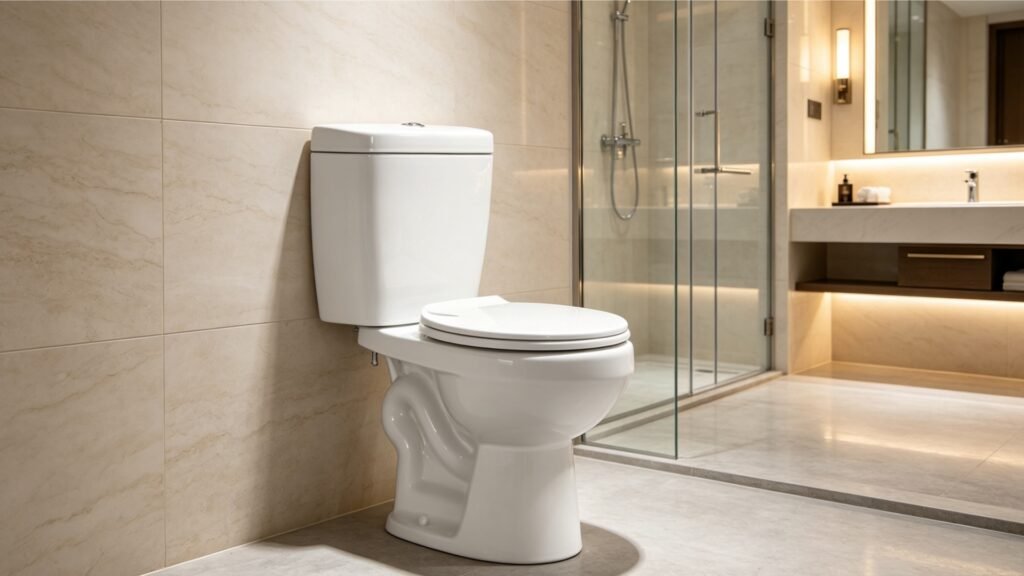
Subfloor Structural Support for Heavy Fixtures
When I evaluate a bathroom setup, checking the structural integrity of the subfloor comes first. Standard residential subfloors are built to handle 30 to 40 pounds per square foot, which easily supports the weight of a two piece toilet (typically 55 to 90 lbs). However, you must account for the total operating load on the floor:
- Fixture Weight: 55–90 lbs (dry weight)
- Water Load: 10–15 lbs inside the tank and bowl
- User Load: Up to 300+ lbs
- Total Concentrated Load: 400+ lbs on a small surface area
If you are dealing with older homes, compromised subfloors, or heavy vitreous china units, check for wood rot or sagging joists before mounting. Reinforcing damaged subflooring prevents tile cracking and long-term structural failure under high floor weight capacity toilet demands.
Securing the Toilet to the Floor Flange
Properly anchoring the unit prevents movement and keeps the frame stable. During any heavy toilet installation, I follow this exact sequence to ensure a solid foundation:
- Inspect the Closet Flange: Confirm the flange rests flat on top of the finished floor. Replace worn PVC or cast-iron flanges immediately.
- Set the Closet Bolts: Slide T-bolts into the flange channels, holding them upright with plastic retaining washers.
- Distribute Weight Evenly: Lower the base straight down over the bolts. Hand-tighten the nuts, then use a wrench to snug them up evenly on both sides.
- Prevent Porcelain Cracking: Tighten the nuts until firm, but avoid excessive force. Overtightening easily snaps the ceramic base under pressure.
Placing the Wax Seal Without Shifting Weight
Positioning the base onto the wax ring requires single-try precision. Once the wax compresses, shifting or twisting the base breaks the seal and causes leaks.
- Lower Vertically: Align the base directly over the closet bolts and drop it straight down without tilting.
- Compress with Even Force: Apply downward pressure using your hands on the bowl rim to seat the base fully into the wax. Never rock the toilet side to side.
- Level and Shim: Place a torpedo level across the bowl. Slide hard plastic shims under low spots to stabilize the fixture before securing the bolts.
- Grout or Caulk the Base: Apply a thin bead of silicone around the front and sides of the base, leaving the rear open so water can escape if a leak ever develops.
Frequently Asked Questions About Two Piece Toilet Weight
Shipping Box Weight
A complete two-piece toilet in its original packaging usually weighs between 80 to 100 lbs (36 to 45 kg). Extra padding, heavy-duty cardboard, and protective foam account for about 5 to 10 lbs of that total toilet shipping weight. Depending on the brand, the unit may arrive in one large box or two separate cartons.
Carrying a Two-Piece Toilet Alone
Yes, a single person can move a two-piece toilet without assistance. Because the fixture splits into two parts, you never have to lift the entire standard toilet weight at once.
- Toilet tank weight: 30–35 lbs (14–16 kg)
- Toilet bowl weight: 45–55 lbs (20–25 kg)
I always recommend moving the bowl to the bathroom first, securing it to the floor flange, and then carrying the tank over to finish the assembly.
Toilet Weight Limit Capacity
The standard residential toilet weight limit capacity ranges from 500 to 1,000 lbs (225 to 450 kg).
- Standard residential units: Rated for up to 500 lbs (225 kg).
- Commercial or reinforced units: Rated for up to 1,000 lbs (450 kg).
The vitreous china itself is exceptionally strong. As long as your subfloor is structurally sound and the floor flange bolts are tightened correctly, the toilet will safely support heavy daily use.