Overview
Core Features of a Smart Toilet with Bidet and Dryer
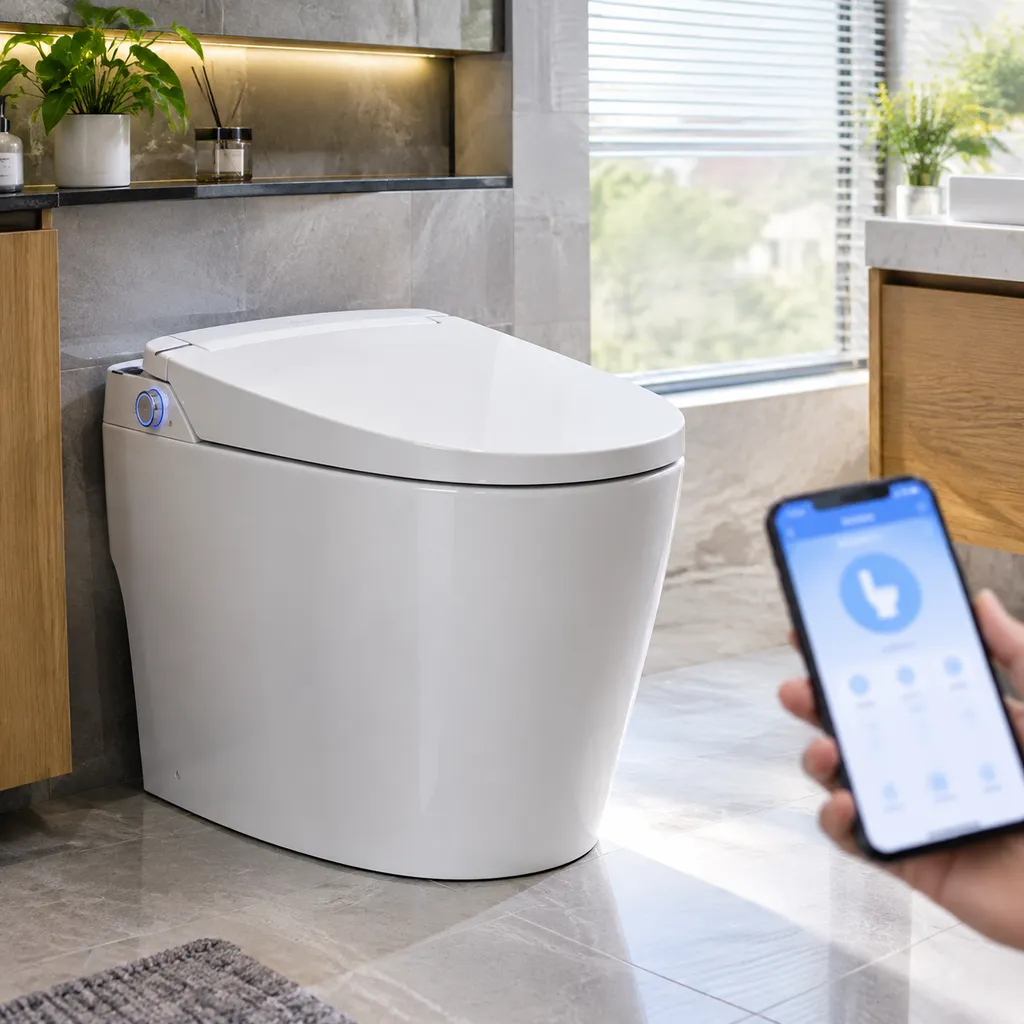
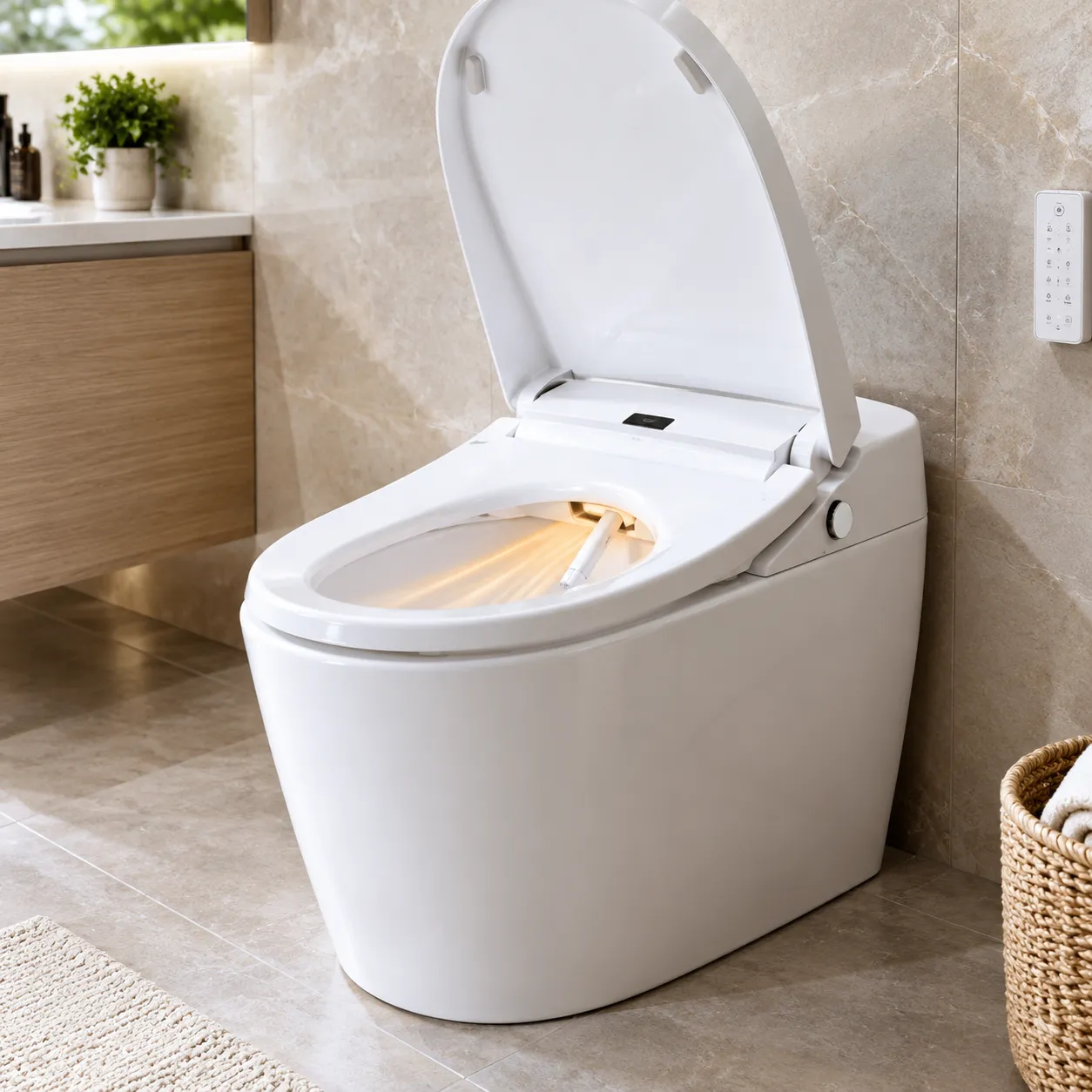
We engineer modern sanitation fixtures around comfort, precision, and continuous hygiene. A high-performance smart toilet with bidet and dryer combines targeted cleansing, on-demand thermal regulation, and hands-free drying into a single streamlined system.
Dual-Action Cleansing Modes
Every user requires different spray dynamics. Our integrated spray wands provide personalized cleansing through distinct, adjustable wash cycles:
- Rear Wash: Delivers a focused, robust stream for thorough posterior cleaning.
- Feminine Wash: Disperses a gentler, wider-angle aerated spray designed for sensitive front hygiene.
- Pulse & Oscillation Modes: Moves the nozzle back and forth while alternating water pressure to stimulate blood flow and maximize rinse coverage.
Instant Ceramic Water Heating vs. Traditional Reservoir Tanks
Older bidet systems store heated water in small internal tanks, which run cold within 30 to 40 seconds. We utilize instant ceramic water heating technology to warm water on demand as it flows through the internal line.
| Feature | Instant Ceramic Heating | Traditional Reservoir Tank |
|---|---|---|
| Warm Water Supply | Continuous, unlimited flow | Limited (lasts 30–45 seconds) |
| Energy Consumption | Low (draws power only during use) | High (cycles constantly to keep tank hot) |
| Internal Footprint | Compact and space-efficient | Bulky; increases toilet base size |
| Hygiene Risk | Minimal (fresh supply water) | Higher (stagnant warm water storage) |
Adjustable Warm Air Drying and Ergonomic Heated Seating
A truly hands-free bathroom routine relies on consistent thermal comfort from start to finish.
- Warm Air Drying: Multi-stage temperature settings pair with variable airflow speeds to evaporate remaining moisture comfortably, cutting out paper abrasions entirely.
- Heated Seat Integration: Ergonomically contoured bases feature embedded heating elements with multiple temperature levels, preventing cold shocks and providing balanced warmth across the entire contact surface.
Key Hygiene and Lifestyle Benefits of a Smart Toilet with Bidet and Dryer
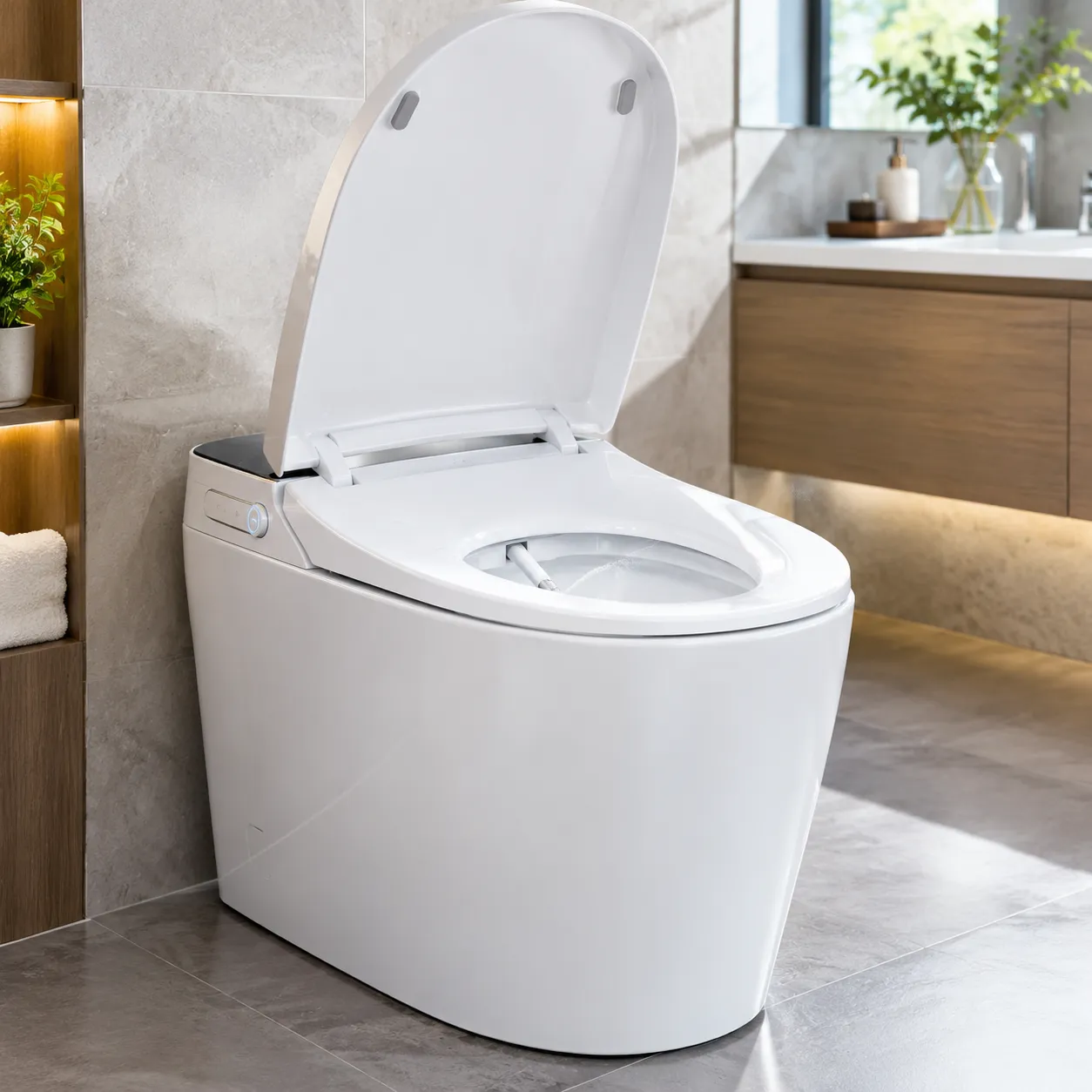
Upgrading to a smart toilet with bidet and dryer changes your daily routine from the first use. We see homeowners switch primarily for comfort, but the immediate sanitary and wellness gains are what make it indispensable.
Total Elimination of Toilet Paper Dependency and Skin Irritation
Traditional dry paper creates friction, leads to micro-tears, and leaves behind residue. By pairing targeted water cleansing with warm air drying, you resolve these issues entirely:
- Soothes Sensitive Skin: Direct, warm water wash eliminates irritation caused by dry wiping, making it ideal for hemorrhoid sufferers and sensitive skin.
- True Cleanliness: Water removes bacteria thoroughly instead of smearing it across surfaces.
- Zero Paper Waste: Eliminating toilet paper clears out bathroom clutter, prevents pipe clogs, and cuts down on household expenses.
Hands-Free Experience with Motion-Activated Controls
A touchless smart toilet minimizes contact with high-touch, bacteria-prone bathroom surfaces:
- Motion-Activated Lid: The lid opens automatically as you approach and shuts securely after you walk away.
- Automatic Flush Bidet: Off-seat sensor triggers a powerful, hands-free flush automatically, keeping the bowl clean without manual handles.
- Cross-Contamination Reduction: Family members never need to touch the seat or flush mechanism with unwashed hands.
Built-in Carbon Air Deodorizers for Continuous Odor Neutralization
Instead of masking foul smells with aerosol sprays, an integrated bidet system stops odors right at the bowl:
- Active Carbon Filtration: An integrated intake fan pulls air through a replaceable activated carbon filter while the seat is occupied.
- Neutralization at the Source: Odors are neutralized chemically at the molecular level before they disperse into the surrounding room.
- Quiet, Automatic Operation: The deodorizer runs silently in the background and shuts off automatically after use.
Improved Accessibility for Seniors, Postpartum Recovery, and Limited Mobility
Personal hygiene should never compromise dignity. We consistently recommend these units for households requiring extra physical care:
- Postpartum Care: Provides gentle, non-abrasive relief for postpartum recovery without painful contact.
- Elderly Independence: Seniors with arthritis or limited upper-body mobility can maintain complete personal hygiene without assistance.
- Ergonomic Assistance: One-touch presets eliminate reaching, bending, and twisting to operate wall paper holders or manual valves.
Lifestyle Comparison: Standard Toilet vs. Smart Bidet Toilet
| Feature | Traditional Toilet | Smart Toilet with Bidet and Dryer |
|---|---|---|
| Cleaning Method | Abrasive dry paper | Warm water spray + gentle warm air drying |
| Bacterial Transfer | High (manual handle, manual lid) | Low (motion-activated lid and automatic flush) |
| Odor Management | Room sprays and passive ventilation | Built-in active carbon filter extraction |
| Mobility Accessibility | Demands twisting and reaching | Fully hands-free operation via remote or sensors |
Essential Buying Factors for a Smart Toilet with Bidet and Dryer
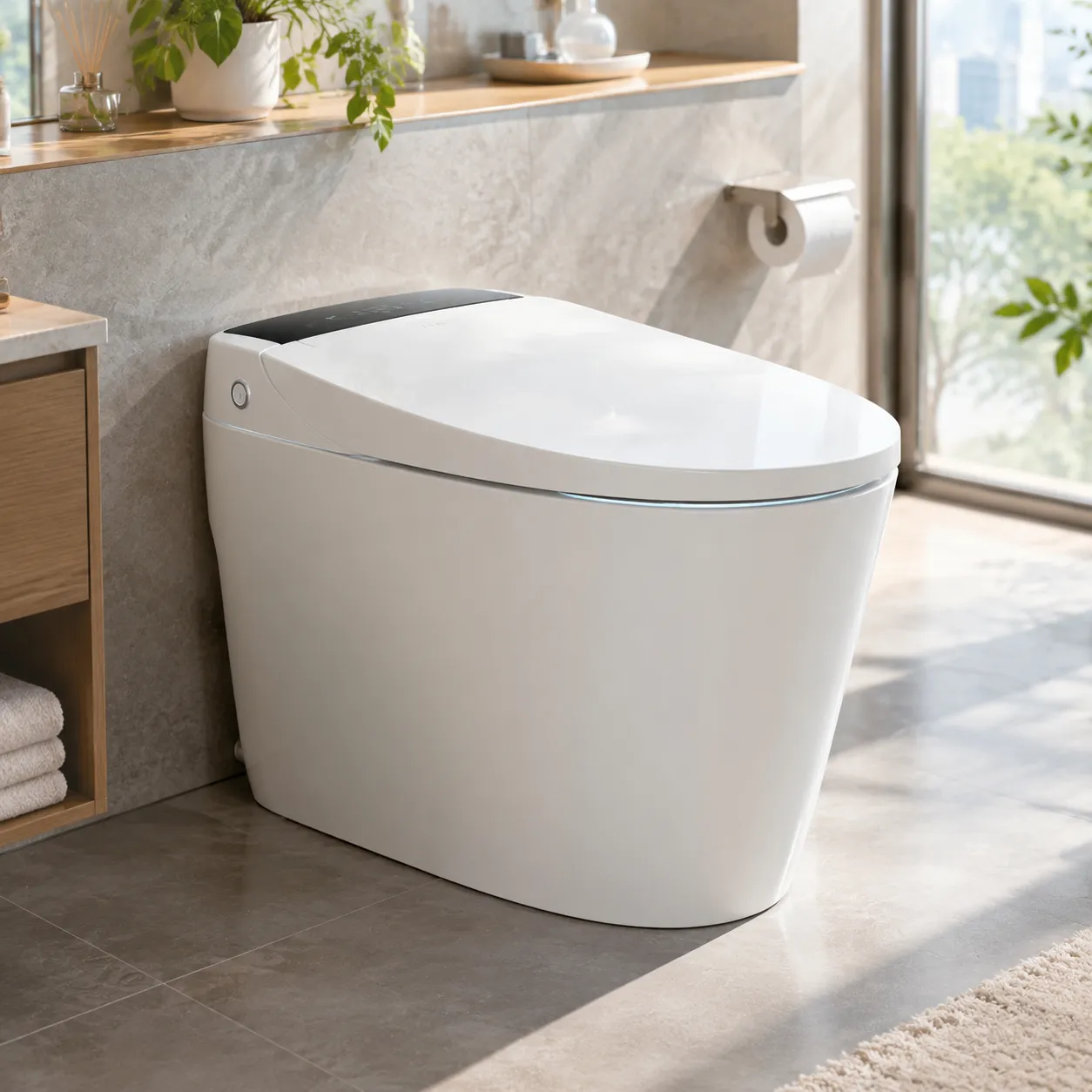
Before upgrading to a smart toilet with bidet and dryer, you need to evaluate your bathroom layout, plumbing lines, and electrical setup. We see many homeowners overlook these technical realities, leading to installation delays. Here is what we check before purchasing or installing any unit.
Electrical Setup and GFCI Outlet Placement
An electric bidet toilet requires a reliable power source to run the water heater, heated seat, and dryer motor.
- Outlet Type: You need a dedicated GFCI outlet (120V in North America, or 220–240V for global markets) to prevent electrical hazards in wet environments.
- Placement: Position the outlet roughly 2 to 3 feet (60–90 cm) from the base of the toilet, ideally on the left or right side according to the unit's power cord exit.
- Circuit Load: We recommend a dedicated 15A or 20A circuit to handle peak draws from the instant warm water heater and air dryer simultaneously.
Minimum Water Pressure for Tankless Systems
Most integrated smart toilets are tankless systems designed to save floor space. Instead of relying on gravity from a bulky tank, they use direct household water pressure to clear the bowl.
- Minimum Requirement: Most models require a dynamic water pressure of at least 30 to 35 PSI (0.2 to 0.24 MPa) and a flow rate of roughly 4 to 5 gallons (15–19 liters) per minute.
- Low-Pressure Fixes: If your home relies on well water or older plumbing with lower pressure, look for a unit with a built-in booster pump or an auxiliary water tank to ensure a complete flush every time.
Quick Comparison: Core Components to Evaluate
| Feature | Best Option | Standard Option | Our Verdict |
|---|---|---|---|
| Nozzle Material | Self-cleaning stainless steel | Antimicrobial ABS plastic | Stainless steel lasts longer, resists scaling, and cleans better. |
| Flushing System | Direct-drive with booster pump | Gravity-assisted flush | Choose a booster system if your home line pressure fluctuates. |
| Control Method | Magnetic wall-mount remote | Basic side dial/buttons | Wall remotes keep controls accessible and off the dirty floor zone. |
Nozzle Construction: Stainless Steel vs. Plastic
The wash wand is the core of the bidet system. We consistently recommend self-cleaning stainless steel nozzles over basic plastic wands. Stainless steel resists mineral buildup from hard water, provides better structural durability, and offers a non-porous surface that inhibits bacterial growth. Premium units feature automatic pre- and post-rinse cycles that flush the nozzle with water before and after every use.
Control Interfaces
Daily usability depends on how you interact with the toilet. We prioritize units that offer a mix of inputs:
- Wall-Mounted Remotes: The cleanest, most ergonomic solution for adjusting water temperature, nozzle position, and dryer heat without twisting your body.
- Side Dials or Foot Sensors: Essential for quick, single-touch flushes or basic rear washes if the remote batteries die.
- Smartphone Apps: Useful for saving personalized user profiles, tracking water efficiency, and managing firmware updates.
Smart Toilet with Bidet and Dryer: Installation and Maintenance
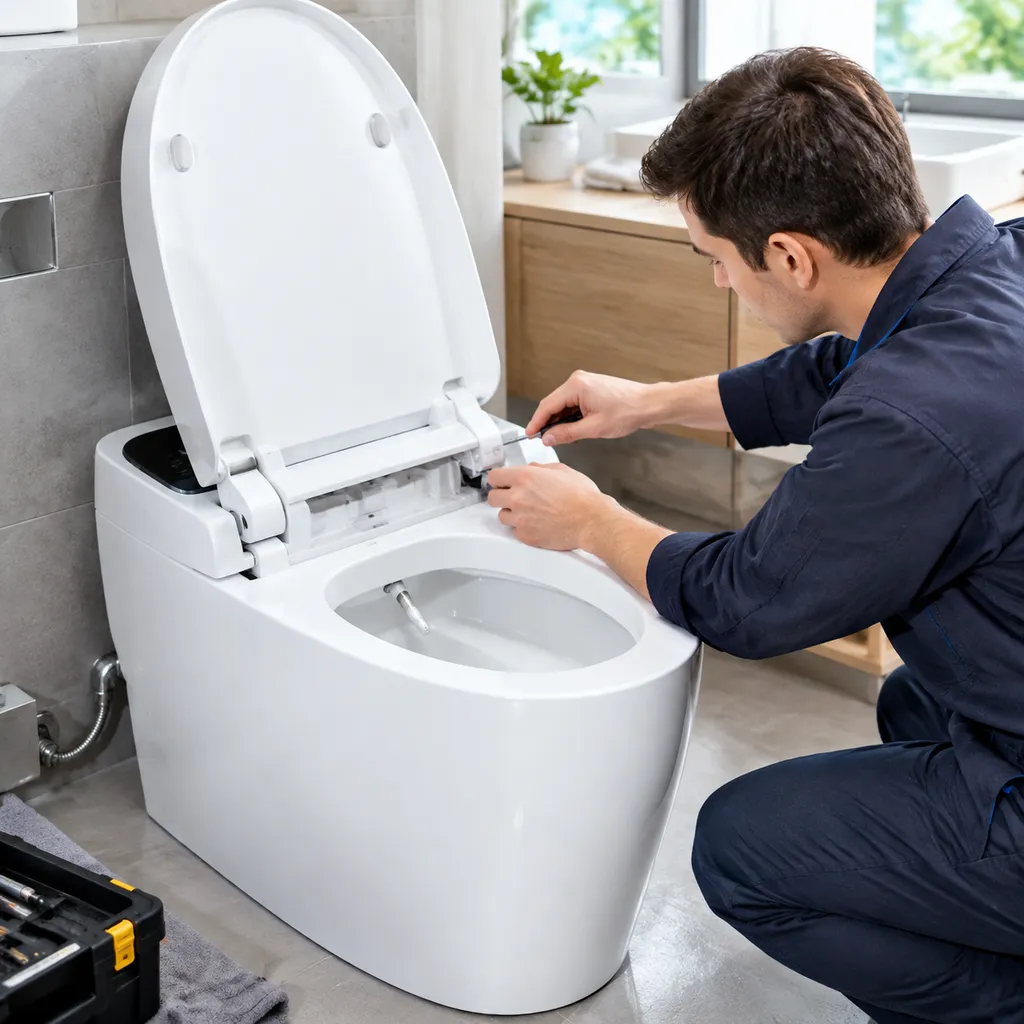
Proper installation and routine care ensure a smart toilet with bidet and dryer runs reliably for years without leaks or electronic failures. Below, we break down the core plumbing specs, backup procedures, and daily upkeep required for long-term performance.
Rough-In Dimensions and Plumbing Compatibility
Before installing any integrated unit, verifying your bathroom's rough-in dimension is mandatory:
- Standard rough-in: Most residential homes require a standard 12-inch (305 mm) rough-in, measured from the finished wall (not the baseboard) to the center of the closet floor drain.
- Shut-off valve clearance: Ensure the cold water supply valve sits at least 6 to 8 inches to the left of the toilet centerline to clear the skirted ceramic base.
- Plumbing lines: These systems connect to standard 1/2-inch NPT or 3/8-inch compression supply lines. Unlike standard gravity toilets, tankless designs require clean, steady flow directly from the main line.
Power Outage Backup: Emergency Manual Flushing
When electrical power drops, the heating elements and motorized functions pause, but the toilet remains functional:
- Battery-operated backup: Most units feature an integrated battery pack (commonly utilizing standard 9V or AA batteries) tucked beneath the side housing to operate the electronic flush valve during blackouts.
- Manual override levers: If batteries are depleted, a mechanical push-button or recessed kick-flush lever provides an unpowered gravity or siphon flush. We always recommend keeping spare batteries on hand inside the bathroom cabinet.
Filter Maintenance and Descaling for Hard Water
Sediment and mineral scale are the primary causes of reduced spray pressure:
- Inline mesh filters: The water inlet features an internal mesh filter screen that traps pipe debris. We recommend shutting off the water stop, removing the filter, and rinsing it under a faucet every 6 months.
- Descaling routines: In hard water regions, calcium deposits can settle inside the stainless steel nozzle tip. Extend the wand using the manual cleaning mode, soak the tip with a 1:1 solution of white vinegar and warm water for 15 minutes, and gently clear the spray orifices with a soft-bristled brush.
Safe Cleaning Protocols for Electronic Components
The external housing contains sensitive circuit boards, infrared seat sensors, and anti-bacterial coatings that harsh cleaning products will degrade.
| Component | Recommended Care | What to Avoid |
|---|---|---|
| Bidet Wand & Nozzle | Warm water, mild dish soap, soft microfiber cloth | Abrasive pads, bleach, wire brushes |
| Heated Seat & Lid | Damp cloth with neutral, diluted detergent | Alcohol wipes, ammonia, acetone-based cleaners |
| Ceramic Bowl Interior | Standard non-abrasive toilet bowl cleaner | Direct splashing onto the electronic bidet engine |
| Control Dials & Sensors | Dry microfiber wipe | Direct water spraying, pressure washers |
Integrated Smart Toilet vs. Add-On Bidet Seat
Choosing between a complete smart toilet with bidet and dryer and a bolt-on bidet seat comes down to plumbing layout, aesthetic preferences, and budget constraints. While an add-on seat replaces your existing toilet lid, a fully integrated unit replaces the entire ceramic fixture with an all-in-one system.
Aesthetics and Space-Saving Bathroom Footprint
Add-on seats often leave exposed water hoses, electrical cords, and awkward overhangs depending on the bowl shape. They also steal vertical seating space.
An integrated bidet system eliminates these visual and physical pain points:
- Concealed Connections: Water inlets and electrical wiring hide completely inside the ceramic skirt.
- Compact Footprint: Tankless and low-profile designs free up to 4 to 6 inches of forward floor space, which is critical in narrow or compact bathrooms.
- Seamless Contours: Zero gaps between seat hinges and bowl rims make exterior wipe-downs fast and hygienic.
Durability, Water Efficiency, and Warranty Protection
| Feature | Add-On Bidet Seat | Integrated Smart Toilet |
|---|---|---|
| Flush Integration | None (uses manual tank flush) | Built-in dual flush intelligent toilet system |
| Water Efficiency | Dependent on old toilet tank | 1.0 to 1.28 GPF automatic precision flushing |
| Structural Lifespan | 3 to 5 years (plastic fatigue) | 10+ years (vitreous china base and modular core) |
| Component Warranty | Typically 1-year limited | 2 to 5 years covering ceramic base and electronics |
We find that while add-on seats work well as temporary upgrades or rental fixes, a dedicated smart toilet with bidet and dryer provides superior mechanical reliability, unmatched space efficiency, and consistent daily performance.
Frequently Asked Questions About Smart Bidet Toilets
Does the warm air dryer completely dry you without toilet paper?
Yes, a smart toilet with bidet and dryer can dry you completely, but it requires patience.
- Cycle time: Most built-in warm air dryers run on a 2- to 3-minute cycle to achieve full dryness.
- Airflow settings: Adjusting the temperature and fan speed up to maximum cuts down waiting time.
- Practical routine: Many users take a single square of toilet paper to blot excess moisture first, using the warm air drying bidet function to finish without friction or irritation.
How does a smart toilet flush if the power goes out?
We design modern units to prevent lockouts during electrical outages. A tankless smart toilet handles blackouts through redundant mechanical backups:
| Backup Method | How It Works |
|---|---|
| Internal Battery Pack | A concealed 9V or AA battery compartment powers the solenoid flush valve via a manual side button. |
| Manual Flush Cord/Lever | A hidden mechanical pull-cord or side push button bypasses electrical controls entirely. |
| Gravity Bucket Flush | Pouring roughly two gallons of water directly into the bowl clears waste through the siphon trapway. |
How much electricity does a smart toilet use per month?
An electric smart toilet averages between 15 to 30 kWh per month, translating to roughly $2.00 to $5.00 on your monthly electric bill depending on local energy rates.
- Units with an instant warm water heater draw power only when actively washing, making them far more energy-efficient than older models with continuously heated water tanks.
- Utilizing built-in eco-modes drops seat-heating temperatures during idle hours, cutting baseline power consumption by nearly half.
Are self-cleaning bidet nozzles truly sanitary for family use?
Yes. The wand mechanism uses several automated hygienic barriers:
- Pre- and post-rinse cycles: The wand self-flushes fresh water over its housing before and after every single extension.
- Material barrier: A self-cleaning stainless steel nozzle resists bacterial biofilm, scale, and fungal growth far better than porous plastics.
- Retractable housing: The nozzle remains shielded behind a protective gate when not spraying, preventing contact with waste or flush splashback.
Can a smart toilet be installed on standard residential plumbing?
Yes, but you must verify two structural points before purchasing:
- Rough-in spacing: Standard homes feature a 12-inch rough-in distance from the finished wall to the center of the floor drain. Ensure your space matches this standard measurement.
- Dedicated power source: You must have a dedicated 120V GFCI electrical outlet positioned within three to four feet of the toilet base.
- Water pressure check: Because many integrated smart toilets lack a gravity storage tank, they require a baseline dynamic water pressure of at least 30 to 35 PSI straight from your supply shutoff valve to cycle the flush properly.