Overview
How a Pressure Assisted Two Piece Toilet Works
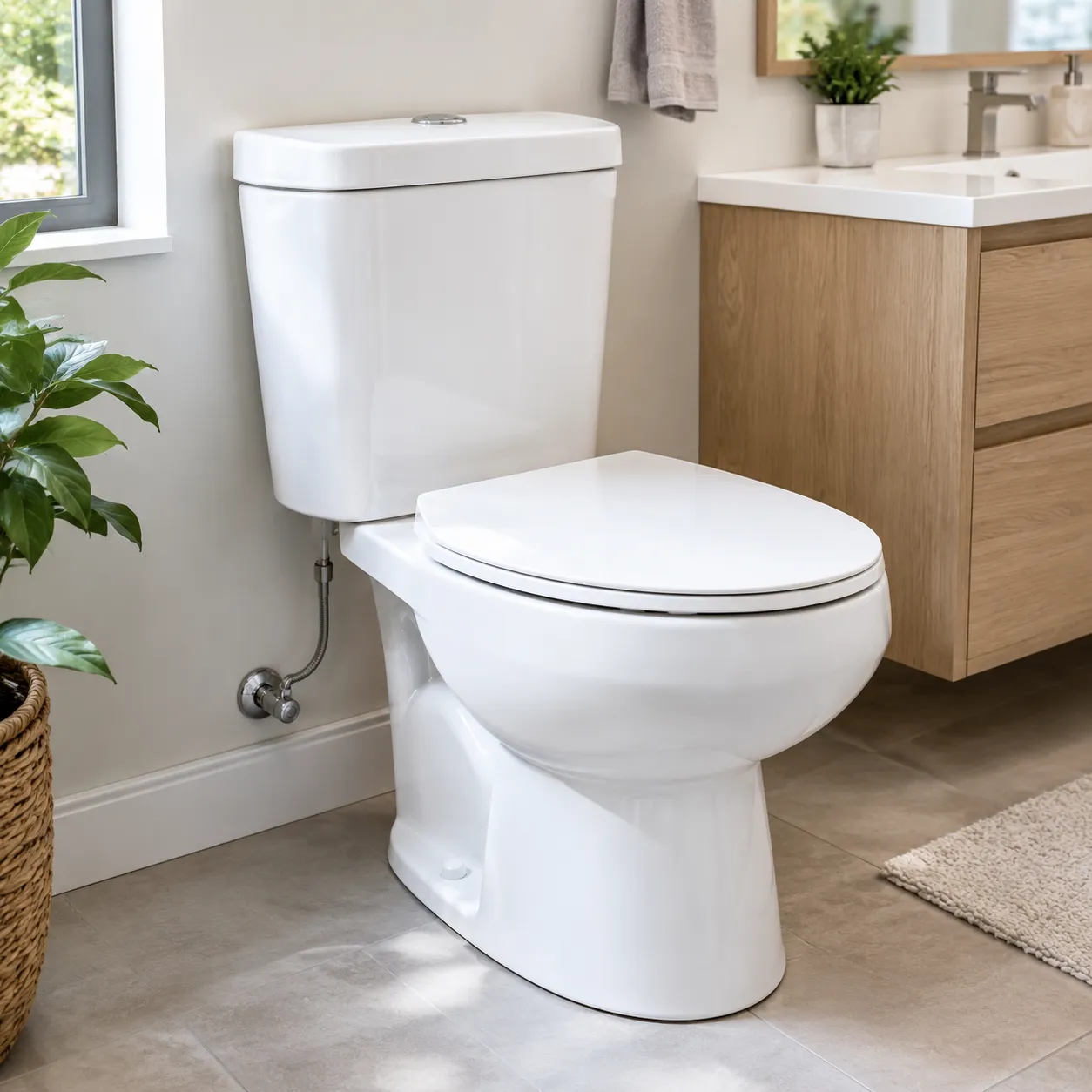
A pressure assisted two piece toilet redefines flushing performance by replacing the standard open-water reservoir with an engineered, closed-loop system. Instead of relying purely on gravity to pull waste through the trapway, these fixtures harness line pressure to push waste out with immediate, high-velocity force.
+-------------------------------------------------------------+
| Ceramic Tank |
| +-------------------------------------------------------+ |
| | Sealed Inner Pressure Vessel | |
| | [ Trapped Air ] <-- Compresses as water enters | |
| | [ Water Volume] <-- Held under supply line pressure | |
| +---------------------------+---------------------------+ |
+------------------------------|------------------------------+
| (High-Velocity Discharge)
v
+-------------------------------------------------------------+
| Toilet Bowl |
| [ Jet Action ] ===> Clears Waste Instantly into Trapway |
+-------------------------------------------------------------+
The Sealed Inner Pressure Vessel Mechanism
Inside the outer porcelain tank sits a heavy-duty, airtight composite pressure vessel. When the supply line fills this chamber:
- Air Compression: Incoming water fills the vessel from the bottom, trapping the air inside the sealed chamber and compressing it.
- Energy Storage: The compressed air acts like a loaded spring, storing the kinetic energy directly from your home water supply line.
- Instant Release: Activating the flush lever releases this trapped energy, firing water into the bowl at a significantly higher flow rate than conventional flush valves allow.
Compressed Air and Water Dynamics vs Gravity Flush
Standard gravity toilets depend strictly on the weight of falling water to create a siphon. A pressurized flushing mechanism creates an explosive push-and-pull action that scours the bowl surface in seconds.
| Feature | Pressure-Assisted Flush | Standard Gravity-Fed Flush |
|---|---|---|
| Operating Principle | Compressed air drives water downward | Water weight creates siphon pull |
| Flushing Velocity | High-speed, pressurized discharge | Moderate, gravity-dependent flow |
| Bowl Scour Power | Maximum bulk waste clearance | Moderate; prone to residue |
| Water Surface Action | Vigorous, instantaneous push | Gradual swirl and drain |
Why the Separate Tank and Bowl Design Makes a Difference
Splitting the unit into a distinct tank and bowl offers critical engineering and practical advantages:
- Vibration and Stress Isolation: The separate tank allows heavy-duty mounting hardware to secure the pressurized vessel independently, protecting the bowl structure from operating stress.
- Targeted Servicing: If an internal valve or pressure vessel requires maintenance, the tank can be serviced or detached without disturbing the floor seal or bowl mount.
- Simplified Handling: Distributing the total unit weight across two separate pieces makes transport, alignment, and rough-in positioning far more manageable for single-person installations.
Major Benefits of a Pressure Assisted Two Piece Toilet
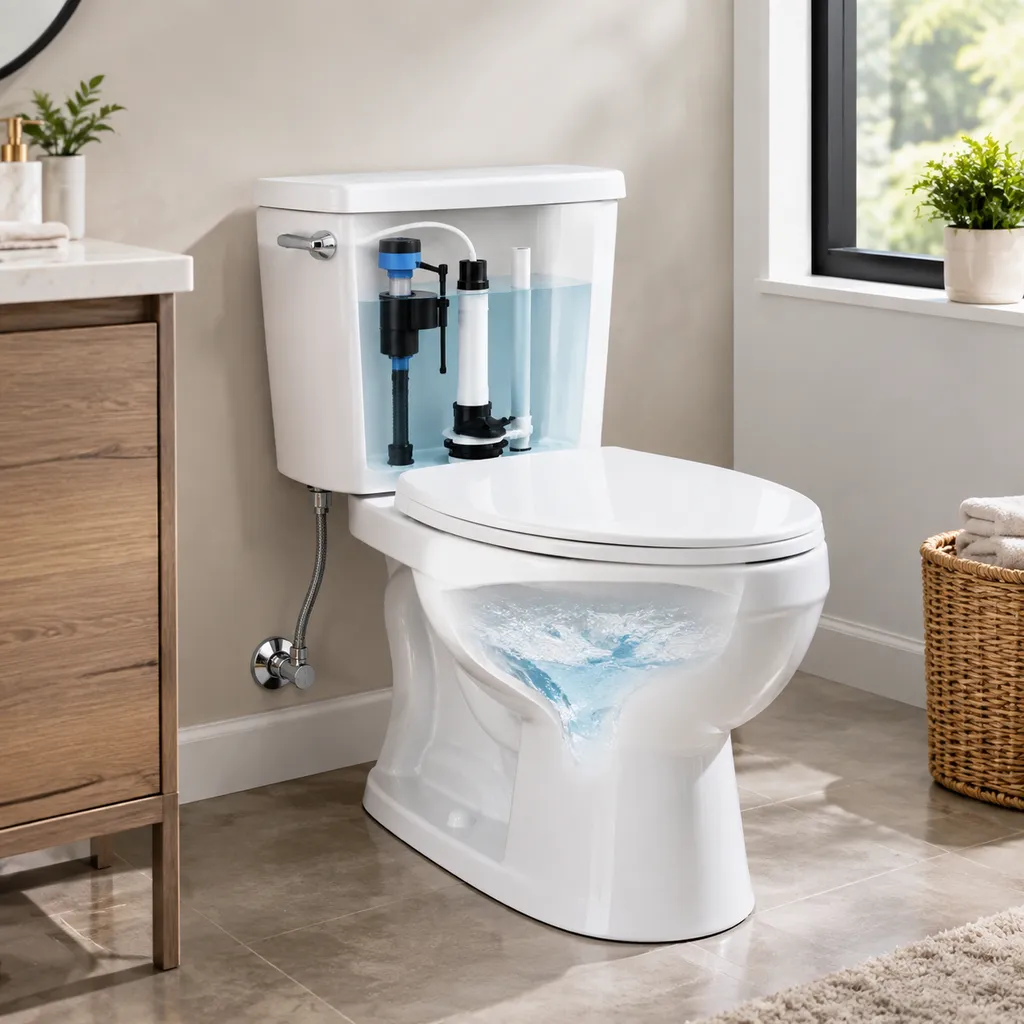
We rely on the pressure assisted two piece toilet to solve the most persistent flushing issues in heavy-use residential and commercial bathrooms. By combining an internal pressurized vessel with a modular porcelain build, these units outperform standard gravity models across daily reliability, efficiency, and maintenance.
Unmatched Waste Clearing and Clog-Resistant Flushing
- High-velocity discharge: The internal air bladder pushes water into the bowl with substantial force, clearing solid waste in a single flush.
- Zero clog reliability: The pressurized jet scrubs the bowl surfaces and pushes waste cleanly through the trapway, virtually eliminating clogs and plungers.
Low Water Consumption (1.0 to 1.6 GPF)
- Optimized efficiency: Utilizing compressed air allows the system to achieve peak bulk removal using only 1.0 to 1.6 gallons per flush (GPF).
- Reduced water costs: Lower volume per flush reduces total household water usage without sacrificing clearing power.
Sweat-Free Outer Porcelain Tank
- Moisture isolation: Cold supply water is contained entirely inside the sealed inner vessel rather than sitting directly against the outer porcelain tank walls.
- Floor and wall protection: The exterior china stays dry at room temperature, eliminating condensation, dripping, and mold growth on bathroom floors in humid conditions.
Practical Handling and Transport
- Manageable component weight: Separating the bowl from the tank divides the overall weight, making transport up stairwells and positioning on the flange straightforward for single installers.
- Component-level servicing: The two-piece structure allows independent access to the bowl or tank connections whenever maintenance or rough-in adjustments are needed.
| Performance Factor | Pressure Assisted Two Piece Toilet | Traditional Gravity Toilet |
|---|---|---|
| Water Usage | 1.0 to 1.6 GPF (High Performance) | 1.6 to 3.5 GPF |
| Flushing Action | Pressurized air-driven jet | Gravity water drop |
| Condensation (Sweating) | None (Internal tank barrier) | Frequent in humid climates |
| Jobsite Handling | Split weight (Separate tank and bowl) | Heavy (if one-piece) / Low-force flush (if gravity) |
Pressure-Assisted vs Gravity-Fed Two-Piece Toilets
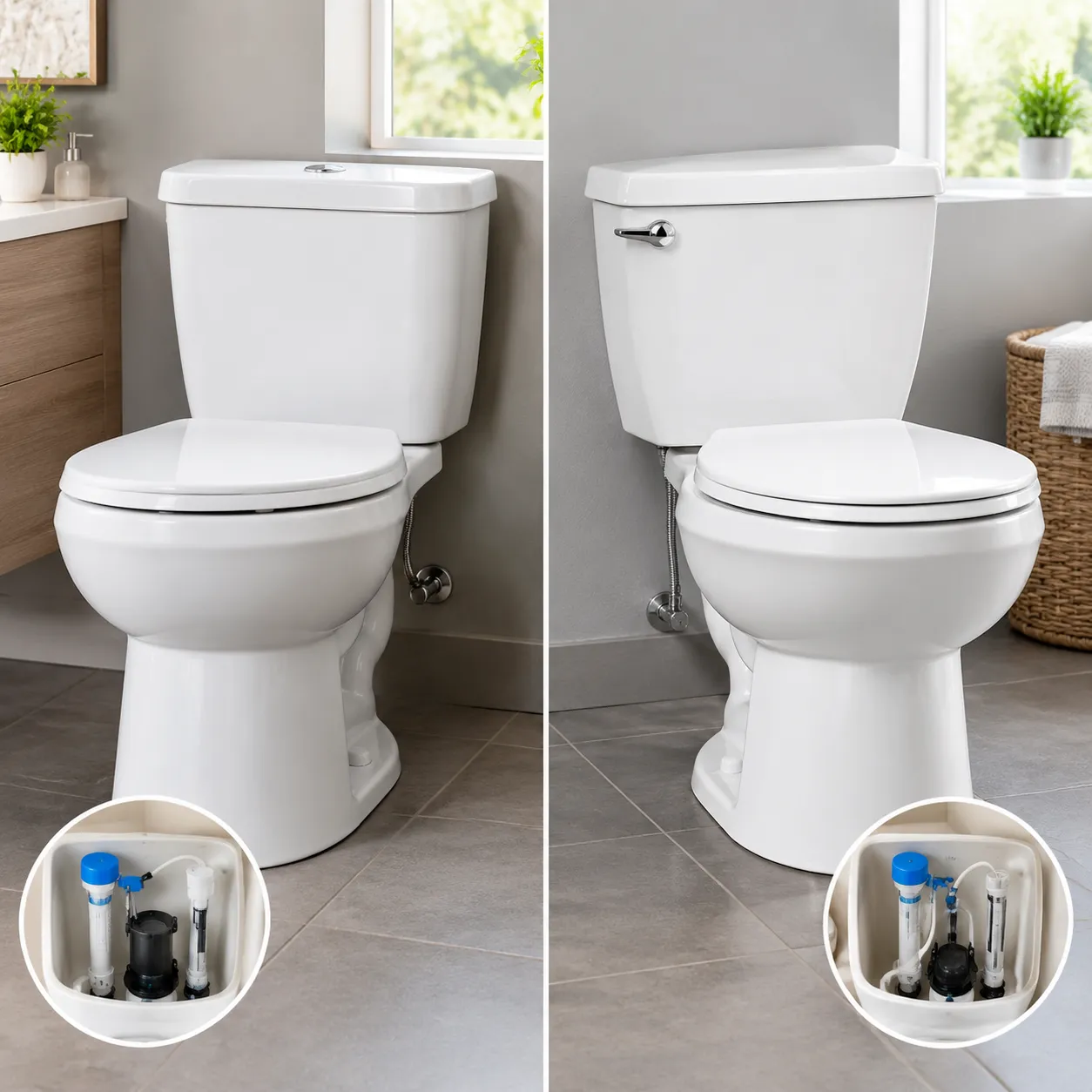
Choosing between a pressure assisted two piece toilet and a traditional gravity-fed unit comes down to raw performance versus simple mechanics. Both designs handle residential waste, but they operate on completely different principles.
Flushing Velocity and Bulk Removal Comparison
- Pressure-Assisted: Trapped air inside an internal pressure vessel forces water into the bowl at high velocity. This rapid push drives bulk waste through the trapway instantly, providing virtually clog-free, commercial-grade clearing power in a single flush.
- Gravity-Fed: Relies entirely on the downward pull of gravity and natural siphonic action. Water enters at a lower speed, which can require occasional double flushing for heavy solid waste.
Noise Levels and Sound Dampening Factors
- Sound Profile: A two piece power flush toilet generates a sharp, distinctive 2-to-4-second "whoosh" rather than a prolonged swirl.
- Sound Dampening: The separate porcelain outer tank helps buffer the sound of the inner vessel. While quieter than commercial tankless flush valves, it is noticeably louder than a standard gravity flush.
Upfront Cost and Long-Term Part Replacement
- Purchase Price: Pressure-assisted two-piece models carry a higher initial cost due to the engineered pressure vessel inside the tank.
- Component Longevity: Traditional toilets use inexpensive rubber flappers that quickly rot from chloramines and hard water. Pressure-assist units use sealed flush cartridges that cost more to replace but last significantly longer without leaking.
Home Water Supply Pressure Requirements (Minimum 25–30 PSI)
- Operating Threshold: A pressure-assisted system requires a minimum static line pressure of 25 to 30 PSI to properly compress the air chamber between flushes.
- Low-Pressure Homes: If your home operates below 25 PSI (common with some rural well systems or aging gravity infrastructure), the unit will not recharge effectively. Gravity toilets do not have this limitation and can operate on low line pressure.
Side-by-Side System Comparison
| Feature | Pressure Assisted Two Piece Toilet | Gravity-Fed Two-Piece Toilet |
|---|---|---|
| Flushing Force | High-velocity air-driven propulsion | Moderate gravitational siphon |
| Clog Resistance | Exceptional; handles high bulk volumes | Moderate; prone to periodic blockages |
| Flush Duration | 2 to 4 seconds | 6 to 10 seconds |
| Noise Level | Crisp, louder burst | Soft, quiet water trickle |
| Supply Line Needs | Minimum 25–30 PSI | Operates below 20 PSI |
| Internal Wear Parts | Heavy-duty cartridge (no flapper) | Rubber flapper and standard fill valve |
Key Buying Factors for Pressure Assisted Two Piece Models
Choosing the right pressure assisted two piece toilet requires matching the unit's mechanical specs with your bathroom layout and plumbing rough-in. I evaluate several core criteria before selecting or recommending a pressurized flushing system.
Bowl Shape: Elongated vs. Round Front
- Elongated Bowl: Extends roughly 18.5 inches from the tank, offering superior thigh support, extra sitting space, and better interior bowl coverage. This is the top choice for master baths and high-traffic powder rooms.
- Round Front Bowl: Measures around 16.5 inches, saving valuable clearance in compact layouts, half-baths, or spaces where swinging doors might hit the front edge of the bowl.
Rim Height: Comfort Height (ADA) vs. Standard Height
- Comfort Height (17" to 19"): Meets ADA compliance standards. Sitting down and standing up requires significantly less knee and back strain, making this height ideal for taller adults, seniors, and universal accessibility.
- Standard Height (14" to 15"): Sits lower to the floor. It remains the practical choice for children's bathrooms or users who prefer a more natural ergonomic squatting posture.
Rough-in Dimensions (10-Inch, 12-Inch, 14-Inch)
Always measure the distance from the finished wall (not the baseboard) straight to the center of the closet flange bolts:
- 12-Inch Rough-in: The industry standard for over 90% of residential installations.
- 10-Inch Rough-in: Common in older homes, basements, or retrofitted powder rooms.
- 14-Inch Rough-in: Used in older builds with excessive space between the wall and the drain flange.
Gallons per Flush (GPF) and WaterSense Ratings
A water saving power toilet relies on pneumatic force rather than high water volume:
- 1.6 GPF Pressure Assist: Delivers maximum velocity to push heavy bulk through difficult or long residential drain lines.
- 1.0 to 1.28 GPF High Efficiency Toilet (HET): Meets EPA WaterSense criteria and local municipal conservation codes, reducing utility bills while delivering complete bowl evacuation in a single cycle.
Cartridge and Inner Tank Compatibility (Flushmate, EcoFlush)
The reliability of a high performance two piece toilet depends on the pressure vessel housed inside the ceramic tank.
- Flushmate Systems: The most widespread industry standard, offering widely available flush cartridge replacements, relief valves, and repair kits across plumbing supply networks.
- EcoFlush / WDI Systems: Efficient dual-flush and single-flush pressurized mechanisms designed for ultra-low water consumption and straightforward drop-in serviceability.
Quick Comparison Matrix
| Specification | Standard / Compact Option | High-Performance / Premium Option |
|---|---|---|
| Bowl Profile | Round front (space-saving) | Elongated (ergonomic comfort) |
| Rim Elevation | Standard 15" rim | ADA / Chair height 17"–19" |
| Water Usage | 1.6 GPF standard power | 1.0 – 1.28 GPF WaterSense rated |
| Rough-in Size | 10-inch or 14-inch (specialty) | 12-inch (universal standard) |
| Vessel System | EcoFlush / Proprietary | Flushmate series |
Maintenance and Troubleshooting for a Pressure Assisted Two Piece Toilet
Maintaining a pressure assisted two piece toilet is straightforward once you know how the inner vessel operates. Because these systems rely on sealed pressure rather than standard gravity flappers, troubleshooting focuses on the cartridge, line pressure, and intake filtration.
How to Fix a Continuous Running or Hissing Pressure Vessel
A constant hissing sound or continuous water flow usually points to an unsealed cartridge, low water pressure, or debris in the valve seat.
- Check Line Pressure: Ensure your main shut-off valve is fully open. If incoming water pressure drops below the required threshold, the internal vessel cannot pressurize and seal properly.
- Inspect the Cartridge Seal: Mineral grit can prevent the cartridge from dropping into a complete seal. Turn off the water supply, flush the unit to discharge all stored air and water, and inspect the rubber seals on the cartridge base.
- Test the Air Inducer: If the vessel constantly leaks air into the bowl, check the air inducer cap on top of the tank. Clean out any debris or replace the small rubber duckbill valve inside.
Adjusting and Replacing the Flush Cartridge
When the flush handle feels loose, sticks, or fails to trip the flush mechanism, the cartridge needs calibration or replacement.
- Depressurize the Tank: Shut off the water supply stop valve and activate the flush actuator to purge all remaining pressure from the vessel.
- Adjust the Actuator Height: Most cartridges feature an adjustable top screw. Turn the screw until you achieve a 1/8-inch clearance between the flush lever rod and the actuator button.
- Cartridge Replacement: If adjusting does not solve the issue, unscrew the cartridge counterclockwise using a cartridge wrench or standard channel locks. Thread in a new flush cartridge replacement, hand-tighten it firmly, and turn the water back on to test the seal.
Clearing Mineral Scale from Rim Jets and Trapway
Hard water deposits can restrict water pathways, reducing the violent siphon jet action that gives a two-piece power flush toilet its clearing power.
- Inspect Jet Openings: Use an inspection mirror to check the discharge holes under the bowl rim for calcium and limescale crust.
- Chemical Clean: Pour a commercial scale remover or warm white vinegar into the bowl water and directly into the primary jet pathway. Let it sit for at least 30 to 45 minutes to dissolve heavy buildup.
- Manual Descaling: Clear individual jet ports with a stiff nylon brush or a piece of flexible wire. Avoid metal tools that can scratch the vitreous china glaze.
Checking and Replacing the Inlet Screen Filter
A clogged inlet screen restricts incoming water flow, leading to exceptionally long fill cycles or a vessel that fails to charge.
| Step | Action | Tools Required |
|---|---|---|
| 1. Isolate the Line | Shut off the water stop valve and flush the toilet to empty the pressure tank completely. | None |
| 2. Disconnect Supply | Unscrew the flexible water supply line from the bottom of the toilet tank shank. | Adjustable wrench |
| 3. Extract the Filter | Use needle-nose pliers to gently pull the small mesh screen from inside the inlet shank. | Needle-nose pliers |
| 4. Clean or Swap | Flush the screen under running tap water to remove rust and sediment. Replace if torn or distorted. | Small brush |
| 5. Reassemble & Test | Push the clean screen back into the shank, reconnect the supply line, and open the water valve. | Adjustable wrench |
Pressure Assisted Two Piece Toilet FAQs
Are pressure assisted two piece toilets too loud for residential bathrooms?
They produce a distinct, brief "whoosh" sound lasting about 2 to 4 seconds, similar to a commercial restroom flush. While noticeably louder than a slow gravity flush, the sound dissipates almost instantly. Modern two-piece porcelain tanks provide extra sound dampening, making them perfectly suitable for high-traffic residential powder rooms and main family bathrooms.
Can you convert a regular gravity two-piece toilet into a pressure-assist?
No. You cannot simply drop a pressurized vessel into a standard gravity tank. A pressure assisted two piece toilet features a reinforced bowl specifically engineered with direct jet channels to withstand higher discharge velocity. Installing a pressure vessel on standard gravity porcelain creates a serious risk of cracking the fixture and improper flushing performance.
How many years does a pressure-assist vessel cartridge last?
Under standard operating conditions, an internal pressure cartridge lasts 5 to 10 years.
Hard water areas: Mineral scaling can shorten valve life to around 4–6 years.
Routine care: Cleaning the internal screen filter and replacing simple duckbill valves can extend vessel life past a decade.
What happens if my home loses water pressure?
A pressure assist system relies on incoming line pressure (minimum 20 to 30 PSI) to compress the air inside the internal vessel. If your home's water supply drops below this threshold or shuts off completely:
You will get one final pressurized flush from the stored charge.
The tank will not recharge or build pressure until water service returns to normal PSI levels.
Are replacement parts for two-piece pressure toilets easy to find?
Yes. Most manufacturers build their fixtures around standardized internal systems like Flushmate or EcoFlush. Replacement flush cartridges, intake screens, upper supply actuators, and mounting hardware are widely stocked online and in local plumbing supply stores, making long-term maintenance straightforward and cost-effective.