Overview
How a One-Piece Siphonic Dual Flush Toilet Works
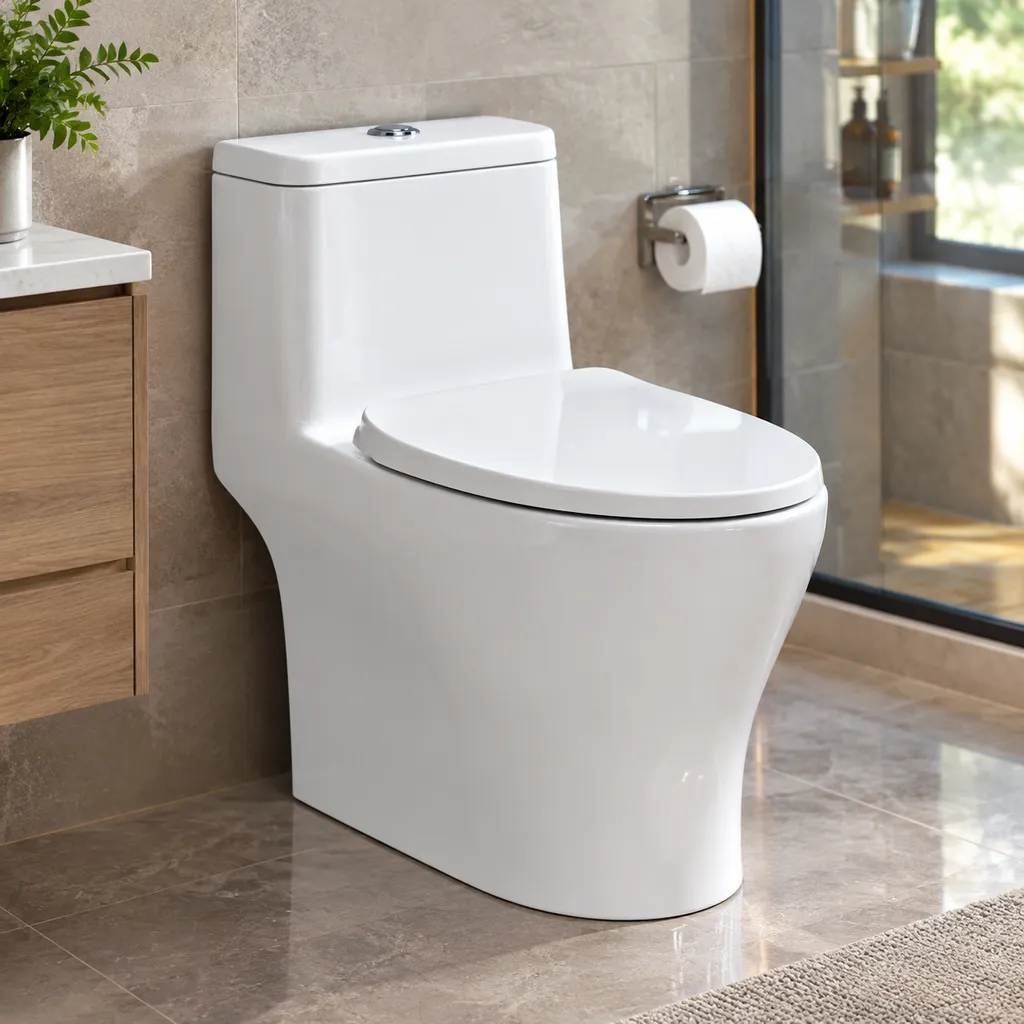
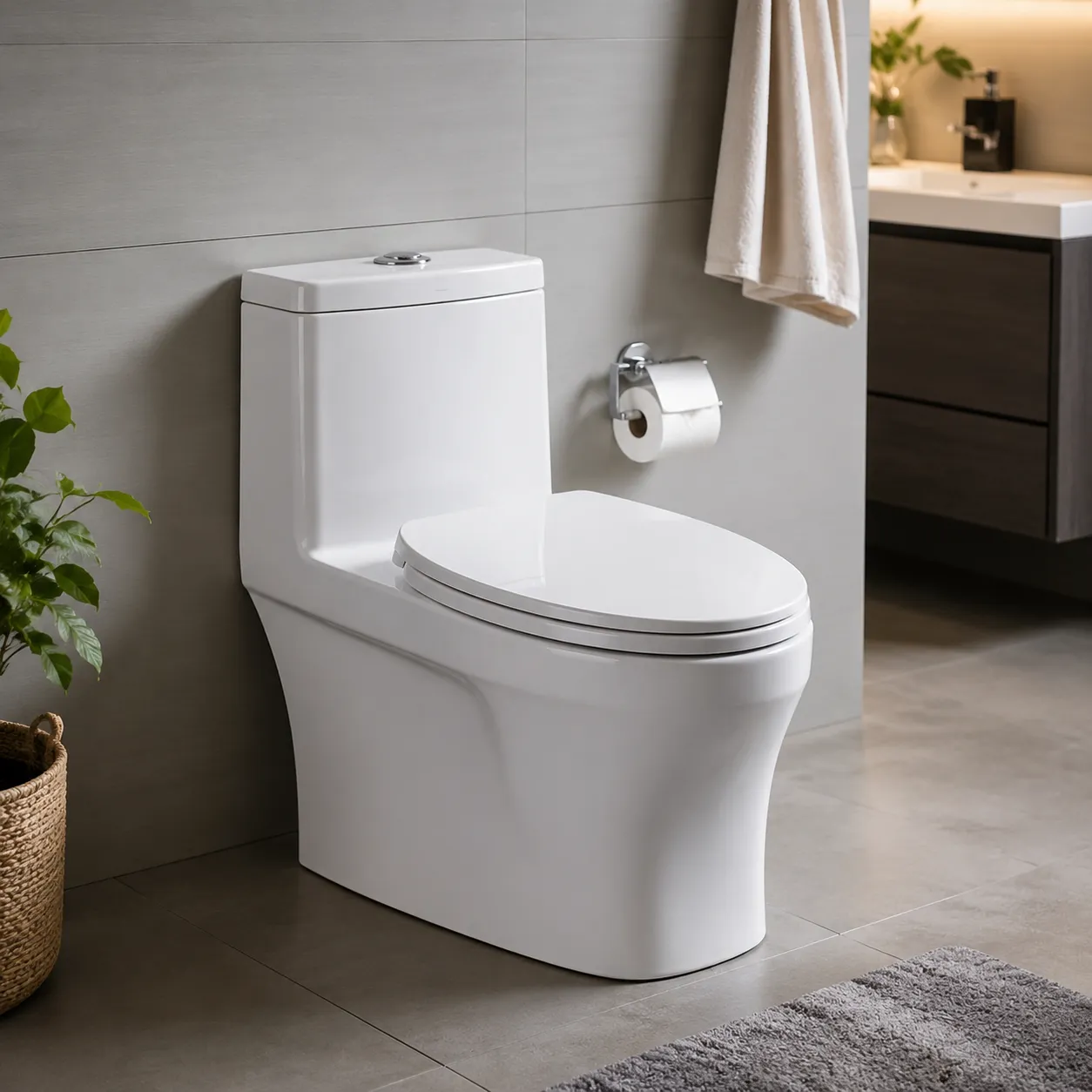
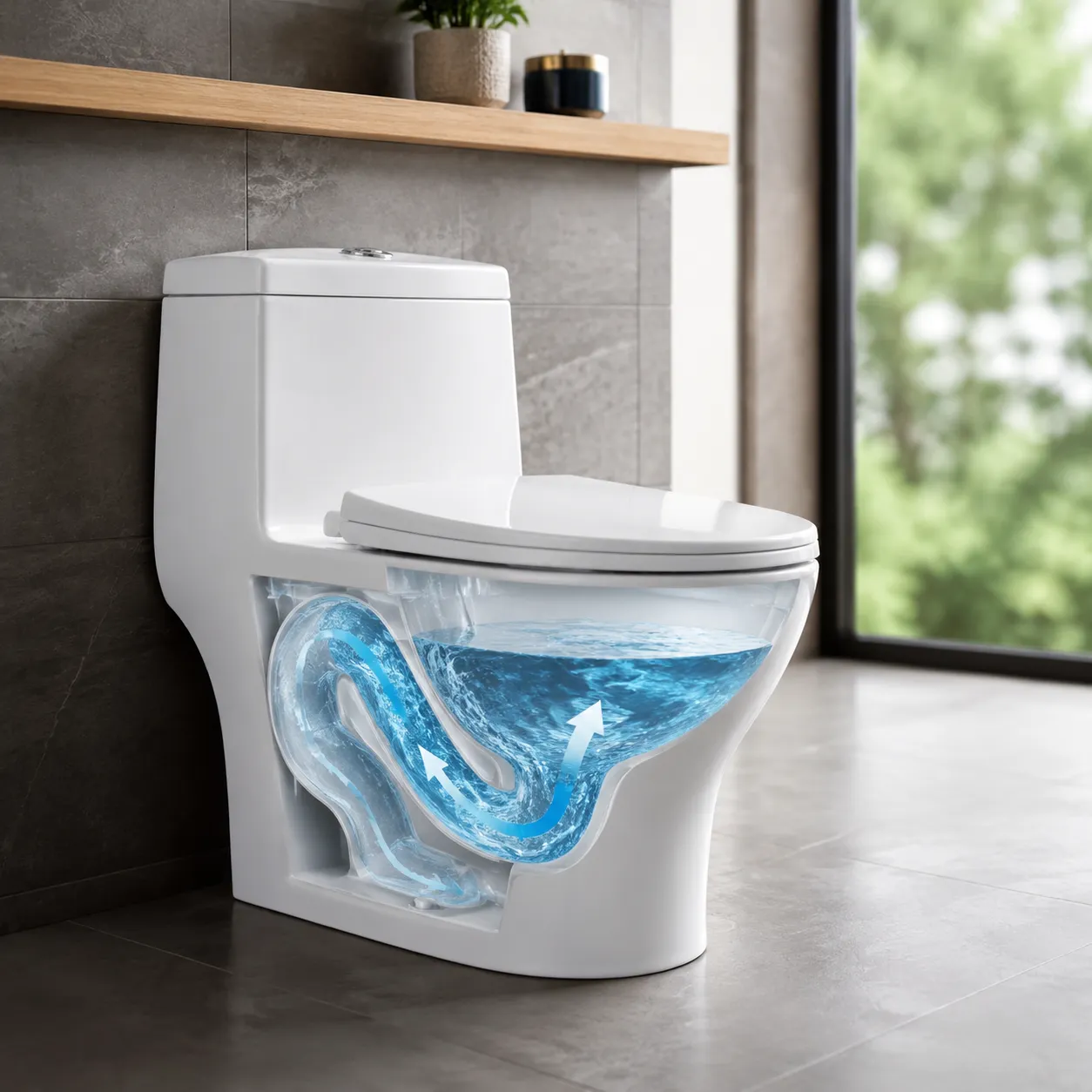
We design fixtures that blend high efficiency with smart engineering. A one piece siphonic dual flush toilet combines a vacuum-assisted flush with customized water control inside a seamless porcelain body. Understanding how these mechanics work together shows why this setup leads modern bathroom standards.
Siphonic Flushing System Explained
Unlike basic washdown units, our siphonic flushing system relies on fluid dynamics and gravity to evacuate the bowl cleanly:
- Water Surge: Pressing the activator releases water rapidly into the bowl through the rim and jet hole.
- Siphon Activation: Water fills the trapway completely, forming a powerful vacuum suction.
- Quiet Pull: The strong siphon action pulls bowl contents down the waste pipe with minimal splashing.
- Refill Phase: A quiet flush toilet mechanism swiftly restores the water seal level without noisy tank turbulence.
Dual Flush Technology: Partial vs. Full Flush
We built a top-mounted dual flush toilet button directly into the tank lid to maximize water efficiency. This dual-valve system provides two dedicated flushing options:
- Partial Flush (0.8–1.0 GPF): Optimized specifically for liquid waste, saving thousands of gallons of water annually.
- Full Flush (1.28–1.6 GPF): Releases a complete tank charge to clear solid waste using an enhanced gravity flush system.
Key Benefits of Upgrading to a One Piece Siphonic Dual Flush Toilet
We engineered our one piece siphonic dual flush toilet to eliminate common bathroom frustrations—high water bills, noisy operation, and stubborn grime traps. Upgrading your bathroom fixture delivers immediate real-world value across efficiency, maintenance, and style.
Maximum Water Savings and Lower Utility Bills
By incorporating an eco-friendly dual flush valve, we give you complete control over your daily water consumption. You no longer need to waste gallons per flush for light use.
- Partial Flush (0.8 GPF): Designed for liquid waste, cutting daily water usage dramatically.
- Full Flush (1.28 GPF): Delivers maximum flushing power for solid waste while meeting strict efficiency standards.
- Lower Bills: Saves thousands of gallons per household every year, directly reducing your monthly utility costs.
Upgrade Comparison Overview
| Feature | Standard Two-Piece Toilet | Our One Piece Siphonic Dual Flush Toilet |
|---|---|---|
| Water Consumption | 1.6 to 3.5 GPF | 0.8 / 1.28 GPF dual flush technology |
| Cleaning Effort | High (grime builds up in gaps) | Minimal (smooth, seamless surface) |
| Flush Noise Level | Loud splash and refill noise | Quiet flush toilet mechanism |
| Trapway Style | Exposed, hard-to-reach contours | Skirted trapway design for fast wiping |
Seamless Construction for Effortless Cleaning
Traditional toilets feature a seam between the tank and bowl that collects dust, bacteria, and grime. Our single-piece vitreous china toilet removes that gap completely. Combined with a fully skirted trapway, maintaining a spotless bathroom requires nothing more than a quick wipe down.
Quiet Yet High Performance Flushing Action
Standard washdown units can be loud and prone to splashing. Our advanced siphonic flushing system creates a powerful siphon pull inside the bowl. It pulls waste down quickly and cleanly on the first try while keeping operation remarkably quiet.
Modern Aesthetic and Space-Saving Design
A bulky fixture can make a bathroom feel cramped. The integrated profile of our one piece siphonic dual flush toilet opens up visual floor space, giving your modern or transitional bathroom a clean, high-end look.
Crucial Features Before Buying a One Piece Siphonic Dual Flush Toilet
Choosing the right one piece siphonic dual flush toilet comes down to five critical performance specifications. We recommend measuring your bathroom setup carefully and prioritizing these features to get the best performance for your space.
Rough-In Dimensions
The rough-in measurement is the distance from the finished wall to the center of the floor drain bolts.
- 12-Inch Rough-In Toilet: The standard measurement for 90% of residential bathrooms.
- 10-Inch or 14-Inch Rough-In: Found mostly in older homes or specialized bathroom layouts.
Bowl Shape Selection
- Elongated One Piece Toilet: Extends further forward to provide extra thigh support and maximum comfort for everyday use.
- Compact Round Bowl: Features a shorter profile that saves valuable floor space in small powder rooms or tight layouts.
Seat Height Options
- Standard Height (14 to 15 inches): Ideal for children or lower-profile preferences.
- ADA Comfort Height Commode (16.5 to 19 inches): Sits at chair height, making sitting and standing noticeably easier. Pairing this with an ADA compliant toilet seat improves accessibility for adults and seniors alike.
Water Consumption Rates
Dual flush valves offer two distinct settings to optimize daily water usage:
- Partial Flush (0.8 to 0.9 GPF): Designed for liquid waste to minimize unnecessary water usage.
- Full Flush (1.28 to 1.6 GPF): Delivers full siphonic power for solid waste.
- Choosing a water-saving toilet 1.28 GPF model drastically cuts annual utility bills while maintaining strong flush velocity.
Trapway Size and Glazing
A smooth fully glazed trapway eliminates rough porcelain surfaces where debris normally collects. Combined with an oversized 2-inch to 2-1/8-inch wide trapway, this feature builds a clog-resistant toilet bowl that clears waste smoothly without constant plunging.
Key Feature Overview
| Feature | Standard Option | Primary Benefit |
|---|---|---|
| Rough-In | 12-Inch Standard | Matches most home plumbing connections |
| Bowl Shape | Elongated | Superior ergonomic support and everyday comfort |
| Height | Comfort Height (ADA) | Easy sitting and standing for all household members |
| Water Usage | 0.8 / 1.28 GPF Dual | High-efficiency performance with lower water bills |
| Trapway | 2"+ Fully Glazed | Clog-free waste clearance and easier maintenance |
Routine Cleaning and Preventive Care Tips
Keep your unit operating smoothly and looking fresh with minimal effort:
- Clean with non-abrasive sprays: Protect the smooth surface and fully glazed trapway using soft sponges and mild soaps.
- Wipe down top flush buttons: Keep mineral buildup from sticking around the push-button mechanism.
- Check interior seals periodically: Inspect the flush valve washer annually to stop minor leaks before they start.
Troubleshooting Your One Piece Siphonic Dual Flush Toilet
Even high-performance fixtures require occasional fine-tuning. We built our one piece siphonic dual flush toilet models for long-term durability, but routine wear, mineral buildup, or simple tension misalignments can cause minor operational issues. You can resolve most common problems quickly using a few basic tools.
Fixing a Running Dual Flush Toilet Button
A toilet that runs continuously wastes water and usually points to a misadjusted dual flush toilet button or debris inside the eco-friendly dual flush valve.
- Adjust Push Rod Tension: Lift the tank lid and check the twin plastic push rods attached to the button assembly. If the rods are threaded too far down, they exert constant pressure on the flush valve beneath. Back them off slightly until you leave a 1 to 2 mm gap above the valve actuators.
- Inspect and Clean the Silicone Seal: Hard water minerals can coat the flush valve washer, preventing a complete seal. Turn off the water supply, twist the central valve tower counterclockwise to remove it, and wipe down the silicone seal with a soft cloth and warm water.
- Lower Tank Water Level: If water constantly drains into the overflow tube, your fill valve height is set too high. Turn the float adjustment screw counterclockwise to lower the water line to roughly 0.5 inches below the overflow pipe rim.
Resolving Weak Siphonic Flush Pull
A strong siphonic flushing system depends on precise water volume and rapid discharge to create a proper vacuum draw. If your flush feels sluggish, inspect these primary culprits:
- Verify Water Volume: Siphonic action fails if the tank lacks sufficient water depth. Ensure the water level reaches the fill line marked inside the tank wall.
- Clear Siphon Jet and Rim Holes: Mineral scale can clog the small rim holes or the primary siphon jet hole located at the bottom of the bowl. Pour white vinegar into the overflow pipe, let it sit for two hours, and clean the openings with a small nylon brush.
- Check Button Travel: Make sure the button rod fully depresses the flush mechanism. Short rod lengths cause partial valve opening, releasing too little water to trigger a complete siphon pull.
Unclogging a Skirted Trapway Design
The smooth exterior of a skirted trapway design offers clean lines, but its concealed structural shape requires proper technique when clearing stubborn blockages without damaging the fully glazed trapway.
- Deploy a Flange Plunger: Avoid flat rubber sink plungers. Use a heavy-duty flange or accordion plunger designed specifically for elongated bowl contours to create a tight seal.
- Apply Dish Soap and Hot Water: Pour 0.25 cups of liquid dish soap into the bowl and let it sit for 10 minutes. Follow up with a bucket of hot tap water (never boiling water, which can crack vitreous china) poured from waist height to break down waste naturally.
- Use a Protected Closet Auger: If plunging fails, feed a closet auger into the trapway. Ensure the auger features a rubber protective sleeve over the metal coil so you do not scratch or mar the glazed ceramic finish inside the bend.
Frequently Asked Questions About Siphonic Dual Flush Toilets
We answered the most common questions our customers ask before upgrading to a one piece siphonic dual flush toilet.
What is the difference between siphonic and washdown toilets?
The main difference lies in how waste clears the bowl. A siphonic flushing system relies on a powerful siphon action created by a fully glazed trapway to pull waste downward quietly with minimal splashing. A washdown toilet uses pure gravity force to push waste out through a larger trap opening.
| Feature | Siphonic Toilet | Washdown Toilet |
|---|---|---|
| Flushing Action | Vacuum pull effect | Gravity pushing force |
| Water Level in Bowl | Higher surface area | Smaller water spot |
| Noise Level | Quiet flush toilet mechanism | Loud water drop |
| Bowl Cleanliness | Superior rinse, clog-resistant toilet bowl | Higher risk of skid marks |
How much water does a dual flush toilet save annually?
By switching from an older standard model to an eco-friendly dual flush valve setup, a family of four saves between 4,000 and 10,000 gallons of water each year. Utilizing a water-saving toilet 1.28 GPF full flush alongside a light 0.8 GPF option significantly lowers household utility bills while maintaining high performance.
Are one-piece toilets harder to install than two-piece toilets?
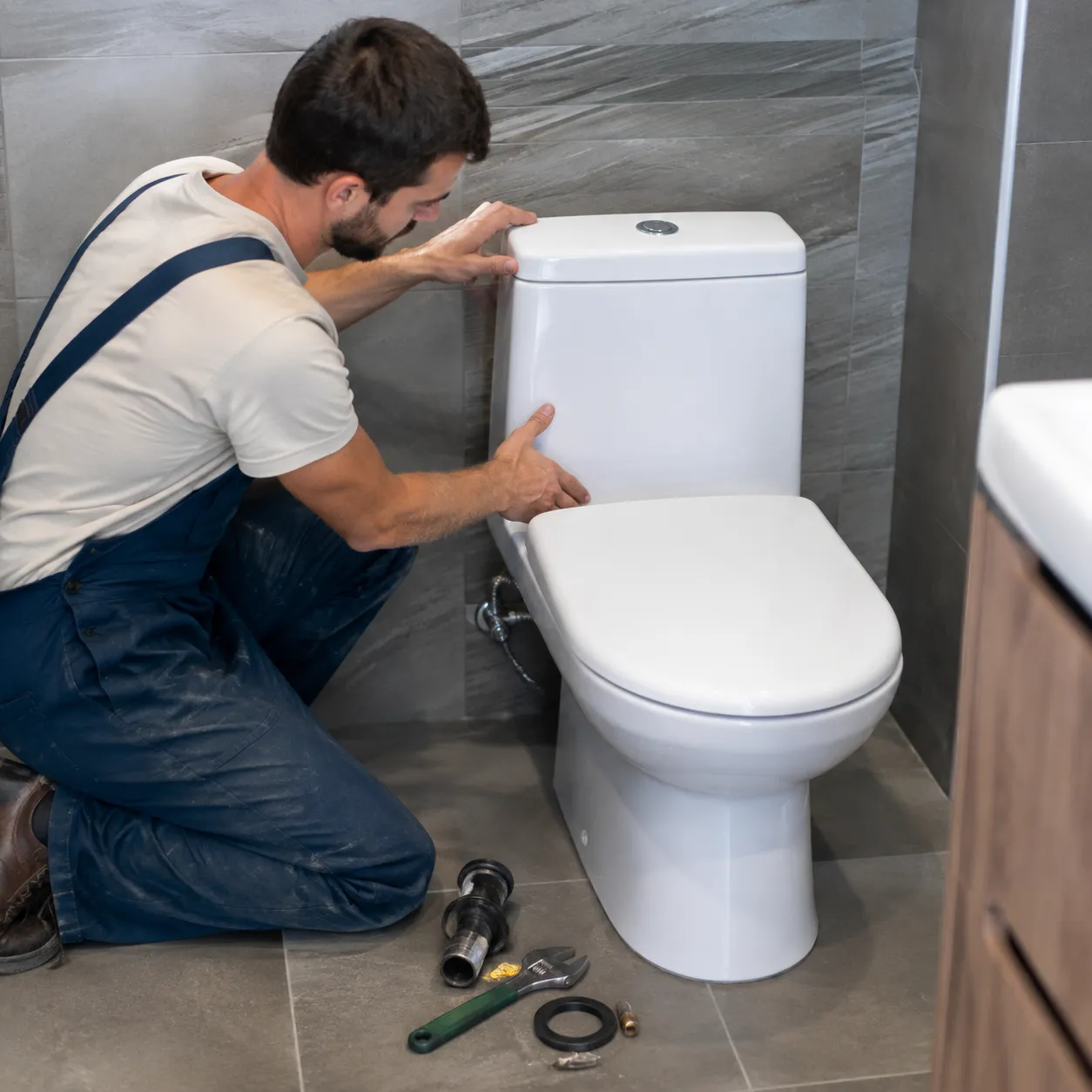
Yes and no. A solid vitreous china toilet cast in a single piece is heavier, so lifting an elongated one piece toilet into place usually requires two people. However, installation is actually simpler because:
- Zero Tank Assembly: You do not need to bolt the tank to the bowl or worry about rubber washer leaks.
- Cleaner Lines: A skirted trapway design sits flat against your wall and bolts easily onto a standard 12-inch rough-in toilet flange.
How do I adjust the water level in a dual flush toilet tank?
Adjusting the water level takes less than five minutes:
- Remove the tank lid carefully to avoid damaging the top dual flush toilet button assembly.
- Locate the fill valve rod inside the tank.
- Turn the adjustment screw clockwise to raise the water line, or counter-clockwise to lower it.
- Test the flush to ensure the water level rests about 1/2 inch below the top of the overflow tube.