What Is a Washdown Toilet?
A washdown toilet is a highly efficient plumbing fixture designed to clear waste using the momentum and weight of discharging water. Widely utilized across global markets, this system relies on a direct pushing action rather than suction to clear the bowl rapidly and effectively.
How the Washdown Flushing Mechanism Works
The flushing mechanism operates through simple, reliable physics:
- Gravity-Driven Flow: Water releases rapidly from the tank or concealed cistern directly into the bowl.
- Direct Force: The weight of the water uses gravitational force to push waste straight through the outlet.
- Instant Discharge: The waste clears immediately without waiting for a vacuum or siphon action to build up.
Key Design Features: Trapway and Water Surface Area
Key anatomical features set washdown toilets apart from conventional alternatives:
- Wide Trapway: Features an oversized diameter (often 2 to 3.5 inches) with fewer bends, virtually eliminating blockages.
- Short Waste Path: The direct route to the soil pipe allows bulk waste to pass effortlessly.
- Compact Water Surface Area: Maintains a smaller standing water pool inside the bowl, concentrating the water force directly beneath the rim for maximum cleaning energy.
Gravity Push vs. Siphon Pull Systems
The foundational difference between a washdown system and a traditional siphonic toilet comes down to pushing versus pulling forces:
| Feature | Washdown Toilet (Gravity Push) | Siphonic Toilet (Siphon Pull) |
|---|---|---|
| Primary Mechanism | Heavy pushing action via water weight | Vacuum suction pulling waste through the trapway |
| Trapway Design | Wide, short, and direct | Narrower, longer, with an S-shaped bend |
| Clog Resistance | Superior; handles solid waste easily | Moderate; higher risk of blockages |
| Water Surface Area | Smaller water pool | Larger, deeper water seal |
| Water Conservation | Highly efficient; lower volume per flush | Uses higher water volume to initiate siphon |
Pros and Cons of Washdown Toilets
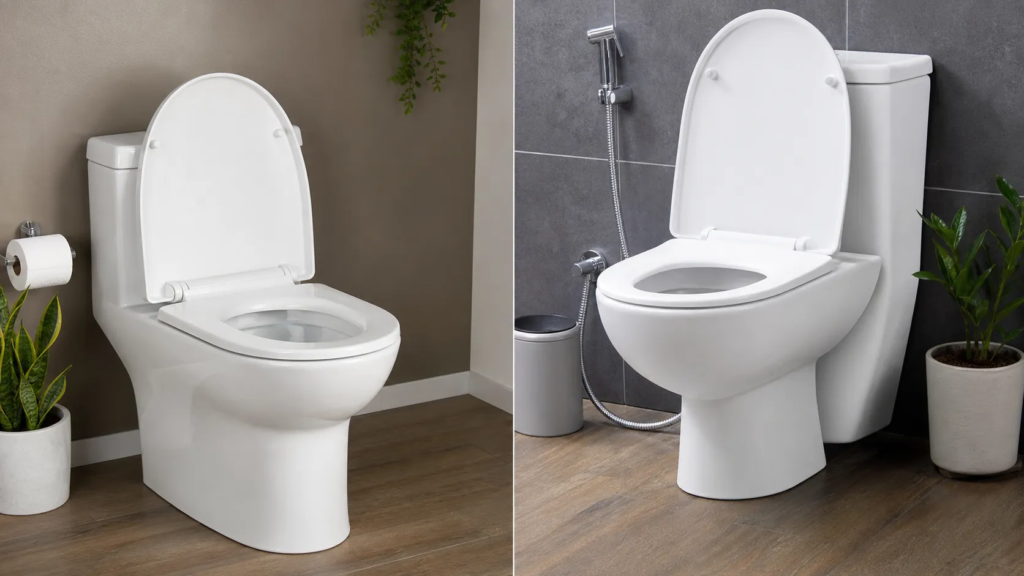
We evaluate bathroom fixtures based on long-term performance, and the washdown toilet consistently stands out for its sheer mechanical efficiency. Understanding its strengths and trade-offs makes it easy to decide if it is the right fit for your home or project.
Key Benefits: Water Savings and High Clog Resistance
The core advantages of a washdown toilet come down to simple physics and smart engineering:
- Maximum Clog Resistance: Designed with a wide, steep trapway (typically 3 to 4 inches in diameter), solid waste passes through effortlessly.
- Powerful Pushing Action: Instead of pulling waste down, the flush relies on direct gravitational force and a heavy pushing action from water rushing from the tank.
- Lower Water Consumption: Because gravity does the heavy lifting, these units use significantly less water per flush than a traditional siphonic toilet, lowering monthly utility bills.
Hygiene and Maintenance Advantages
A washdown toilet simplifies daily bathroom maintenance while maintaining high sanitation standards.
| Feature | Operational Advantage |
|---|---|
| Wide Trapway | Virtually eliminates pipe blockages and plunger use. |
| Direct Water Flow | Sweeps waste away instantly in a single flush. |
| Simple Flush Valves | Fewer mechanical parts mean less wear and lower repair costs. |
Potential Drawbacks: Noise Levels and Odor Control
While durable and efficient, the design brings a few specific trade-offs:
- Flush Noise: The sudden release of water creates a short, noticeable rushing sound compared to quieter siphon systems.
- Smaller Water Spot: A smaller standing water surface area leaves more dry ceramic exposed, which can occasionally require more frequent bowl brushing.
- Odor Management: Less standing water means waste isn't immediately submerged, making quick flushing essential for odor control.
Types of Washdown Toilets
When selecting a washdown toilet for your project or home, choosing the right configuration depends on your space, plumbing setup, and cleaning preferences. We design and offer three main types to suit different bathroom layouts and functional needs.
Wall-Mounted Washdown Toilets
Wall-mounted models offer a sleek, modern look while maximizing floor space.
- Concealed Cistern Integration: The water tank is hidden inside the wall frame, creating a clean, minimalist aesthetic.
- Easy Maintenance: Lifting the toilet off the floor makes sweeping and mopping underneath effortless.
- Flexible Mounting Heights: Can be adjusted during installation for tailored ergonomics.
Floor-Standing Washdown Toilets
Floor-standing models remain the most versatile and direct choice for traditional and modern bathrooms alike.
- High Stability: Mounts securely to the bathroom floor for heavy-duty, long-term durability.
- Standard Plumbing Setup: Fits easily into standard rough-in dimensions without requiring wall alterations.
- Straightforward Servicing: The cistern is readily accessible, making routine maintenance quick and simple.
Rimless Washdown Toilets
Rimless designs re-engineer the bowl interior to deliver optimal hygiene and efficient flushing performance.
- Zero Hidden Spots: Removes the traditional inner rim where limescale, germs, and dirt usually accumulate.
- Direct Pushing Action: Directs water smoothly along the entire inner surface for complete coverage with every flush.
- Effortless Cleaning: Requires significantly less effort and harsh chemical cleaners to stay spotless.
Washdown Toilet vs. Siphonic Toilet: Key Differences
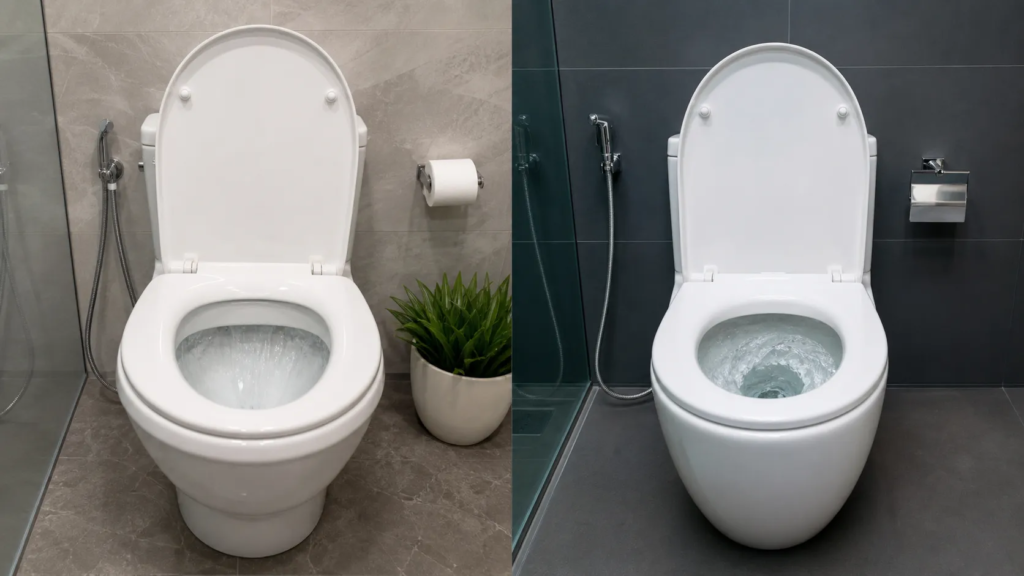
When selecting bathroom fixtures, I often compare a washdown toilet to a siphonic toilet. While both serve the same core purpose, their flushing mechanics, bowl designs, and overall performances differ significantly.
| Feature | Washdown Toilet | Siphonic Toilet |
|---|---|---|
| Flushing Action | Direct pushing action via gravitational force | Vacuum suction (siphon pull) |
| Trapway Size | Wide and short (approx. 3–4 inches) | Narrow and long (approx. 2 inches) |
| Clog Resistance | High | Moderate |
| Water Usage | Lower (highly efficient) | Higher |
| Noise Level | Audible, quick flush | Quiet flush |
Flushing Principle and Performance Comparison
A washdown toilet relies on direct gravitational force to clear waste. Water flows rapidly from the tank, creating a powerful pushing action that drives contents straight down the drain. Conversely, a siphonic toilet fills the bowl first to create a vacuum suction, pulling waste through an S-shaped trapway.
Water Efficiency and Water Consumption
Because a washdown toilet doesn't need to fill the bowl to trigger a suction mechanism, it requires significantly less water per flush. In my experience with global sanitation standards, washdown designs perform seamlessly with dual-flush systems, making them an ideal choice for conserving water without sacrificing flush performance.
Trapway Size and Clogging Risk
The trapway design is where the washdown toilet truly shines. It features a wide, short, and direct trapway—often up to twice the diameter of a siphonic trapway. This wide pathway practically eliminates clogging risks and easily handles bulk waste without needing a plunger.
Noise Levels and Odor Prevention
Siphonic toilets operate quietly and hold a larger water surface area in the bowl, which traps odors effectively. Washdown models feature a smaller standing water surface and a slightly louder, faster flush. However, their rapid bowl-clearing power ensures high hygiene and easy long-term maintenance.
Modern Features and Technologies in Washdown Toilets
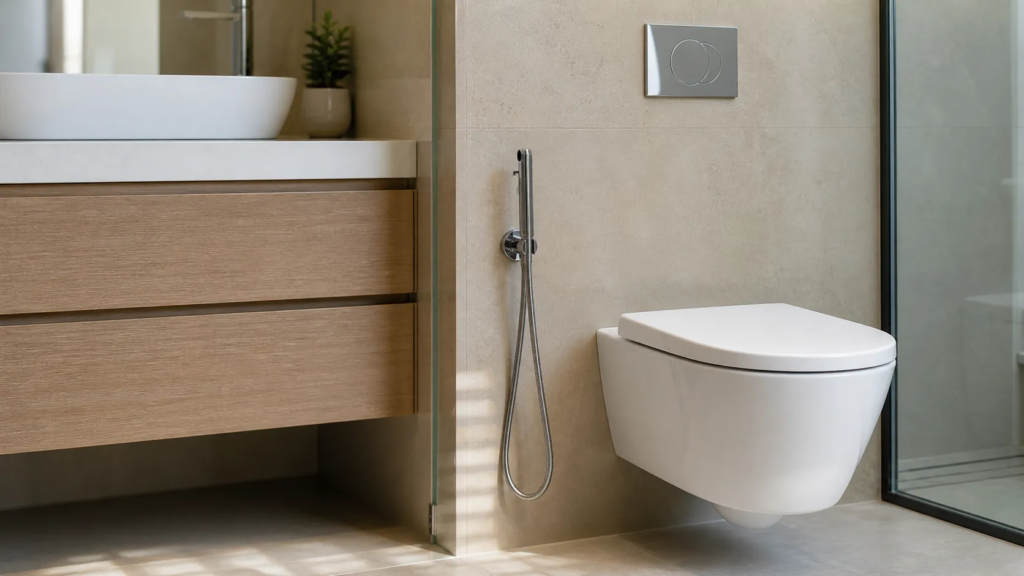
We engineer modern washdown toilet systems to combine reliable flushing power with clean, minimal aesthetics. Today's models bring practical engineering into your bathroom to maximize hygiene and space.
Rimless Flushing Systems for Superior Hygiene
Traditional rims trap limescale, dirt, and bacteria in hard-to-reach grooves. Modern rimless engineering eliminates these hidden spots completely:
- Direct Water Flow: Water shoots horizontally along the upper inner edge, generating a fast pushing action.
- Wipe-Clean Surfaces: Without a rim box, you can clean the entire inner bowl with a single wipe.
- Complete Wash Coverage: Every flush rinses the full bowl surface, preventing waste buildup.
Dual-Flush Mechanisms for Water Conservation
Water efficiency is built into our core designs. By leveraging natural gravitational force, modern dual-flush systems clear waste thoroughly while using significantly less water than traditional setups.
| Flush Mode | Avg. Consumption | Best For | Water Saving Impact |
|---|---|---|---|
| Partial Flush | 3.0 L (0.8 Gal) | Liquid waste | Cuts daily water usage by up to 50% |
| Full Flush | 4.5 L (1.2 Gal) | Solid waste | Delivers maximum waste removal in one flush |
Compact and Ergonomic Bowl Designs
Modern floor plans require smart, space-efficient fixtures. Our bowl profiles deliver maximum comfort while keeping the overall footprint compact.
- Short Projection Bowls: Saved floor depth makes compact bathrooms feel twice as large.
- Concealed Cistern Integration: Hiding the water tank behind the wall creates a sleek look and muffles flush sounds.
- Ergonomic Seating: Carefully contoured rim profiles support comfortable, natural posture.
How to Choose the Right Washdown Toilet for Your Bathroom
Picking the right washdown toilet comes down to balancing your space layout, existing plumbing setup, and long-term functional needs. We recommend evaluating a few key factors before making a purchase.
Bathroom Space and Mounting Options
Your bathroom floor plan determines the type of toilet installation that works best:
- Wall-Mounted Washdown Toilet: Perfect for compact or modern bathrooms. It pairs with a concealed cistern inside the wall, freeing up floor space and making floor cleaning effortless.
- Floor-Standing Washdown Toilet: A classic, sturdy choice. It mounts directly to the floor, offering straightforward installation and reliable stability for standard bathroom layouts.
Plumbing Compatibility and Rough-In Dimensions
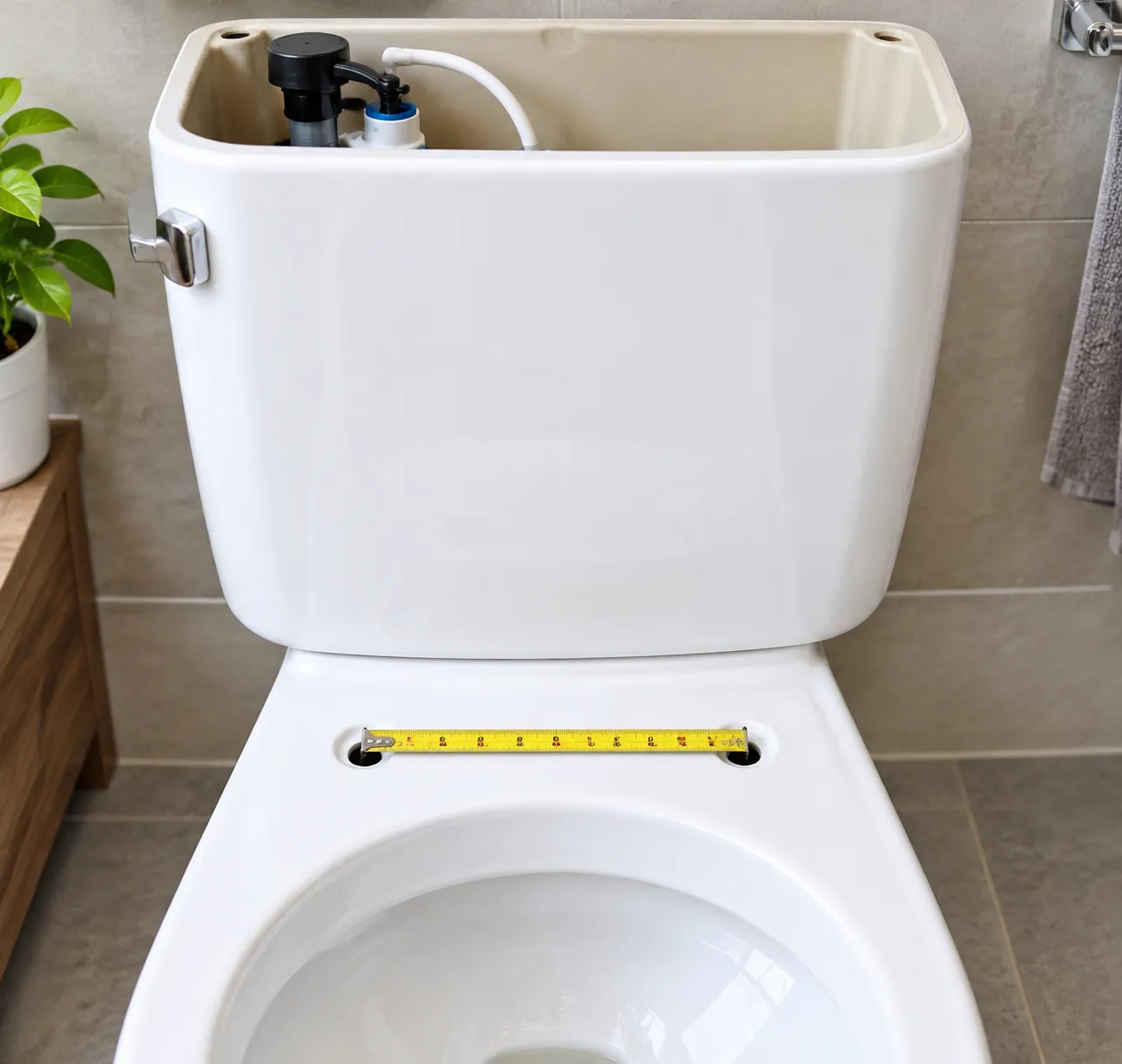
Before buying, measure your plumbing dimensions to ensure a seamless fit.
| Plumbing Type | Drain Outlet Location | Typical Rough-In Distance | Best For |
|---|---|---|---|
| S-Trap | Floor Drain | 200 mm – 300 mm (8" – 12") | Standard ground-floor or direct-floor plumbing |
| P-Trap | Wall Outlet | 180 mm (7") | Wall-exit drainage systems common in modern builds |
Pro Tip: Always measure from the finished wall surface (not the baseboard) to the center of the drain pipe to get an accurate rough-in size.
Key Specifications and Features to Look For
To maximize performance, hygiene, and efficiency, look for these essential design features:
- Rimless Flush Technology: Eliminates hidden bowl rims where bacteria hide, allowing water to sweep the inner bowl cleanly.
- Dual-Flush Mechanism: Saves water by offering a full flush for solids and a reduced flush for liquids, lowering overall water consumption.
- Wide Glazed Trapway: A larger, fully glazed trapway uses strong gravitational force and a fast pushing action to drive waste out without clogging, unlike the narrower channels in a typical siphonic toilet.
- Soft-Close Seat: Prevents sudden slamming, reducing noise and extending the life of the seat and ceramic bowl.