Can Smart Toilets Flush Without Power? (Quick Answer)
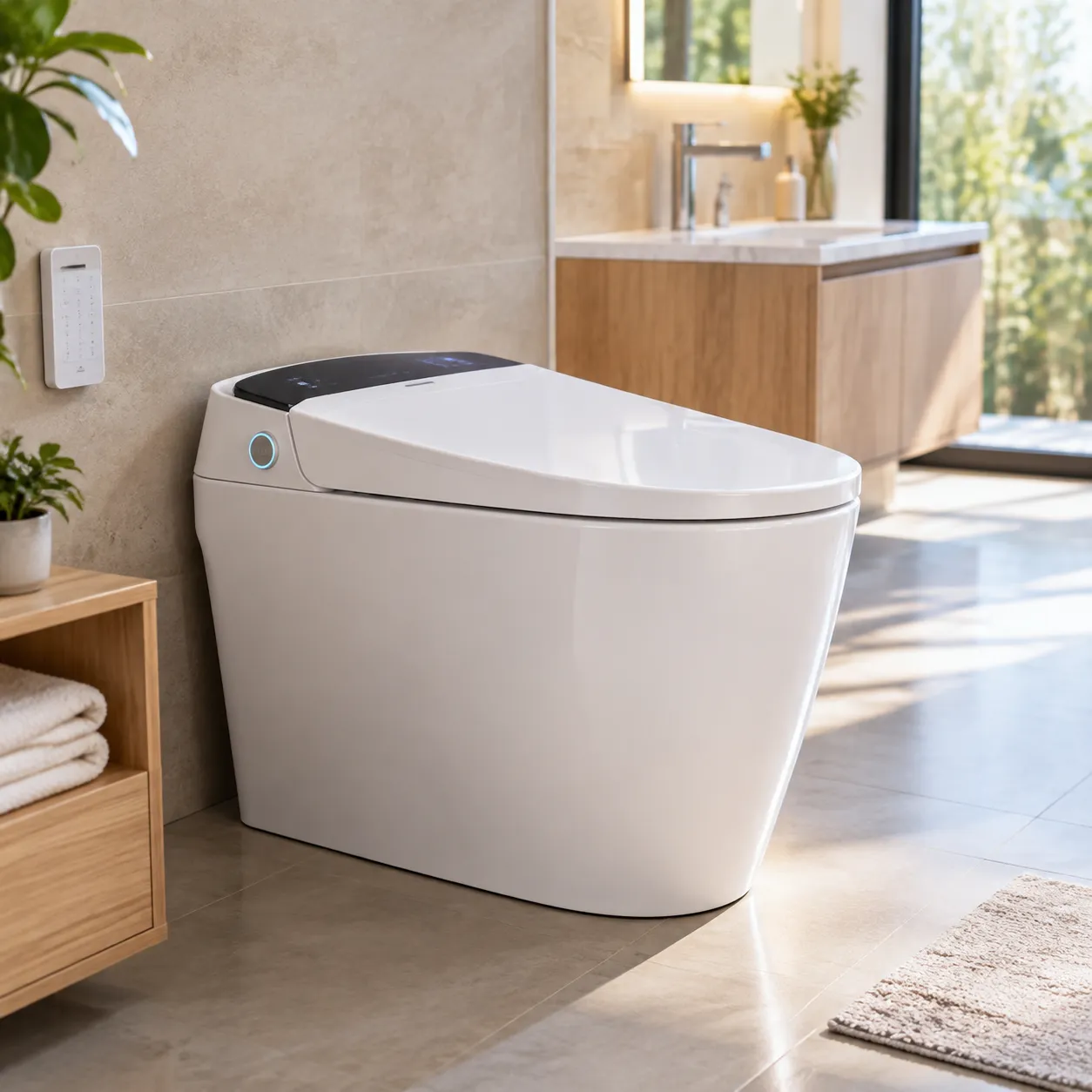
Yes, smart toilets can flush without electrical power. Most modern units are engineered with emergency protocols specifically designed for blackouts, ensuring your bathroom remains fully functional when the power goes out.
The ability to flush depends on the model's design. Smart toilets generally rely on one of two primary emergency mechanisms:
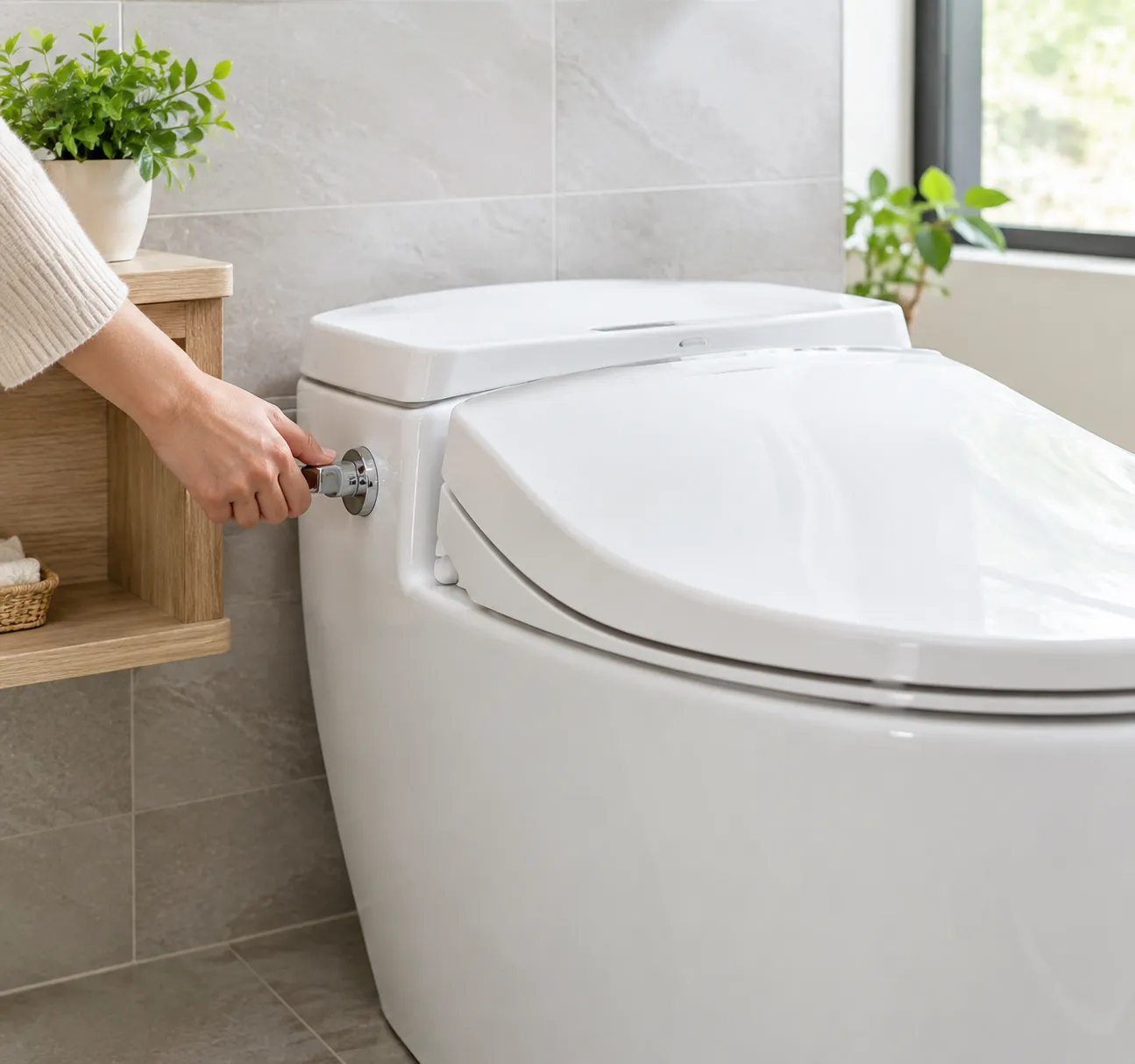
- Manual Mechanical Override: A concealed manual flush lever, side push-button, or pull cord that operates the flush valve without electricity.
- Emergency Battery Backup: Built-in or external battery power (often using standard 9V or AA batteries) to trigger the electronic valve and cycle the flush mechanism.
Even tankless and fully integrated electronic units ensure essential waste disposal remains operational during unexpected grid failures.
Which Features Work and Stop Working During an Outage
During an electrical outage, a smart toilet shifts from a luxury fixture to basic sanitary operation. High-voltage and motor-driven features shut down, while mechanical and low-voltage emergency functions stay accessible.
| Feature Category | Operational Status | Operating Mechanism |
|---|---|---|
| Basic Flushing | Active | Manual override button, side lever, or battery backup |
| Bidet Cleansing & Spray | Disabled | Requires electric pump and digital pressure control |
| Heated Seat | Disabled | Requires continuous high-voltage power supply |
| Warm Air Dryer | Disabled | Requires electric heating element and blower fan |
| Automatic Lid Open/Close | Disabled | Requires electric sensor and motor (operates manually) |
| Nightlight & UV Sanitization | Disabled | Requires active power line feed |
| Remote Control & App Sync | Disabled | Wireless receiver modules power off |
Power Outage vs. Water Supply Outage Differences
Understanding the difference between an electrical blackout and a municipal water interruption determines how your smart toilet performs:
- Electrical Power Outage (Water Line Active): The home has water pressure, but no electricity. The smart toilet flushes normally via its manual flush lever or emergency battery backup system. The water line automatically refills the bowl after each flush.
- Water Supply Outage (Electricity Active): The home has electrical power, but no incoming water. Electronic displays, seat heating, and sensors remain active, but the automatic bidet and flush cycles cannot draw water from the supply line.
- Combined Power and Water Outage: Neither electricity nor pressurized water is available. The toilet can only clear waste using a manual gravity pour (bucket flush) directly into the bowl to trigger the trapway siphon.
How Different Smart Toilet Flushing Mechanisms Work
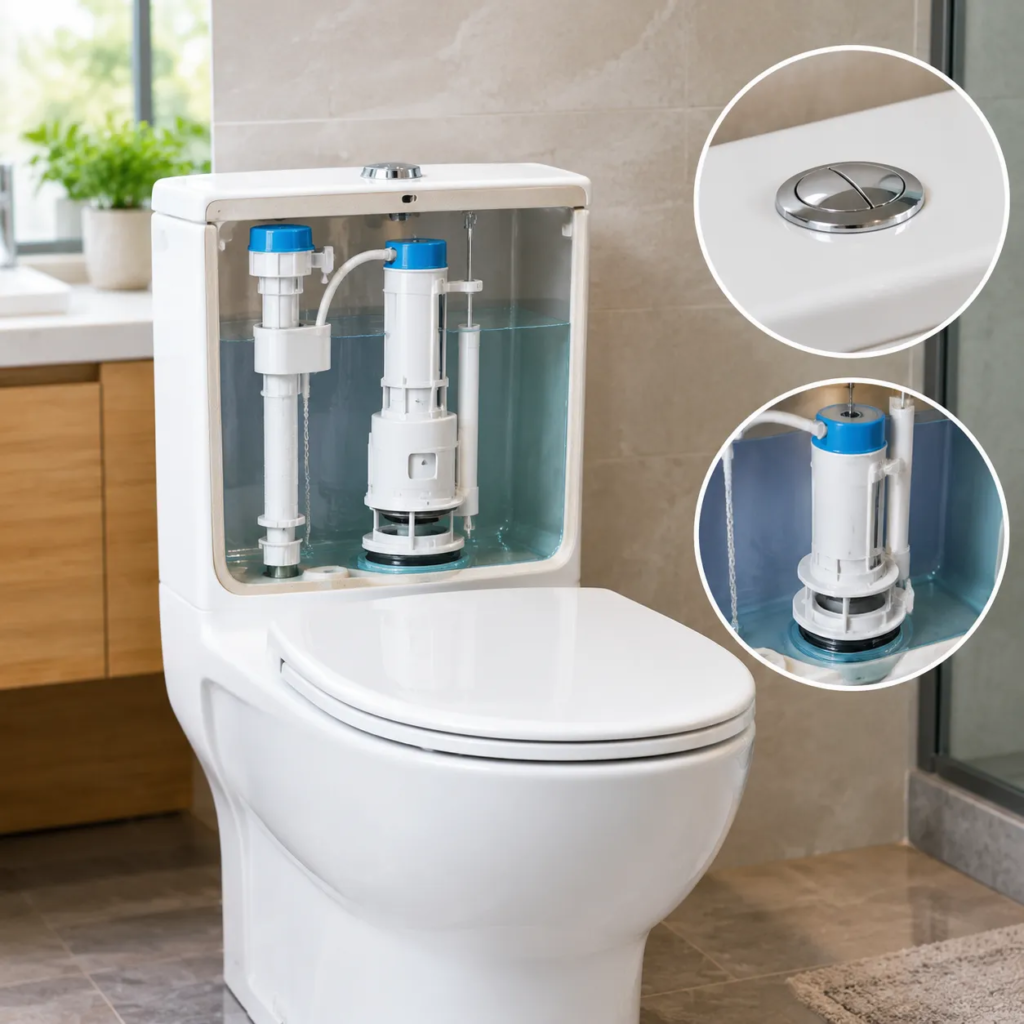
Understanding how your fixture handles water flow is the key to knowing whether a smart toilet can flush without power. Different models rely on distinct internal plumbing and actuation hardware, ranging from standard mechanical valves to fully computerized flow systems.
| Flush System Type | Primary Power Dependency | Outage Operation Method |
|---|---|---|
| Traditional Gravity | Non-electric (Mechanical) | Standard manual flush lever or mechanical side push |
| Tankless & Pressure-Assisted | Electric pump / Solenoid | Emergency battery backup or manual bypass button |
| Electronic Sensor & Valve | Direct AC line power | Battery power slot or mechanical override cable |
Traditional Gravity Flush Systems
Some smart units incorporate a hidden or low-profile gravity tank.
- How it works: Water fills a dedicated reservoir, using gravitational force to clear the bowl when triggered.
- Outage behavior: The flapper or discharge seal connects directly to a physical manual flush lever or cable. Because gravity does the heavy lifting, these units flush normally even during a total power outage, requiring zero electricity to evacuate waste.
Pressure-Assisted and Tankless Systems
Direct-connect and tankless smart toilets eliminate the bulky water cistern for a streamlined profile, relying instead on municipal line pressure and internal booster pumps.
- How it works: Instead of relying on a standing reservoir, an internal pressure chamber or pump injects high-velocity water into the rim and siphon jet.
- Outage behavior: When the power cuts out, motorized pumps cannot run on standard AC current. These models depend either on a secondary mechanical relief switch or a dedicated battery backup to trigger the release cycle using available line pressure.
Electronic Valves and Sensor Controls
High-end integrated smart fixtures replace physical linkages with motorized components and automated sensors.
- How it works: An electronic valve (solenoid) opens and closes based on signals from radar motion sensors, foot-kick switches, or wireless remotes.
- Outage behavior: In default operation, a loss of electricity leaves the electronic valve locked shut. To restore flushing capability, the system requires auxiliary battery power (such as a 9V clip or rechargeable lithium pack) or an integrated manual override release hidden on the side of the ceramic base.
How to Flush a Smart Toilet During a Power Outage
When a blackout hits, you can still flush a smart toilet using several straightforward emergency methods. Modern smart toilet designs account for electrical grid failures, ensuring essential sanitation stays fully functional through mechanical overrides, auxiliary power sources, or basic gravity physics.
Using the Built-In Manual Override Flush Button
Most smart toilets feature a non-electric manual override to bypass the main electrical valve system during a power outage:
- Locate the manual switch: Find the physical mechanical button, side knob, or concealed pull cord typically placed on the lower side of the base or beneath a discreet maintenance panel.
- Engage the mechanism: Press and hold the manual flush lever or button for 2 to 3 seconds.
- Mechanical release: This action mechanically opens the flush valve to release water through the siphon jet without relying on AC electrical power.
Utilizing Battery Backup Systems
Many integrated smart toilets come equipped with an emergency battery backup module designed to keep electronic flush valves working seamlessly:
- Battery compartments: These units feature a dedicated slot for a standard 9V battery or a pre-installed rechargeable emergency battery pack.
- Emergency battery power: Once installed or switched on, the battery supplies enough DC voltage to trigger the electronic flush cycle with the push of a button.
- Operational reliability: A fresh battery backup typically delivers multiple flushes over several days of an extended outage, maintaining normal flushing performance without primary power.
Gravity and Bucket Flushing Techniques
If your unit lacks a manual mechanical lever and has no active battery power installed, gravity flushing remains a reliable fallback:
- Prepare water: Fill a bucket with approximately 1 to 2 gallons (4 to 8 liters) of tap or stored water.
- Pour forcefully into the bowl: Pour the water directly and quickly into the center of the toilet bowl rather than trickling it down the sides.
- Trigger the siphon: The sudden volume and weight of the water create an immediate siphon effect, clearing the bowl completely using pure gravity.
Smart Toilet vs. Smart Toilet Seat Emergency Performance
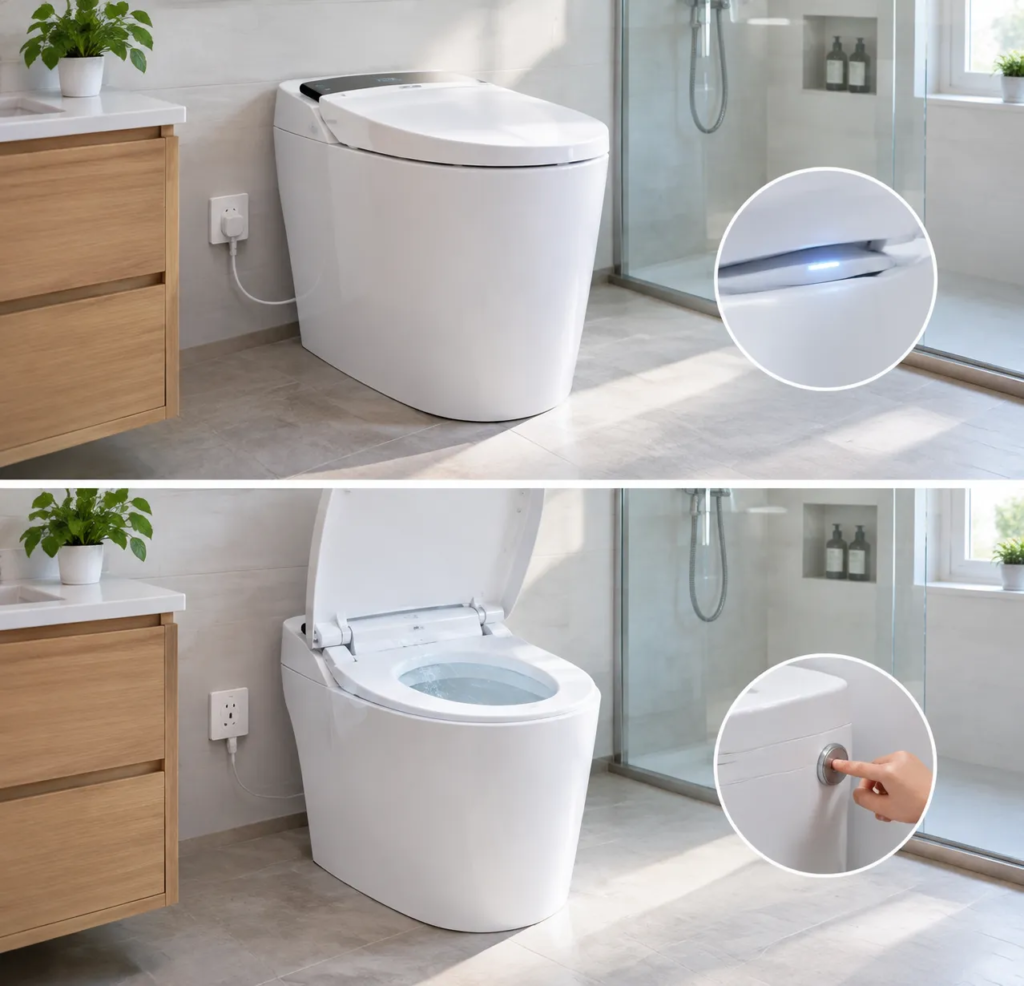
When assessing how well your bathroom functions during an electrical failure, the difference between an integrated all-in-one smart toilet and an add-on smart bidet seat is significant. Both handle blackouts differently depending on how their flushing mechanisms are engineered.
| Feature / Scenario | Integrated Smart Toilet | Add-On Smart Bidet Seat |
|---|---|---|
| Flushing Mechanism | Electronic valve / Solenoid | Traditional manual flush lever & tank flapper |
| Power Outage Flushing | Requires battery backup or manual override | 100% functional (gravity flush) |
| Bidet Functions | Disabled without power | Disabled without power |
| Seat Heating & Dryers | Disabled without power | Disabled without power |
Integrated Smart Toilets Emergency Capabilities
An integrated smart toilet combines the porcelain bowl, electronic flushing system, and bidet features into a single unified unit. Because these units typically lack a standard gravity water tank, they rely on electronic valves to discharge waste.
- Flushing with Battery Power: We equip these systems with a dedicated emergency battery backup compartment or an integrated auxiliary power module. This allows the electronic valve to pulse and cycle waste even when main line power is cut.
- Manual Mechanical Overrides: Many models include a concealed side button or manual pull cord that mechanically triggers the discharge valve without requiring any electricity.
- Disabled Luxuries: While waste removal continues to work via emergency protocols, luxury functions—including heated seats, automatic lid sensors, warm air dryers, and electronic bidet sprays—temporarily shut down until electricity is restored.
Add-On Smart Bidet Seats on Standard Toilets
An add-on smart bidet seat is mounted directly onto a conventional ceramic toilet base. During a blackout, this setup offers distinct emergency advantages:
- Uninterrupted Flushing: The flushing action is completely mechanical. Because the porcelain base uses a standard gravity tank and a manual flush lever, the toilet flushes normally regardless of electrical status.
- Independent Operation: The bidet seat requires power solely for its water heating, nozzle movement, and pressure pumps. When power is lost, only the electronic wash features stop working.
- Zero Setup Required for Waste Disposal: You do not need to connect external batteries or locate emergency buttons to flush. As long as your municipal water line maintains pressure, the tank refills and operates just like a standard fixture.
How to Choose an Outage-Proof Smart Toilet
When you invest in a luxury bathroom upgrade, you should never have to worry about whether your smart toilet can flush without power during an unexpected blackout. I always advise prioritizing models built with fail-safe mechanical designs and dedicated emergency electrical reserves.
Key Features to Look For (Battery Backup & Manual Override)
To ensure uninterrupted functionality when the power grid goes down, look for models equipped with direct mechanical controls and emergency battery interfaces.
| Emergency Feature | Primary Mechanism | Blackout Benefit |
|---|---|---|
| Manual Flush Lever / Side Knob | Mechanical cable or direct valve linkage | Flushes completely without any electricity or battery power. |
| Emergency Battery Backup | Integrated 9V slot or rechargeable lithium pack | Powers the electronic valve to pulse water through the trapway. |
| Dual-Mode System | Electronic push-button plus emergency physical bypass | Offers the best balance of everyday automation and emergency reliability. |
- Direct Mechanical Bypass: A true manual flush lever or side push button operates completely independent of the digital circuit board.
- Accessible Battery Power: Look for easily accessible battery compartments (often standard 9V or AA battery packs) that keep the electronic valve functioning smoothly during a prolonged power outage.
- Status Indicators: Built-in low-battery alerts ensure your backup system is charged and ready before an emergency occurs.
Installation, UPS Options, and Water System Considerations
A reliable emergency setup requires thoughtful planning during the initial installation phase:
- Uninterruptible Power Supply (UPS) Integration: If you want continuous seat heating and bidet spray functions during a short blackout, connect the unit to a small, bathroom-rated UPS backup battery.
- Water Line Pressure Requirements: Tankless smart toilets rely on incoming dynamic water line pressure. Ensure your home water supply meets the minimum PSI requirement so the electronic valve can cycle waste effectively without booster pumps.
- Accessible Power Outlets: Position your GFCI outlet with sufficient clearance so you can easily plug in an external battery backup or UPS unit whenever severe weather strikes.
Frequently Asked Questions About Smart Toilet Power Outages
How many times can you flush a smart toilet without power?
The number of available flushes depends entirely on the design of your unit:
- Manual Flush Lever / Mechanical Override: Unlimited flushes, provided your home's municipal water line or gravity tank still has active water pressure.
- Emergency Battery Backup: A standard 9V battery or dedicated lithium pack typically delivers anywhere from 30 to 100+ flushes. It solely powers the low-voltage electronic valve to open the flush mechanism.
Does a backup battery power the heated seat and bidet functions?
No. Emergency battery power is strictly reserved for the flush cycle. High-load components—such as the heated seat, warm water heater, air dryer, and UV sterilization lights—draw significant wattage and remain completely disabled until main electrical power returns.
Will a smart toilet still flush if both power and water are off?
If both electricity and water supply lines are down, built-in battery systems and manual buttons will not clear the bowl on their own. However, you can still perform a manual bucket flush:
- Fill a bucket with roughly 1.5 to 2 gallons (6 to 8 liters) of water.
- Pour the water swiftly and directly into the center of the toilet bowl.
- The rapid inflow creates a natural gravity siphon effect, emptying the bowl without requiring electricity or line pressure.
Can you install a battery backup or UPS on an existing smart toilet?
Yes. If your model lacks an integrated battery compartment, you can plug the unit directly into an external Uninterruptible Power Supply (UPS). A standard compact UPS rated for consumer electronics will keep the core electronic valve operational through multiple power outages, ensuring reliable flushing performance at all times.