What Is a Built-In Toilet and How Does It Work?
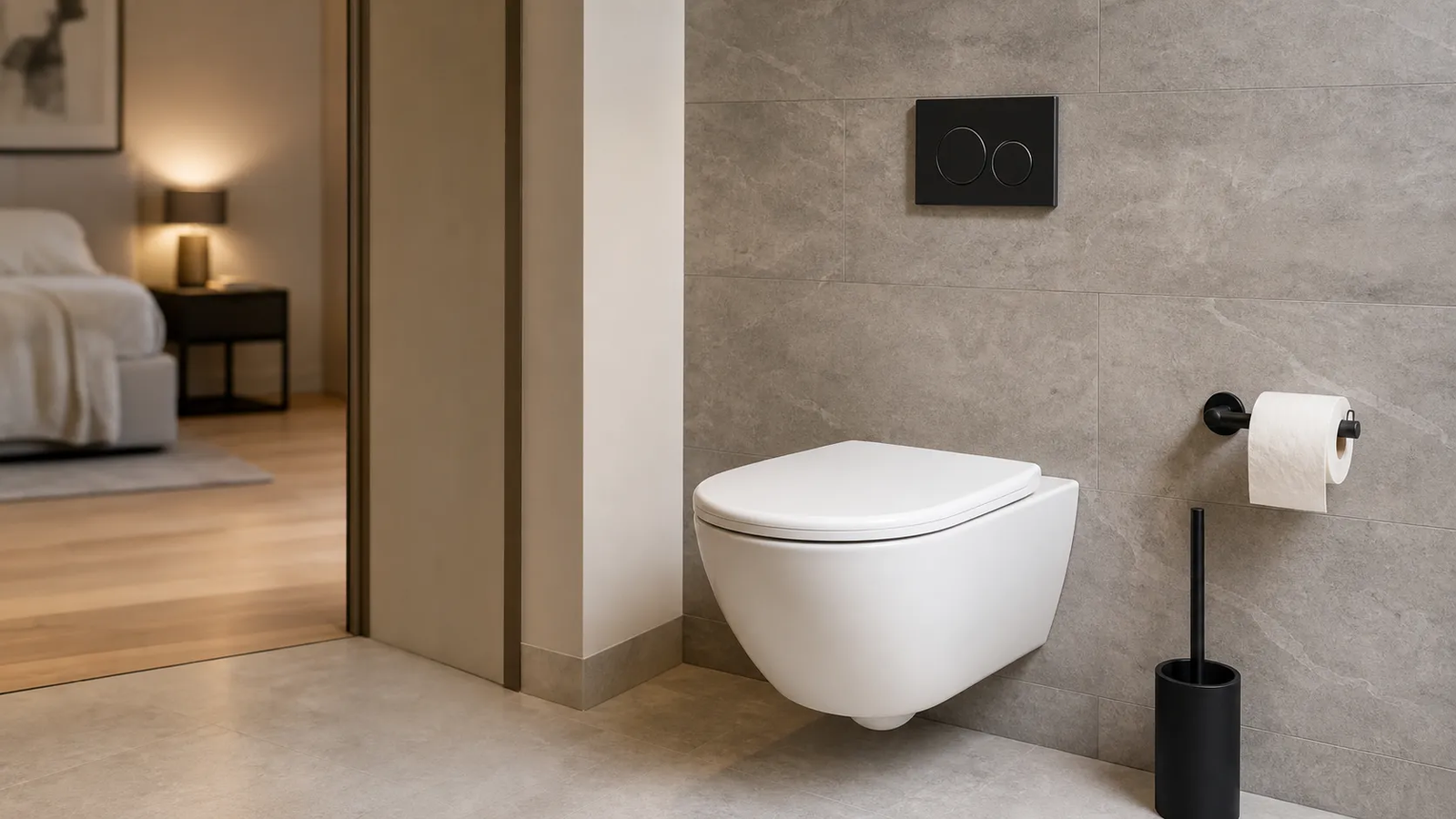
A built in toilet—often referred to as an in-wall toilet—redefines modern engineering by concealing the water reservoir inside the wall structure. By elevating the bowl off the floor and keeping bulk plumbing out of sight, this design elevates function while streamlining room aesthetics.
Understanding Built-In and In-Wall Toilet Systems
Traditional toilets combine the bowl and exposed tank into a single floor-mounted unit. Built-in systems separate these components, mounting the reservoir inside the wall cavity and suspending the toilet bowl.
- Concealed Functionality: Water lines, valves, and the tank remain entirely hidden behind drywall or tile.
- Suspended Fixture: The bowl hangs off the floor, eliminating base crevices where dirt collects.
- Space Saving Bathroom Design: Reclaims up to 10–12 inches of valuable floor depth, making it an ideal choice for both minimalist luxury suites and compact floor plans.
How Concealed Tank Systems Function
Concealed systems operate on the same gravitational flushing principles as standard toilets, but utilize specialized, slim-profile mechanics designed to fit within standard wall depths.
- Actuator Control: Pushing a button on the wall-mounted panel activates mechanical or pneumatic rods inside the wall.
- Efficient Water Release: The flush valve opens to release water into the bowl for a thorough rim rinse.
- Acoustic Insulation: The wall cavity and insulated tank casing naturally dampen refill sounds for exceptionally quiet operation.
Key Components of a Wall-Hung Toilet
A complete built-in system relies on four core elements engineered for load-bearing strength and long-term reliability:
| Component | Function |
|---|---|
| Carrier Frame | A rigid, heavy-duty steel frame anchored to studs and floor joists, engineered to support up to 880 lbs (400 kg). |
| Concealed Tank | An insulated, blow-molded polyethylene reservoir housed within the frame to prevent sweat and condensation. |
| Wall-Hung Bowl | A suspended vitreous china bowl designed for optimal water coverage and easy floor clearance underneath. |
| Actuator Plate | The stylish, wall-mounted control interface that also doubles as a removable access hatch for servicing valves. |
- Key Benefits of Installing a Built-In Toilet
Upgrading your bathroom with a built-in toilet transforms both daily functionality and overall design. By tucking the water tank into the wall cavity, we eliminate bulk and deliver a cleaner, high-performing setup.
Space-Saving Design for Modern Bathrooms
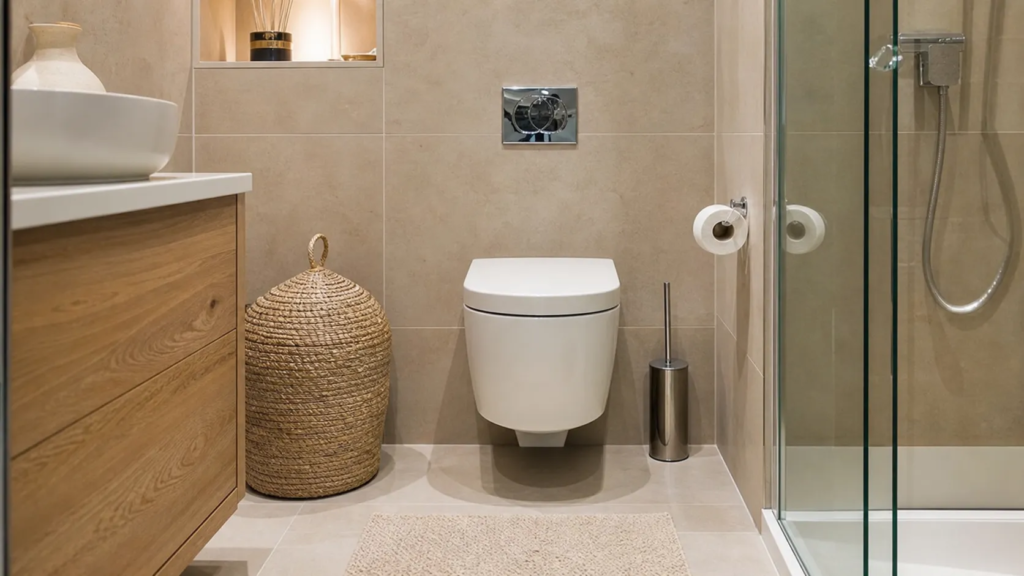
Installing an in-wall toilet frees up valuable floor area, making it an essential choice for compact layouts and master suites alike.
- Gains extra floor space: Saves up to 10 to 12 inches of room depth compared to standard floor-mounted models.
- Open visual line: Creates a true space saving bathroom by keeping the floor visible beneath the bowl.
Easier Cleaning and Improved Hygiene
Traditional toilets accumulate dust and grime around floor bolts and exposed trapways. A wall-hung built-in toilet sits completely off the ground, turning floor maintenance into a quick pass with a mop.
| Cleaning Factor | Standard Floor Toilet | Built-In Wall Toilet |
|---|---|---|
| Floor Access | Blocked by base and caulking | Unobstructed floor for fast cleaning |
| Exterior Wipe-Down | Multiple curves and hard-to-reach nooks | Smooth, floating bowl exterior |
| Hygiene | Traps moisture and dust near base | Completely elevated, zero floor contact |
Sleek Aesthetic and Height Customization
We favor concealed systems because they combine high-end design flexibility with custom ergonomic comfort.
- Streamlined appearance: Hides messy plumbing so only the clean porcelain bowl and flush actuator plate stay on display.
- Tailored seating height: The steel carrier frame allows us to adjust bowl height anywhere between 15 and 19 inches off the floor to meet custom comfort and ADA requirements.
Water Efficiency and Quiet Flushing
A concealed wall tank carrier delivers notable functional benefits behind the drywall.
- Sound insulation: The wall structure and built-in insulation naturally muffle tank refilling sounds for whisper-quiet flushes.
- Water savings: Built-in dual-flush controls let you choose between partial and full flushes, reducing household water consumption every day.
Types of Concealed Tanks and Flush Actuators
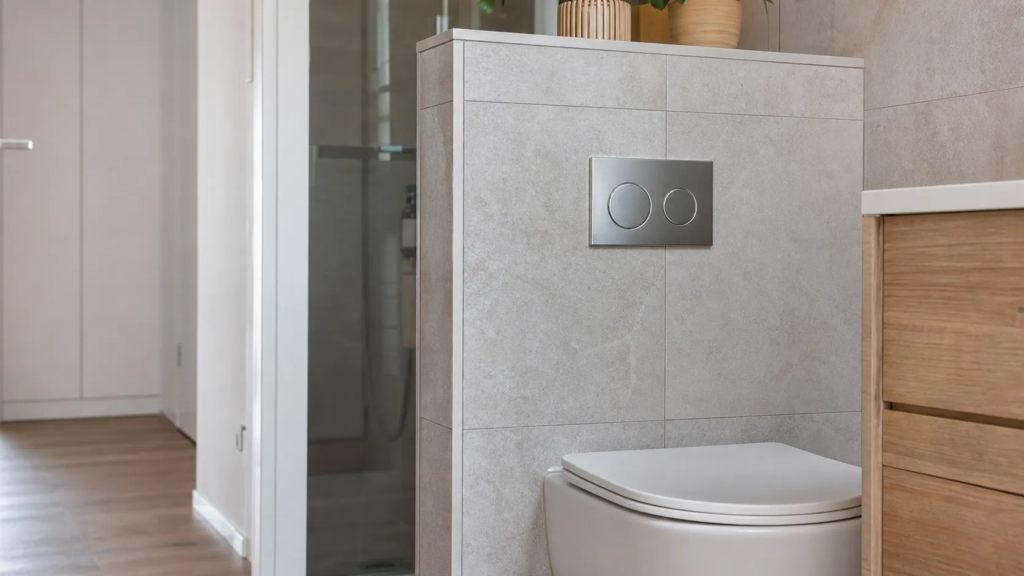
A built in toilet relies on two core hidden components: an in-wall tank carrier frame and a wall-mounted flush actuator plate. We design and select these systems to deliver long-term reliability, maximum water efficiency, and modern styling for any space saving bathroom.
In-Wall Carrier Frames and Installation Systems
The carrier frame is the structural foundation of an in-wall toilet. Engineered from heavy-duty powder-coated steel, a solid wall tank carrier hides completely behind the drywall and supports substantial weight without flexing.
- 2x4 Stud Frames: Compact designs engineered specifically for standard 2x4 interior wall construction.
- 2x6 Stud Frames: Deeper frames offering higher water capacities and maximum structural rigidity.
- Weight Capacity: Built to comfortably support up to 880 lbs (400 kg) when properly anchored to studs and floor plates.
- Adjustable Height: Integrated mounting legs allow precise seat height customization during frame installation.
Dual-Flush Actuator Plates and Control Options
Flush actuator plates replace traditional flush handles, providing direct access to the hidden tank for maintenance without opening up the wall.
| Actuator Type | Operating Mechanism | Key Advantages |
|---|---|---|
| Mechanical | Direct push-rod linkage | Highly reliable, tactile feedback, zero power required |
| Pneumatic | Air-pressure tubing | Allows flexible plate placement up to several feet from the carrier |
| Electronic / Touchless | Motion sensors | Maximum hygiene, hands-free operation, sleek LED lighting |
Popular System Brands and Features
Top-tier concealed tank systems combine smooth flushing technology with easy maintenance. Premium carriers feature integrated sound-insulation sets to keep flush noise quiet, along with dual-flush valves that cut domestic water use by up to 30%. Standardized service openings allow you to service all interior tank valves directly through the actuator plate cutout in minutes.
Important Considerations Before Installation
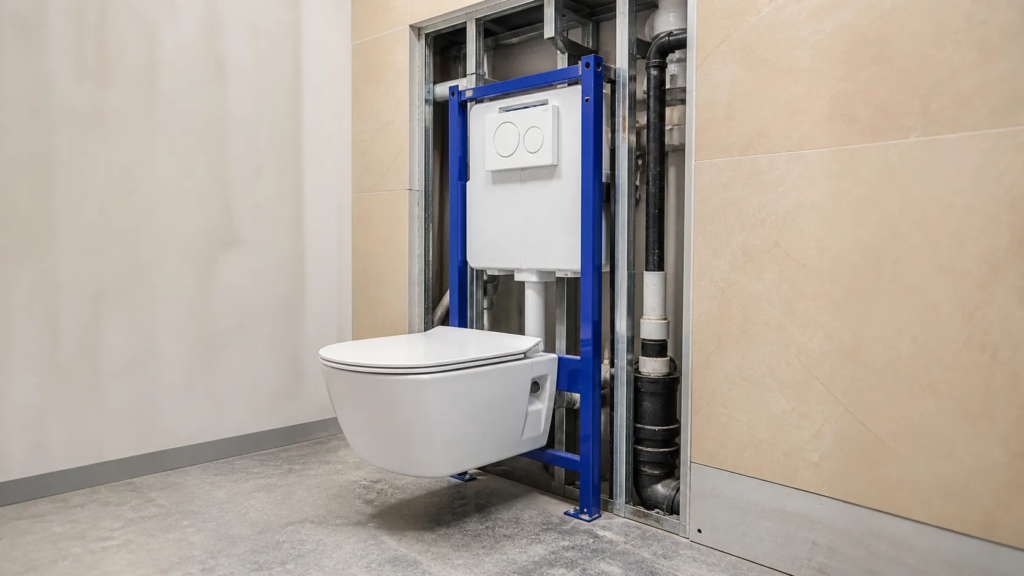
Installing a built in toilet requires careful planning before opening up your walls. We always recommend evaluating your layout and existing infrastructure to ensure a seamless setup for your space saving bathroom upgrade.
Wall Stud and Structural Support Requirements
An in-wall toilet relies entirely on a heavy-duty carrier frame anchored securely inside the wall stud cavity.
- Framing Depth: Standard installations typically require 2x4 or 2x6 studs depending on frame design.
- Weight Capacity: A properly installed wall tank carrier safely supports up to 880 lbs (400 kg).
- Secure Anchoring: Frames must bolt directly into floor joists and studs to eliminate any movement.
Plumbing and Waste Line Compatibility
Matching your existing piping to a concealed system ensures clean, leak-free operation.
| Spec / Requirement | Standard Metric | Installation Note |
|---|---|---|
| Waste Outlet Size | 3-inch or 4-inch line | Uses rear-discharge waste connection through wall |
| Water Supply Line | 1/2-inch cold water connection | Connects internally inside the carrier frame housing |
| Drainage Slope | Minimum 1/4-inch drop per foot | Critical for proper gravity-fed flushing |
Accessing Maintenance Points for Repairs
Servicing a built in toilet is simple and does not require opening up drywall.
- Dual-Purpose Actuator Plate: The flush plate doubles as a full service panel.
- Tool-Free Removal: Unclip the panel to access fill valves, flush valves, and shut-off valves.
- Easy Component Swaps: Internal parts lift out directly through the wall opening for quick maintenance.
Built-In Toilet Selection and Buying Guide
Picking the right built in toilet comes down to balancing long-term performance, budget, and design aesthetics. When I guide homeowners and builders through bathroom upgrades, I always stress that an in-wall toilet is an investment in both real estate value and everyday comfort. Here is my straightforward buying guide to help you choose the right system for your space.
Comparing Price Ranges and Overall Costs
Purchasing a built in toilet setup requires buying a few distinct components rather than a single boxed product. You will need to budget for the visible toilet bowl, the hidden carrier frame, the flush plate, and professional installation.
| System Component | Average Cost Range (USD) | What You Get |
|---|---|---|
| Wall-Hung Toilet Bowl | $250 – $800+ | Ceramic bowl with stain-resistant glazes or specialized shapes. |
| In-Wall Carrier Frame & Tank | $300 – $600 | The structural steel frame and concealed tank built to hold up to 880 lbs. |
| Flush Actuator Plate | $50 – $250 | The wall-mounted control interface available in modern finishes. |
| Wall & Plumbing Installation | $500 – $1,500 | Labor for framing adjustments, plumbing rerouting, and drywall completion. |
While total costs are higher upfront than traditional floor-mounted toilets, the space-saving benefits and modern design deliver unmatched long-term value.
Choosing the Right Bowl Finish and Style
Because the toilet bowl is the primary visible piece in your bathroom, picking the right finish and silhouette defines the room's aesthetic.
- Classic Gloss White: The most popular choice due to its timeless look, scratch resistance, and easy pairing with other fixtures.
- Matte Black or Matte White: Perfect for modern, minimalist designs. These require mild non-abrasive cleaners to keep the surface pristine.
- Compact Elongated Shapes: Ideal for a space saving bathroom. They provide the comfort of an elongated seat while maintaining a compact footprint.
- Rimless Technology: Bowl designs without an inner rim remove hidden crevices where grime builds up, dramatically reducing cleaning time.
Frequently Asked Questions About Built-In Toilets
Are In-Wall Toilets Worth the Investment?
In our experience, yes. While a built in toilet carries higher initial equipment and installation costs, it delivers long-term value for any space saving bathroom project.
- Maximizes Floor Space: Opens up valuable area in compact layouts.
- Hassle-Free Cleaning: Suspended bowls make floor mopping effortless.
- Custom Ergonomics: Set your preferred bowl height during installation.
Choosing an in-wall toilet gives you a durable, high-end look that elevates your home's overall market appeal.
How Do You Fix a Leaking Concealed Tank?
You do not need to tear down drywall to perform repairs. Every quality wall tank carrier is engineered with a built-in service opening directly behind the flush panel.
- Pop Off the Actuator Plate: Remove the flush plate by hand to access the tank interior.
- Inspect the Valves: Reach inside to check the fill valve and flush mechanism for debris or wear.
- Replace Seals or Valves: Swap out worn rubber gaskets or snap-in components straight through the wall access opening.
Can You Retrofit a Built-In Toilet in an Existing Bathroom?
Yes, retrofitting a built in toilet during a remodel is completely doable, provided you plan for structural modifications.
| Key Requirement | Retrofit Factor |
|---|---|
| Wall Framing | Opens up the wall to anchor the carrier frame directly into 2x4 or 2x6 studs. |
| Plumbing | Waste lines and water supplies must be rerouted inside the wall cavity. |
| Wall Finishing | Replaces surrounding drywall, backer board, and tile once the frame is set. |
While retrofitting requires extra initial prep work, the clean layout and open floor space make the project well worth it.