Overview
What Is a Bluetooth Smart Toilet?
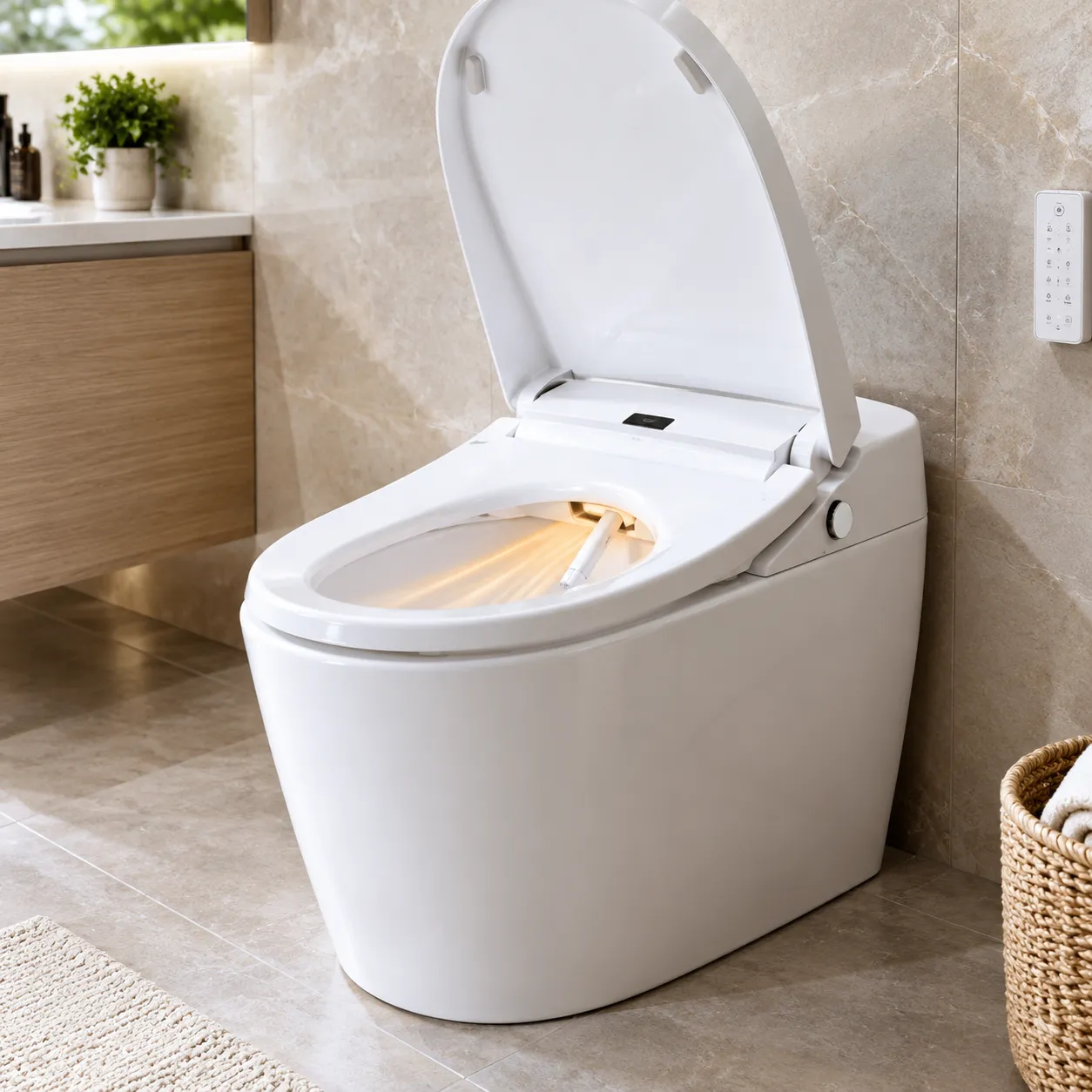
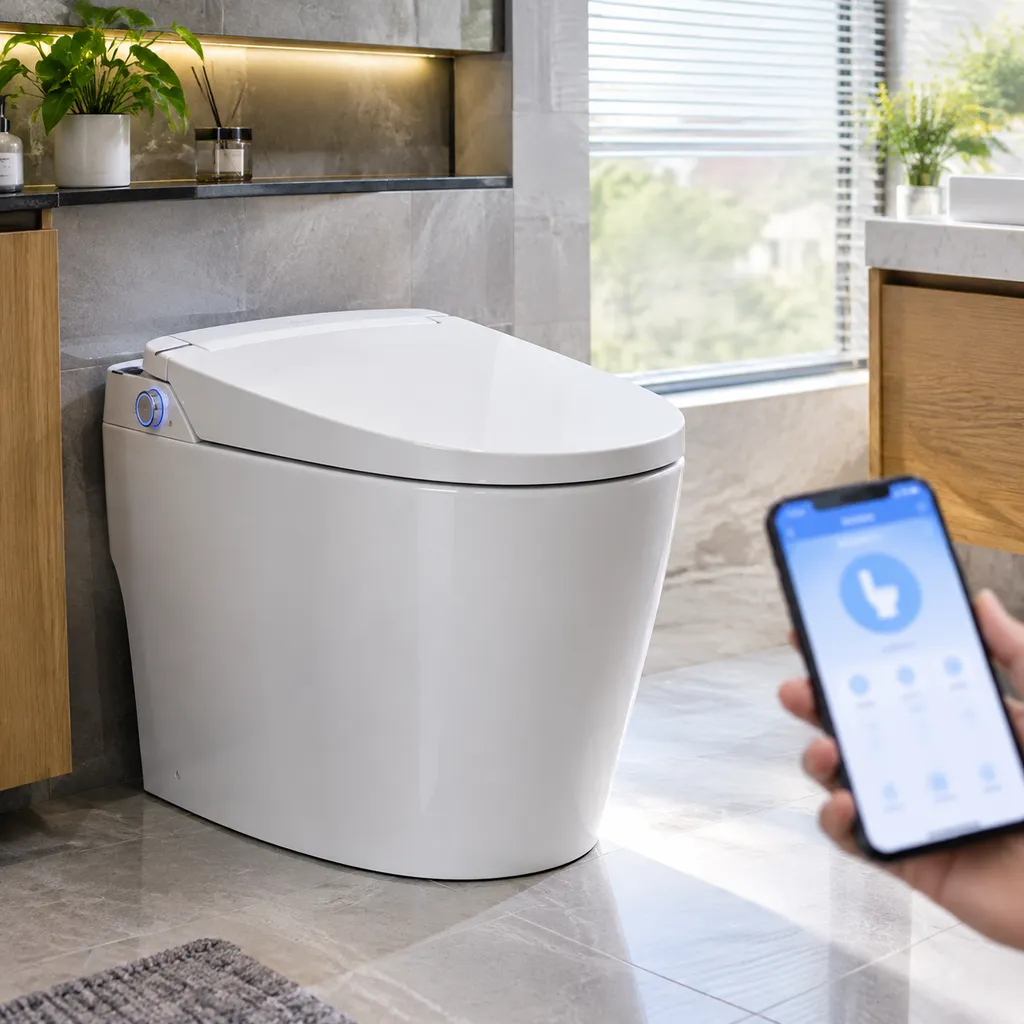
A Bluetooth smart toilet is an advanced electronic commode that pairs short-range wireless technology with automated personal hygiene systems. Unlike basic fixtures, these units sync directly with smartphones, tablets, or smart remotes to manage bidet settings, stream audio, and store personalized profile preferences. We design and integrate this technology to transform standard bathroom fixtures into personalized, hands-free sanitation hubs.
Core Technology Behind Bluetooth-Enabled Commodes
The interior of a Bluetooth-enabled commode integrates plumbing mechanics with low-voltage digital hardware:
- Bluetooth Low Energy (BLE) Module: Establishes an instant, secure local connection with low power consumption.
- Central Microcontroller (MCU): Translates digital signals from your phone or remote into mechanical actions like flushing, nozzle adjustment, and temperature regulation.
- Waterproof Acoustic Transducers: Sealed, moisture-resistant speakers embedded inside the ceramic base or seat assembly.
- Digital Valve & Sensor Actuators: Electronically controlled valves that respond instantaneously to app commands for spray angle and pressure.
Integrated Audio Speakers vs. App-Controlled Wireless Features
Bluetooth functionality in modern units serves two distinct roles: entertainment and device operation.
| Feature Type | Primary Hardware | Core Function | Control Method |
|---|---|---|---|
| Audio Streaming | Waterproof acoustic speakers | Music playback, podcasts, and ambient sound masking | Standard phone media apps (Spotify, Apple Music) |
| App-Controlled Presets | BLE data transceiver & MCU | Spray pressure, nozzle positioning, seat temperature, eco-modes | Dedicated companion apps (iOS & Android) |
How Bluetooth Differs from Standard Smart Toilets
Standard smart toilets rely strictly on localized hardware:
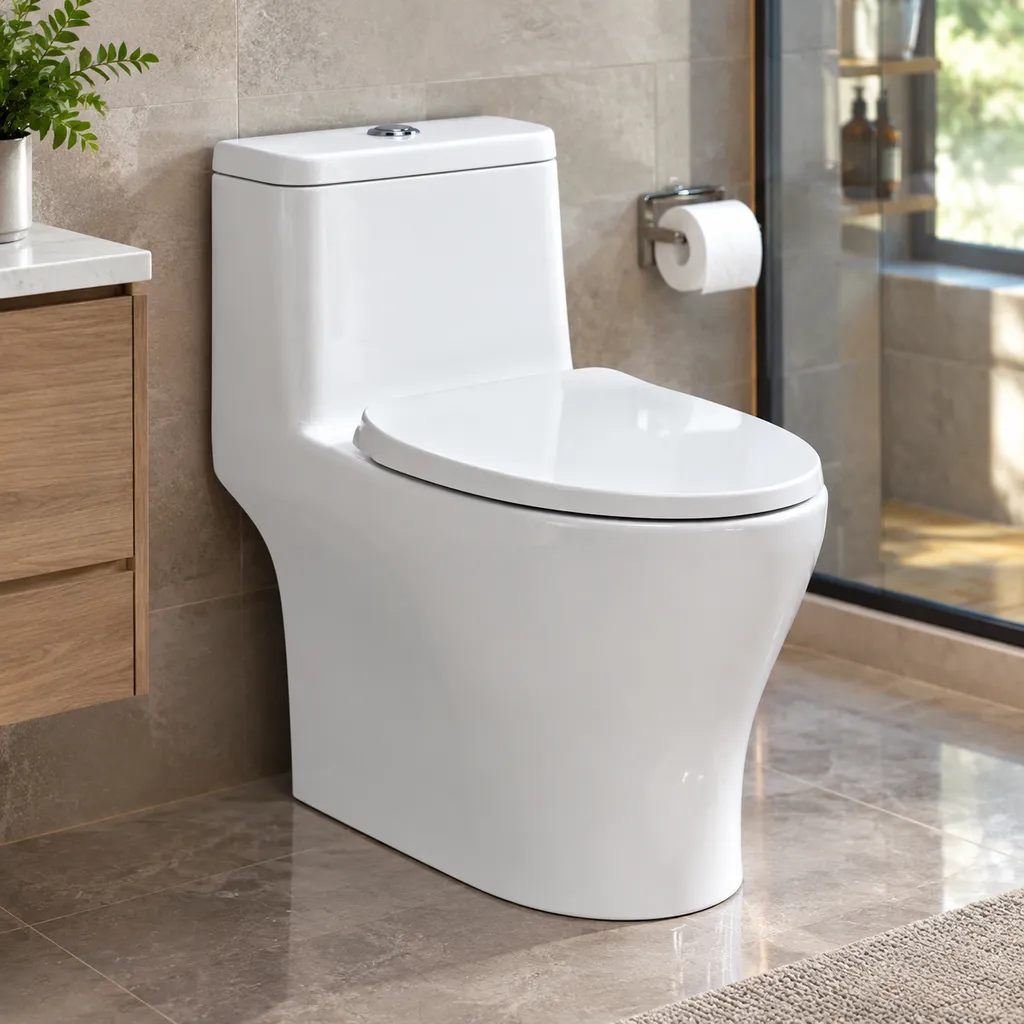
- Standard Smart Toilets: Use fixed side-mounted buttons, basic foot sensors, or infrared (IR) remotes. They operate on line-of-sight signals, offer no cross-device data memory, and cannot play external media.
- Bluetooth Smart Toilets: Utilize secure radio-frequency signals that bypass line-of-sight issues. They allow individual users to save custom hygiene profiles, monitor maintenance data wirelessly, and stream audio directly to the fixture.
Top Features of Bluetooth Smart Toilets
Upgrading to a Bluetooth smart toilet brings high-end automation, personalized comfort, and media connectivity right into your daily bathroom routine. We design and test these units to eliminate friction points—from cold seats to awkward bathroom acoustics. Here are the core features driving this modern bathroom upgrade.
Built-in Bluetooth Audio Streaming and Ambient Sound Masking
A smart toilet with bluetooth speakers turns your porcelain fixture into an acoustic hub. Dual waterproof speakers housed safely within the base deliver crisp wireless audio streaming straight from your phone or tablet.
- Media playback: Stream morning news podcasts, audiobooks, or your favorite playlists while getting ready.
- Ambient sound masking: Automatically trigger gentle white noise, soothing rain sounds, or running stream tracks the moment you sit down. This sound masking feature ensures complete acoustic privacy in compact living spaces or shared master suites.
Smartphone App Integration for Custom User Presets
Instead of fiddling with wall panels every single time, an app-controlled smart toilet lets multiple household members save their preferred settings directly to their mobile devices.
Through a companion app, you can fine-tune:
Water spray pressure and nozzle positioning
Seat warmness and heated air-dry temperatures
Speaker volume and automatic audio triggers
Nightlight colors, intensity, and active hours
Once saved, the toilet recognizes your profile via Bluetooth proximity, automatically loading your preferred comfort cycle as soon as you enter the room.
Hands-Free Sensor Controls for Auto-Lid and Auto-Flush
Touch-free operation keeps bathroom surfaces clean and significantly cuts down on household cross-contamination.
- Motion-activated lid and seat: High-precision microwave sensors detect your approach, lifting the lid automatically. A subtle foot sensor tap raises the seat for stand-up use.
- Off-seat auto-flush: Built-in weight and proximity sensors register when you stand up and step away, activating a dual-cyclone flush without requiring physical touch.
- Manual backup: A side-mounted kick button or battery-backed flush button ensures continuous operation even during occasional power interruptions.
Advanced Bidet Functionality with Personalized Water and Seat Temp
At its core, a bluetooth bidet toilet delivers superior personal hygiene compared to traditional dry paper. The integrated wash system features an instant ceramic heating core that supplies endless warm water without waiting.
- Multiple spray modes: Choose between gentle front feminine wash, targeted rear wash, pulsating massage, and wide oscillating cleaning.
- Adjustable heated toilet seat: Multi-level seat warmers keep the surface comfortable during cold seasons.
- Warm air dryer: High-velocity, temperature-controlled air blowers dry skin gently, reducing toilet paper usage to near zero.
- Self-cleaning stainless steel wand: The nozzle automatically rinses with UV-sterilized water before and after every use.
LED Nightlights and Customizable Ambient Mood Lighting
Navigating the bathroom in the dark should not require blinding overhead lights. Modern units feature integrated LED illumination along the inner bowl and beneath the skirting.
- Pathfinder bowl light: A soft, downward-firing LED guides nighttime visits and shuts off automatically when ambient light returns.
- Mood lighting: Customize outer cabinet lighting schemes via the app to match your bathroom decor or establish a calming atmosphere for late-night routines.
Feature Summary
| Core Feature | Practical Function | Key Benefit |
|---|---|---|
| Bluetooth Audio & Masking | Integrated stereo speakers play media or white noise | Full privacy and hands-free morning entertainment |
| Mobile App Profiles | Stores independent settings for multiple users | Personalized hygiene and water pressure at a tap |
| Radar Motion Sensors | Automatic lid opening, closing, and flushing | 100% hands-free, germ-free interaction |
| Instant-Heat Bidet | Endless warm water spray with heated seat | Superior cleanliness and reduced paper waste |
| Smart LED Illumination | Ambient nightlights with color customization | Safe nighttime navigation without harsh glare |
Benefits of Installing a Bluetooth Smart Toilet
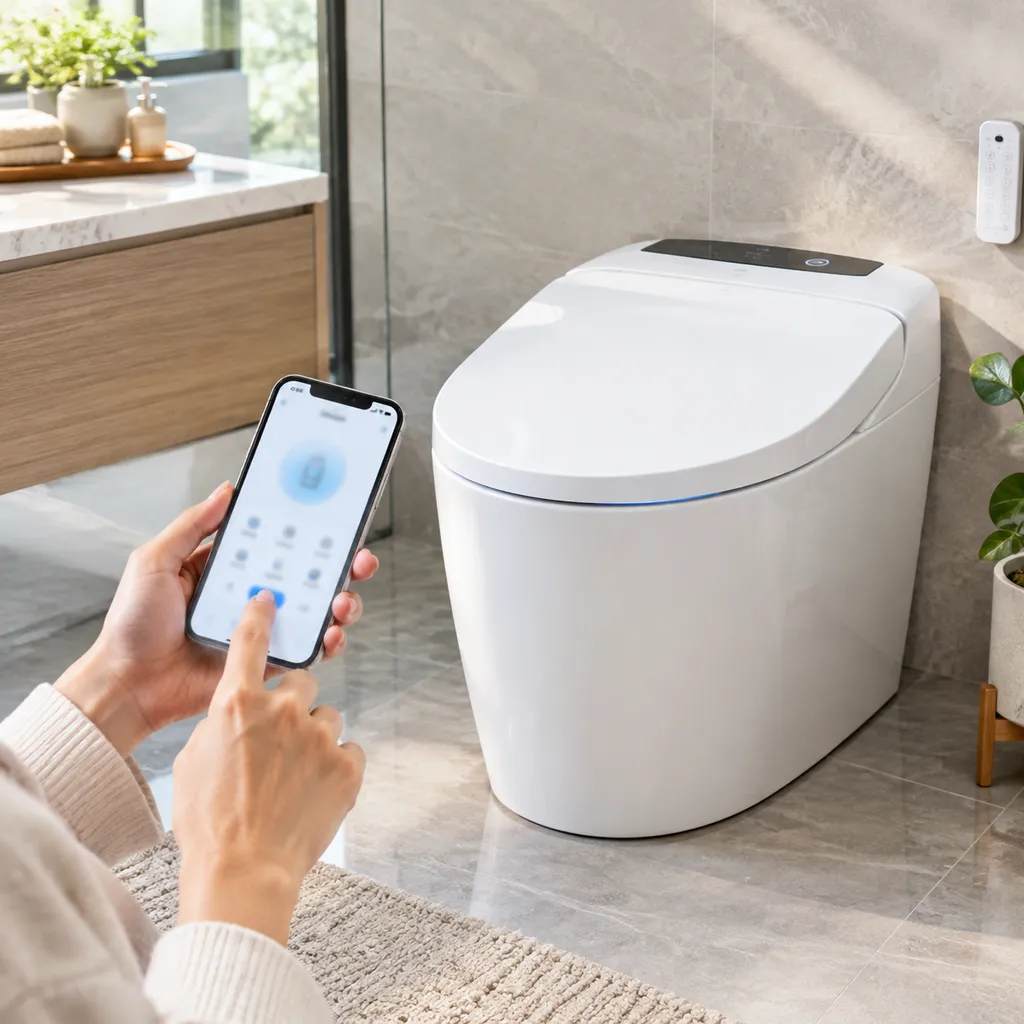
Upgrading to a Bluetooth smart toilet brings tangible upgrades to daily comfort, bathroom hygiene, and household efficiency. Here is what we see as the most practical advantages of adding one to your home.
Personalized Hygiene Routines for Multiple Household Members
Shared bathrooms often create friction when it comes to personal preferences. With a Bluetooth-connected toilet, every member of your home can configure and save their own specific settings:
- Custom spray profiles: Save exact water pressure, wand position, and wash temperature.
- Heated seat settings: Match warmth preferences to individual comfort levels.
- One-tap activation: Sync via smartphone app or wireless remote control so the unit adjusts the moment you step in.
Enhanced Privacy Through Music and White Noise Masking
Bathroom acoustics can be awkward, especially in compact apartments or busy family homes. Built-in Bluetooth speakers resolve this cleanly:
- Ambient sound masking: Stream soothing white noise, ocean sounds, or running water to cover unwanted noise.
- Wireless audio streaming: Play podcasts, audiobooks, or playlists directly from your phone while getting ready.
- Discreet design: Integrated moisture-resistant speakers eliminate the need for standalone countertop audio devices.
Touchless Operation for Cleaner, Germ-Free Surfaces
Minimizing physical contact with the commode cuts down bacteria spread and keeps surfaces clean longer.
- Sensor-activated lids: Automatic proximity sensors raise and lower the lid as you approach and walk away.
- Hands-free auto-flush: The system detects when you finish, providing an automatic flush without touching a lever.
- Cleaner environment: Fewer hand touches mean fewer smudges, less cross-contamination, and easier routine upkeep.
Energy and Water Savings via Automated Eco-Modes
Modern smart commodes are engineered to use resources only when necessary.
| Feature | Standard Toilet | Bluetooth Smart Toilet |
|---|---|---|
| Seat Heating | Runs continuously or manual switch | Intelligent scheduling via Bluetooth app |
| Flushing Mechanism | Fixed single volume (typically 1.6+ GPF) | Precision dual-flush auto-sensors (1.0–1.28 GPF) |
| Idle Power Consumption | None (manual) | Ultra-low draw sleep mode during inactive hours |
| Water Efficiency | High static usage | Tailored rinse cycles that reduce annual water waste |
By pairing automated scheduling with low-flow flush engineering, we achieve noticeable drops in both utility bills and water waste without sacrificing performance.
What to Look for When Buying a Bluetooth Smart Toilet
Choosing the right Bluetooth smart toilet comes down to balancing audio convenience, core wash performance, and bathroom infrastructure. We look at five critical factors before making any purchase or installation decision.
Key Specs at a Glance
| Feature | Minimum Requirement | Ideal Setup |
|---|---|---|
| Speaker Location | Base or rear housing | Dual side-firing, water-sealed drivers |
| OS Compatibility | Bluetooth 4.2+ | Bluetooth 5.0+ with iOS & Android app |
| Bidet System | Single rear wash | Dual stainless self-cleaning nozzles + dryer |
| Power Outlet | Dedicated 110V–120V line | GFCI outlet within 3 feet (0.9 m) of unit |
| Rough-In & Pressure | Standard 12-inch (305 mm) rough-in | Minimum 0.14 MPa (20 PSI) static pressure |
Audio Quality and Speaker Placement Inside the Unit
In a smart toilet with Bluetooth speakers, speaker positioning directly affects sound clarity:
Placement matters: Side-mounted or rear-housing speakers project audio into the room rather than trapping it against the porcelain bowl or floor.
Acoustic tuning: Look for moisture-sealed drivers rated for high-humidity environments. They deliver crisp sound for music, podcasts, or ambient white noise without buzzing or tinny distortion.
App Compatibility Across iOS and Android Ecosystems
An app-controlled smart toilet should integrate seamlessly with your mobile devices:
Cross-platform reliability: Verify that the companion app runs smoothly on both iOS and Android platforms.
Direct connection: The system should pair quickly via standard Bluetooth without requiring an active cloud account or external hub just to adjust basic seat settings.
Firmware support: Reliable brands offer app updates to patch bugs and maintain Bluetooth protocol stability over time.
Bidet Performance Features: Self-Cleaning Nozzles and Warm Air Dryers
The Bluetooth audio features should complement, not replace, dependable bidet toilet functionality:
Nozzle hygiene: Insist on stainless steel, self-cleaning nozzles with automatic pre- and post-rinse cycles.
Adjustability: Ensure independent control over spray position, water temperature, and oscillation modes.
Drying efficiency: Multi-speed warm air dryers reduce toilet paper dependence and complete the hands-free hygiene cycle.
Electrical Requirements and Dedicated GFCI Outlet Placement
Every luxury electronic toilet requires safe, steady electrical power:
Dedicated circuit: Plan for a 110V–120V circuit (or regional standard 220V–240V) capable of handling the instantaneous water heater and seat elements (typically 1,000W to 1,400W peak).
GFCI protection: Install a dedicated Ground Fault Circuit Interrupter (GFCI) outlet within 3 feet of the toilet base, positioned safely away from direct water supply lines.
Rough-In Dimensions and Water Pressure Specifications
Even the most advanced unit fails if it does not fit the plumbing layout:
Rough-in measurement: Standard bathrooms use a 12-inch rough-in (distance from the finished wall to the center of the floor drain). Double-check older homes, which may feature 10-inch or 14-inch configurations.
Water line pressure: Tankless Bluetooth smart toilets rely on direct line pressure for flushing. Verify that home water supply provides at least 20 to 25 PSI dynamic pressure to guarantee a clean, single-flush evacuation.
How to Set Up and Pair a Bluetooth Smart Toilet
Getting a Bluetooth smart toilet up and running is straightforward when the space is prepped correctly. We focus on getting the physical hookups secure first, followed by syncing your devices to control your audio streaming and wash settings without a hitch.
Pre-Installation Checklist for Plumbing and Electrical Hookups
Before opening the box or moving the unit into place, verify that the bathroom meets these basic requirements:
- Dedicated GFCI Outlet: Ensure a standard, grounded GFCI electrical outlet sits within 3 to 4 feet of the toilet base. Never use an extension cord in wet bathroom environments.
- Water Shut-Off Valve: Check that your existing shut-off valve is functional and leak-free. A standard 1/2-inch or 3/8-inch connection is typically needed.
- Dynamic Water Pressure: Ensure your home's water line delivers sufficient flow—most bidet wash systems require at least 0.14 to 0.75 MPa (roughly 20 to 108 PSI) to flush and spray efficiently.
- Clearance and Leveling: Check that the finished floor is level and that you have at least 12 inches of standard rough-in clearance from the wall to the floor drain.
Step-by-Step Bluetooth Pairing via Smartphone and Tablet
Once the plumbing is connected and the unit is powered on, syncing your device takes less than two minutes:
- Activate Pairing Mode: Press and hold the Bluetooth or Function button on the toilet's side panel or wireless remote until you hear a chime or see an LED indicator flash.
- Enable Device Bluetooth: Open the settings menu on your iOS or Android phone or tablet and turn on Bluetooth.
- Select the Commode: Look under the "Available Devices" list for your toilet model or system ID.
- Confirm the Connection: Tap the device name to connect. A solid chime or steady LED light will signal a successful link.
- Open the App (If Applicable): For an app-controlled smart toilet, launch the companion app to complete the initial device handshake.
Configuring Custom User Profiles and Spray Presets
Most modern Bluetooth bidet toilets allow you to save individual preferences so you do not have to recalibrate the settings every time:
- Bidet Spray Adjustments: Customize nozzle position, water pressure, and oscillation preferences via the app or remote control.
- Temperature Controls: Dial in preferred heat levels for the heated seat, water spray, and warm-air dryer.
- Audio Preferences: Set default volume limits for music streaming or configure ambient sound masking to trigger automatically upon seating.
- Assigning Slots: Save your personalized setup under "User 1" or "User 2" for one-touch activation.
Troubleshooting Pairing Drops and Signal Interference
If your phone drops the connection or fails to recognize the Bluetooth smart toilet, apply these quick fixes:
- Check Obstructions: Dense bathroom materials like thick marble, heavy porcelain, or metal framing can weaken wireless signals. Keep your device within 15 to 20 feet of the toilet during operation.
- Disconnect Competing Devices: Bluetooth hardware connects to one primary audio stream at a time. Make sure another household member's phone is not automatically tethered to the toilet in the background.
- Clear the Device Cache: Remove the toilet from your phone’s Bluetooth list under "Forget This Device," restart your phone's wireless toggle, and re-pair from scratch.
- Power Cycle the Unit: Unplug the toilet from the GFCI outlet or trip the reset button on the plug, wait 30 seconds, and plug it back in to reboot the onboard wireless controller.
Care and Maintenance for Electronics-Heavy Smart Toilets
Maintaining a high-tech commode requires a slightly different approach than scrubbing a traditional porcelain bowl. Because a bluetooth smart toilet integrates delicate hardware, audio drivers, and plumbing into a single footprint, safe cleaning and routine servicing keep every system working smoothly.
Cleaning Safety Around Speakers and Electronic Components
Moisture control is essential when dealing with external electronics, sensor windows, and built-in audio speakers.
- Cut the power first: Always switch off the dedicated GFCI breaker or unplug the unit before applying any liquid cleansers.
- Avoid direct spraying: Never spray water, foam, or aerosol chemicals directly onto speaker grilles, touch panels, or seam joints. Spray cleaner onto a microfiber cloth first, then wipe.
- Use mild, non-abrasive cleaners: Harsh chemicals like bleach, ammonia, or abrasive scrubbing powders degrade plastic seals and peel speaker coatings. We use warm water mixed with a drop of neutral dish soap for all external surfaces.
- Keep the speaker dry: If water splashes onto the speaker mesh during regular bathroom use, pat it dry immediately with a clean, lint-free towel.
Descaling Water Lines and Maintaining Bidet Nozzles
Hard water minerals can clog internal valves and reduce wand pressure over time. Regular descaling protects internal heating elements and spray paths.
- Run the self-cleaning wand cycle: Most units feature an automatic nozzle-extend mode. Activate this mode to extend the wand without spraying water.
- Manual wand detailing: Gently wipe the extended stainless steel or antimicrobial plastic nozzle with a soft-bristled toothbrush dipped in a diluted white vinegar or citric acid solution to dissolve calcification.
- Clean the inline water filter: Shut off the water supply valve every six months, remove the mesh screen filter located at the water inlet, and rinse away trapped sediment to maintain consistent spray volume.
Updating Toilet Firmware and Mobile Companion Apps
A bluetooth bidet toilet relies on both physical hardware and digital software to maintain stable wireless streaming and customized user presets.
- Check the companion app monthly: Open the control app on your phone or tablet to verify that your toilet is running the latest firmware version released by the manufacturer.
- Maintain continuous power during updates: Never unplug the toilet or switch off your phone's Bluetooth connection while a firmware update is installing, as interruptions can corrupt internal controller settings.
- Re-pair after major updates: If app controls become sluggish or speaker streaming drops post-update, clear the paired device from your phone's settings and run a fresh pairing cycle to reset the wireless connection.