Understanding Commercial vs. Residential Toilets
Selecting the proper sanitary fixtures requires a clear understanding of the operational demands separating commercial facilities from residential environments. While both systems serve the same basic sanitary function, their engineering, supply-line requirements, and load capacities diverge significantly.
What Defines a Commercial Toilet System
Commercial toilet systems are engineered specifically for high-traffic environments, continuous usage cycles, and maximum vandal resistance. These fixtures prioritize rapid evacuation, minimal downtime, and rigorous structural endurance over whisper-quiet operation or decorative styling.
- High-Capacity Usage: Built to handle hundreds of flushes daily without component fatigue or valve failure.
- Direct Supply Integration: Frequently utilize tankless flushometer valves connected directly to high-pressure, larger-diameter water lines.
- Heavy-Duty Construction: Features reinforced vitreous china, elongated open-front bowls, and robust mounting hardware designed for public facilities, office complexes, and hospitality venues.
- Rapid Cycle Recovery: Eliminates the refill wait time typical of standard gravity tanks, ensuring immediate readiness for the next user.
What Defines a Residential Toilet System
A residential toilet system is optimized for household duty cycles, acoustic comfort, aesthetic integration, and standard municipal water pressures. The standard configuration typically relies on a gravity-fed mechanism where water stored in a tank delivers the necessary head pressure for waste evacuation.
- Moderate Usage Design: Engineered for typical household traffic patterns with an emphasis on water conservation and quiet refilling.
- Standard Utility Compatibility: Operates seamlessly on standard residential supply lines (typically 3/8-inch to 1/2-inch connections) and standard domestic water pressure.
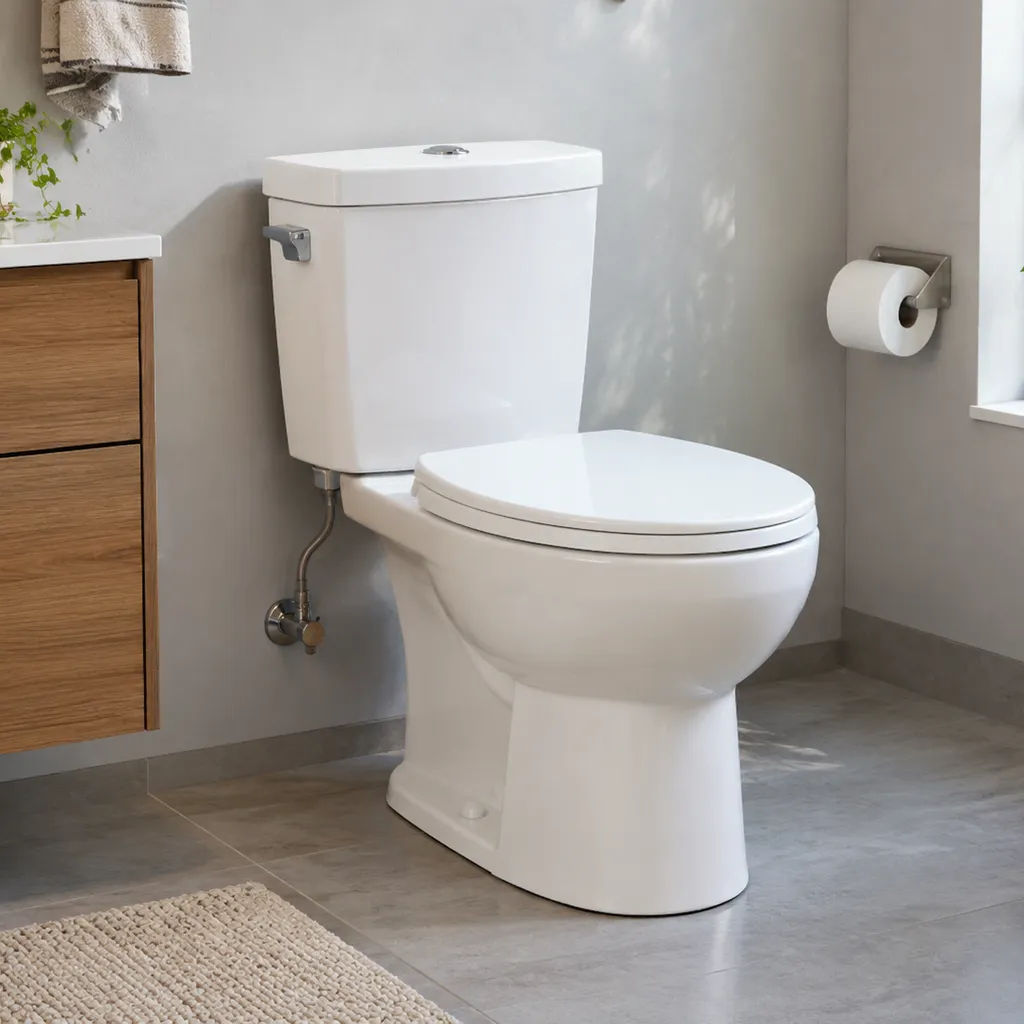
- Classic Tank and Bowl Assembly: Often installed as a two-piece toilet configuration, facilitating straightforward installation, simple maintenance, and versatile placement within diverse bathroom layouts.
- Aesthetic and Ergonomic Focus: Offers closed-front seats, skirted trapways, and compact footprints tailored to residential living spaces.
Two-Piece Toilet Durability and Reliability
When evaluating fixture investments, two-piece toilet reliability and durability stand out across both commercial and residential applications. The separated design provides a time-tested balance of structural resilience, straightforward maintenance, and reliable daily operation.
Material Quality and Build Longevity
The core strength of a two-piece toilet rests in its structural ceramic composition. High-grade vitreous china fired at high temperatures creates a non-porous, highly sanitary surface engineered to withstand decades of use.
- Vitreous China Resilience: Resists heavy wear, chemical cleaners, scratching, and fading over time.
- Extended Toilet Lifespan: With proper care, the porcelain structure easily lasts 20 to 30 years or more.
- Glaze Integrity: Fully glazed trapways ensure smooth waste transit and active clog prevention during every cycle.
Component Reliability and Common Wear Points
The mechanical performance of a standard gravity fed toilet depends on simple, replaceable internal hardware. While porcelain lasts indefinitely, internal working parts experience normal operational wear.
- Tank and Bowl Assembly: Heavy-duty rubber gaskets and corrosion-resistant mounting bolts create a watertight seal between the sections.
- Fill and Flush Valves: Standardized internal components endure thousands of flush cycles before needing minor adjustments.
- Rubber Flappers and Seals: As the primary wear point, these components can be serviced or swapped out quickly without replacing the fixture itself.
Two-Piece vs. One-Piece Toilet Durability
Both designs offer distinct operational and maintenance characteristics:
| Feature | Two-Piece Toilet | One-Piece Toilet |
|---|---|---|
| Structural Integrity | Robust, independent tank and bowl | Single fused ceramic body |
| Stress Distribution | Bolted joint absorbs minor structural vibrations | Rigid body can crack under severe structural stress |
| Part Replacement | Inexpensive, universally available components | Often requires proprietary parts |
| Maintenance Flexibility | Cracked tanks or bowls can be replaced individually | Full fixture replacement required if porcelain cracks |
| Application Range | Adaptable for budget-conscious commercial & residential sites | Primarily high-end residential or luxury hospitality |
The modular nature of the tank and bowl assembly makes the two-piece format exceptionally reliable for high-traffic environments, ensuring long-term serviceability with minimal downtime.
Key Differences Between Commercial and Residential Toilets
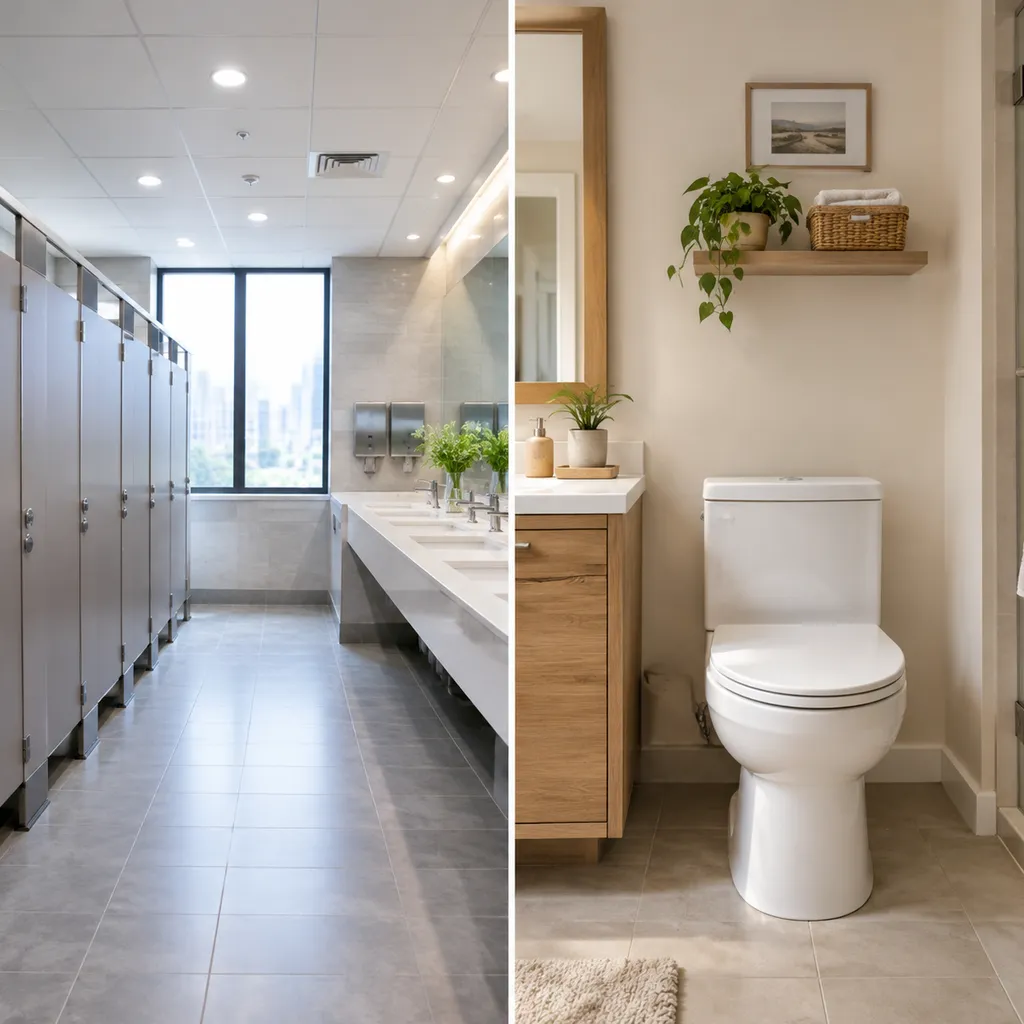
When comparing fixtures for commercial facilities versus residential homes, the functional demands dictate the design. We evaluate these systems based on how they handle volume, water pressure, and long-term wear.
Flushing Mechanisms and Water Pressure Requirements
The operational engine defines the primary distinction between commercial and residential setups:
- Gravity Fed Toilet Systems: Most residential two-piece models rely on gravity. Water stored in the tank drops into the bowl, creating a siphon to remove waste quietly and reliably.
- Flushometer and Pressure Systems: Commercial setups typically bypass standard tanks, using direct line pressure (flush valves) or pressure-assisted units to clear waste instantly and optimize clog prevention in high-use environments.
- Cycle Reset Time: Commercial flush valves reset in seconds, whereas residential gravity tanks need 30 to 60 seconds to refill.
| Feature | Residential Two-Piece Toilet | Commercial Toilet System |
|---|---|---|
| Flush Type | Gravity-fed siphon jet | Flush valve (Flushometer) or Pressure-assist |
| Operating Pressure | Standard (20–40 PSI) | High flow/pressure (35–80+ PSI) |
| Reset Speed | 30–60 seconds refill | Instantaneous |
| Clog Prevention | Moderate to high (standard waste) | Heavy-duty (high volume) |
Water Supply Line and Pipe Sizing
Plumbing infrastructure determines which unit a building can support:
- Residential Lines: Homes use standard 3/8-inch or 1/2-inch cold water supply lines. These provide adequate volume to fill a two-piece tank and bowl assembly over time without overloading domestic piping.
- Commercial Lines: Direct-flush commercial fixtures require a dedicated 1-inch or 1.25-inch supply pipe. This delivers the sudden, high-volume surge of water necessary to clear the bowl without relying on stored tank water.
Noise Levels, Aesthetics, and Space Requirements
Form follows function when balancing user comfort against heavy foot traffic:
- Acoustics: Residential units prioritize quiet operation to prevent noise transfer to nearby bedrooms and living spaces. Commercial units generate a powerful, loud flush sound that clears waste rapidly.
- Visual Appeal: Residential designs focus on clean lines, finished porcelain tanks, and matching home interior aesthetics. Commercial designs favor utilitarian, easy-to-sanitize contours.
- Spatial Footprint: A standard two-piece toilet requires dedicated vertical and horizontal space for the tank. Tankless commercial wall-hung or floor-mounted bowls save space and make floor cleaning fast and efficient.
Installation and Plumbing Requirements Comparison
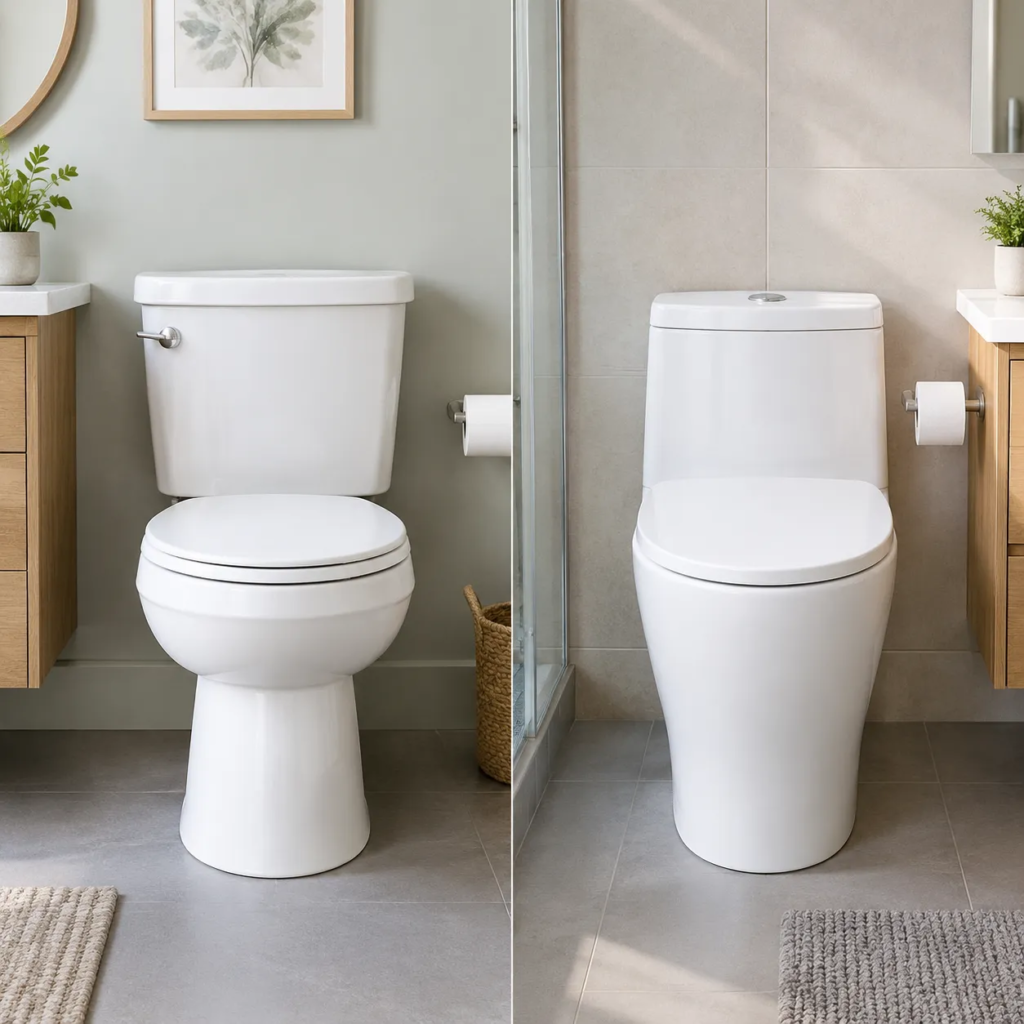
Installing a toilet involves specific structural, mechanical, and line-pressure considerations. Looking at two piece toilet reliability durability installation commercial vs residential applications reveals clear differences in labor, setup complexity, and infrastructure needs.
Residential Two-Piece Toilet Installation Complexity
Installing a residential two-piece model is straightforward and requires standard household plumbing connections.
- Standard Rough-In: Most homes use a standard 12-inch rough-in distance from the finished wall to the center of the drainpipe.
- Tank and Bowl Assembly: The bowl bolts directly to the floor flange with a wax seal, while the tank secures to the bowl using a rubber gasket and heavy-duty mounting bolts.
- Water Supply: Standard residential units connect easily to a 3/8-inch flexible supply line.
- DIY-Friendly Setup: Because it operates as a standard gravity fed toilet, no specialized high-pressure lines or structural wall modifications are needed.
Proper alignment during the tank and bowl assembly ensures a watertight seal, which directly protects the overall toilet lifespan and prevents base leaks.
Commercial Toilet Plumbing and Structural Demands
Commercial restrooms handle constant, heavy usage, requiring rigorous structural support and higher supply capacities for maximum clog prevention.
- Dedicated Line Sizing: Commercial valve systems require dedicated 1-inch or 1.25-inch water supply lines to deliver immediate flushing velocity.
- Structural Wall Carriers: Wall-hung commercial fixtures require heavy steel carrier brackets inside wall frames to support weights exceeding 500 lbs (227 kg).
- Vandal-Resistant Fasteners: Floor-mounted and wall-mounted commercial bowls require heavy-duty anchoring bolts designed to withstand continuous public impact.
Upfront Installation and Long-Term Maintenance Costs
Residential installations prioritize lower initial investment and standard off-the-shelf parts, whereas commercial installations demand higher upfront labor and plumbing costs to secure high-traffic durability.
| Feature | Residential Two-Piece Toilet | Commercial Flushometer / High-Traffic Toilet |
|---|---|---|
| Supply Line Diameter | 3/8-inch standard flexible line | 1-inch to 1.25-inch rigid line |
| Operating Pressure | 20 to 80 PSI standard domestic supply | 35 to 100+ PSI direct municipal/booster supply |
| Installation Labor | Low to moderate (DIY or single plumber) | High (requires commercial rough-in & structural mounts) |
| Initial Unit Cost | Budget-friendly | Moderate to High |
| Maintenance & Parts | Inexpensive, universal replacement seals and valves | Specialized diaphragm kits, commercial-grade seals |
| Primary Failure Points | Flappers, fill valves, tank-to-bowl gaskets | Valve diaphragms, high-pressure sensors |
Residential two-piece units deliver reliable, cost-effective performance with minimal structural preparation. Commercial setups require higher upfront plumbing investments to guarantee structural endurance and uninterrupted service under heavy daily cycles.
Can You Install a Commercial Toilet in a Residential Home?
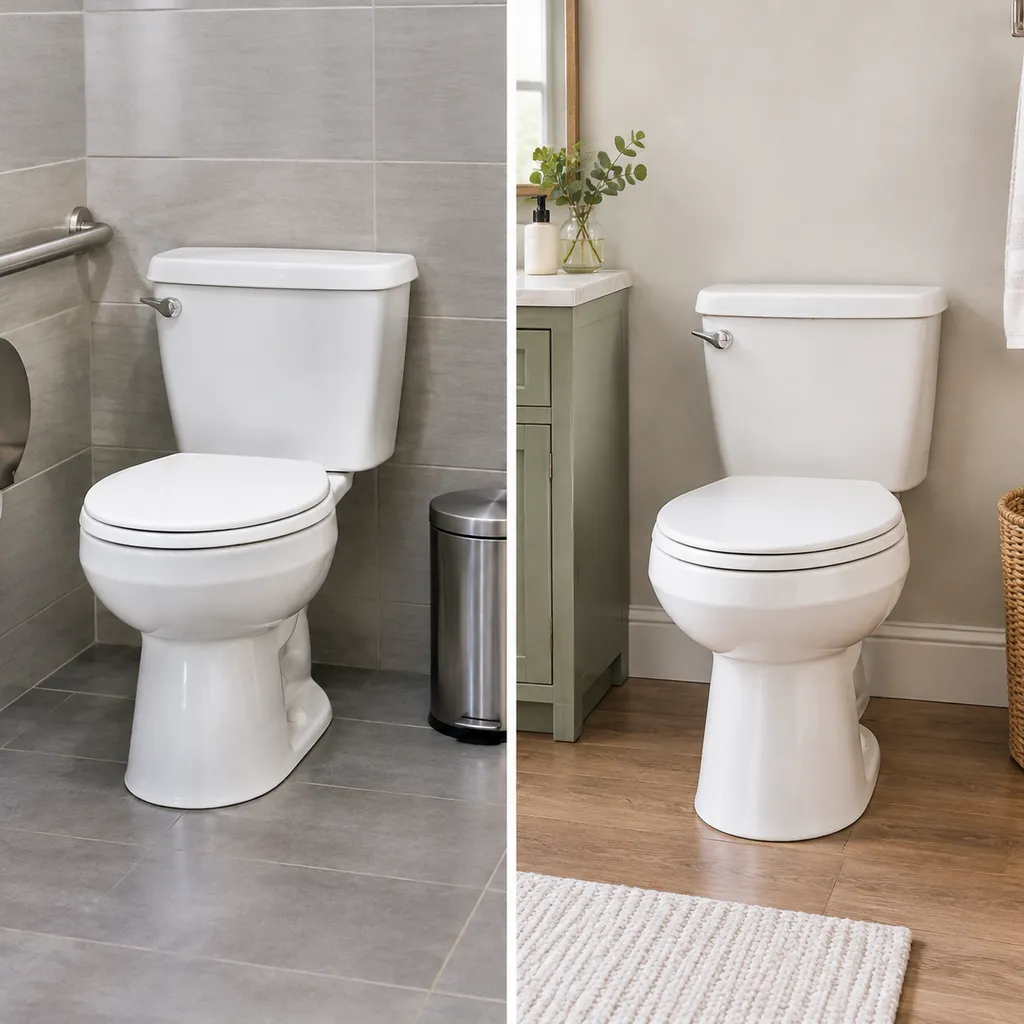
Many property owners ask me if they can drop a true commercial flushometer toilet into a residential bathroom to eliminate clogs forever. The short answer is almost always no—at least not without tearing into your walls and overhauling your entire plumbing stack.
When evaluating commercial vs residential setups, the gap comes down to infrastructure. While a commercial fixture offers extreme duty cycles, standard home plumbing simply cannot deliver the dynamic flow these valve systems demand.
Plumbing and Pressure Limitations in Residential Bathrooms
True commercial tankless toilets rely on high-volume, instant water flow rather than stored tank water. Most houses cannot support these operational demands:
- Supply Line Diameter: Commercial flush valves typically require a minimum 1-inch or 1-1/4-inch dedicated water supply line. Standard residential homes use 1/2-inch or 3/8-inch lines, which cannot supply the required volume per second.
- Static vs. Dynamic Pressure: Commercial systems need high dynamic flow rates (often 25 to 35 gallons per minute during the flush cycle). Standard municipal feeds to homes deliver volume too slowly, leading to weak flushes or complete valve failure.
- Acoustic and Structural Factors: Commercial flush valves produce a loud water hammer and rush that reverberates through residential framing, creating unwanted noise across living spaces.
| Requirement | Standard Residential Bathroom | Commercial Flushometer System |
|---|---|---|
| Water Line Size | 3/8" to 1/2" supply pipe | 1" to 1-1/4" dedicated line |
| Flow Rate Needed | 3 to 5 GPM | 25 to 35 GPM burst |
| Flush Delivery | Stored water release | Direct line pressure |
| Retrofit Complexity | Drop-in standard rough-in | Major pipe replacement |
High-Performance Residential Alternatives
You do not need commercial plumbing lines to get commercial-grade performance. If two piece toilet reliability durability installation is your priority, modern residential engineering bridges the gap effectively.
- Heavy-Duty Gravity Fed Toilet Systems: Modern gravity fed toilet designs utilize optimized, fully glazed trapways (2-1/8 inches or wider) and oversized 3-inch flush valves. This delivers rapid bulk waste removal and superior clog prevention using standard home water pressure.
- Pressure-Assisted Two-Piece Units: These units house a sealed pressure vessel inside the tank and bowl assembly. They harness line pressure to compress air inside the tank, releasing an aggressive, commercial-style blast using standard residential 3/8-inch supply lines.
- Long-Term Serviceability: A high-quality two-piece unit offers an extended toilet lifespan because replacement gaskets, fill valves, and flappers remain universally available, low-cost, and easy to swap without specialized commercial plumbing tools.
How to Choose the Right Toilet for Your Property
Selecting the right fixture comes down to understanding your space, usage demands, and plumbing capacity. When comparing a two piece toilet reliability durability installation commercial vs residential setup, we always evaluate how the fixture will perform under daily physical strain and whether standard maintenance matches the skill level of your on-site team.
Assessing Traffic Volume and Durability Needs
Daily user count dictates the required structural integrity and flush cycle demands of your installation.
- High-Traffic Environments: Public and commercial spaces require heavy-duty vitreous china and commercial-grade seals designed to endure continuous use without mechanical fatigue.
- Moderate Residential Use: A standard gravity fed toilet offers adequate endurance for family homes, providing an impressive toilet lifespan of several decades when properly maintained.
- Impact Resistance: Commercial models prioritize robust hardware, whereas residential models emphasize comfort, quiet filling, and clean line finishes.
| Selection Factor | Residential Applications | Commercial Applications |
|---|---|---|
| Typical Daily Flushes | 10–30 flushes | 100+ flushes |
| Flush Mechanism | Standard gravity flush valve | Heavy-duty commercial valve or flushometer |
| Target Lifespan | 20–30+ years (china), 5–10 years (trim) | 10–20 years under intense traffic |
| Installation Focus | Simple rough-in, minimal tools | Reinforced floor mounting, leak resistance |
Evaluating Ease of Replacement and Part Availability
A major strength of the two-piece format is serviceability. Because the tank and bowl assembly consists of independent sections, replacing a cracked tank or worn internal valve does not require demolishing the entire fixture.
- Universal Parts: Standard residential two-piece models utilize off-the-shelf flappers, fill valves, and supply lines readily available at any hardware supplier.
- Component Modularity: If a tank cracks in a rental unit or office, we can simply swap the tank while leaving the bowl anchored to the flange.
- Simplified Maintenance: Standard gravity-fed internal components allow for quick repairs without specialized plumbing tools or system shutdowns.
Balancing Performance, Aesthetics, and Budget
Achieving the right balance requires aligning flushing performance with interior design goals and installation budgets.
- Clog Prevention: Look for fully glazed trapways measuring at least 2 inches to ensure rapid waste extraction without repeated flushing cycles.
- Installation Economics: Residential two-piece units offer significantly lower upfront hardware costs and straightforward installation, making them ideal for budget-conscious properties.
- Visual Appeal: While commercial units prioritize utilitarian function, residential two-piece designs provide diverse tank profiles, elongated bowl configurations, and concealed trapways that complement modern interior aesthetics.