Are Toilet Tank Holes Standard in Two-Piece Toilets?
When evaluating whether the tank holes in two piece toilets standard width and placement are uniform, the short answer is: there is no single universal standard. While the plumbing fixture industry relies on common sizing conventions, exact hole spacing, diameter, and configurations vary depending on the manufacturer, flush mechanism, and production era.
Understanding these dimensional variations is critical for proper alignment, leak-proof sealing, and secure tank-to-bowl mounting.
| Connection Type | Common Dimensions | Primary Purpose |
|---|---|---|
| Tank Bolt Spread | 5.5" to 6.875" (140 mm – 175 mm) | Secures the tank to the bowl deck |
| Bolt Hole Diameter | 0.45" to 0.55" (11.5 mm – 14 mm) | Fits standard 5/16" or 3/8" tank bolts |
| Flush Valve Drain Hole | 2.0" to 3.25" (50 mm – 83 mm) | High-volume discharge into the bowl |
| Fill Valve Mounting Hole | 0.875" to 1.0" (22 mm – 25 mm) | Water supply inlet connection |
Standard Tank Bolt Hole Spacing and Diameter
The mounting bolt layout determines mechanical stability between the tank and the bowl.
- Center-to-Center Distance: The most prevalent spread on modern two-piece models is approximately 5.5 inches (140 mm). However, many contemporary high-efficiency systems utilize wider spacing ranging from 6.0 to 6.875 inches.
- Hole Diameter: Standard bolt cutouts are sized between 1/2 inch (12.7 mm) and 9/16 inch (14.3 mm). This tolerance allows standard brass or stainless steel mounting hardware with rubber sealing washers to seat flush against the ceramic base.
Flush Valve and Fill Valve Drain Hole Sizes
Water movement through the base of the tank relies on two distinct openings:
- Flush Valve Drain Hole: Traditional fixtures feature a 2-inch discharge hole, whereas modern high-performance models utilize a 3-inch to 3.25-inch opening to deliver faster, more powerful water flow.
- Fill Valve Hole: This is the most standardized opening on a two-piece tank, uniformly measuring 7/8 inch to 1 inch. This consistency ensures nearly all aftermarket replacement fill valves interface seamlessly with standard 1/2-inch MIP supply lines.
Are Two-Piece Toilet Tanks and Bowls Interchangeable?
Tanks and bowls from different product lines are not universally interchangeable. Installing a replacement tank requires precise matching across three key criteria:
- Bolt Pattern Alignment: The center-to-center distance of the tank must align exactly with the mounting holes on the bowl deck.
- Discharge Compatibility: A tank engineered for a 3-inch flush valve cannot properly seat against a bowl inlet designed for a 2-inch gasket.
- Base Footprint and Gasket Fit: Bowl decks have specific recessed channels for the tank-to-bowl sponge gasket. An improper fit prevents complete compression, resulting in base wobbling or direct water leaks.
Key Dimensions of Two-Piece Toilet Tanks and Bowls
When you ask whether the tank holes in two-piece toilets are standard width, the answer comes down to critical mating dimensions. I always check these key measurements before pairing any tank with a bowl to guarantee a watertight seal and proper alignment.
| Dimension Point | Standard Range | Key Purpose |
|---|---|---|
| Bolt Hole Spacing | 5.12" to 6.5" (Typically 5.5") | Secures tank to bowl deck |
| Drain Hole Diameter | 2" or 3" (Interior) | Transfers flush water to bowl inlet |
| Rough-In Clearance | 10", 12", or 14" | Aligns waste outlet to wall |
Distance Between Tank Mounting Bolt Holes
The center-to-center distance between mounting holes is the most crucial dimension for tank stability:
- The 5.5-inch standard: Most modern two-piece models utilize a 5.5-inch center-to-center spread.
- Brand variations: Certain designs range from 5.12 inches to over 6 inches, meaning not every replacement fits automatically.
- Hole diameter: Bolt holes usually measure around 0.5 inches (12–15 mm) to accommodate standard 5/16-inch brass bolts and rubber sealing washers.
Tank Drain Hole vs. Bowl Inlet Hole Sizing
The flush valve drain hole at the bottom of the tank must correspond directly with the water inlet hole on the bowl platform:
- 2-Inch systems: Traditional setups with a smaller drain aperture using a standard sponge rubber plumbing fitting gasket.
- 3-Inch high-flow systems: Modern, high-efficiency designs with a wider opening that require a broader bowl inlet and larger seal.
- Mating profile: Even with matching diameters, the recess depth on the bowl must seat the tank gasket completely flat to prevent stress cracks.
Standard Rough-In and Overall Clearance Measurements
Proper fit extends beyond hole spacing to room dimensions and wall clearances:
- Standard 12-inch rough-in: The universal distance from the finished wall to the center of the floor drain.
- Alternate rough-ins: 10-inch and 14-inch configurations require specific tank profiles to maintain proper rear clearance.
- Back-wall gap: A properly sized universal toilet tank leaves a 0.5-inch to 1-inch clearance from the drywall to prevent lid interference and wall condensation.
Types of Two-Piece Toilet Tank Connection Holes
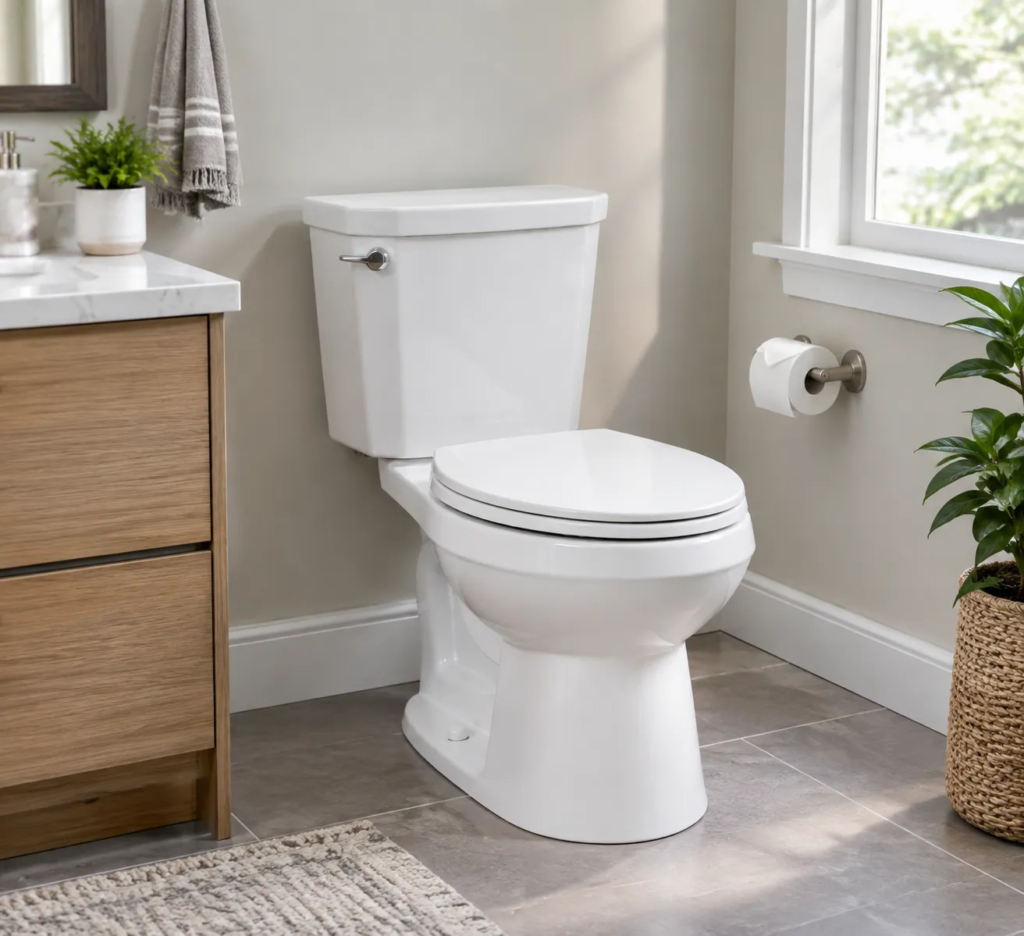
When evaluating whether the tank holes in two piece toilets standard width apply to your setup, the physical hole configuration on the bottom of the tank is the deciding factor. We engineer and categorize these connection points into three distinct hole types: mounting bolt openings, the central flush valve outlet, and the fill valve intake.
Understanding these configurations ensures you select the correct tank style and prevent structural leaks.
Two-Bolt vs. Three-Bolt Tank Connection Systems
The mounting pattern determines how securely the tank anchors to the bowl fixture:
- Two-Bolt Systems (Industry Standard): The vast majority of modern residential units use a two-bolt configuration. These holes sit directly across from each other, spaced symmetrically on either side of the flush valve. They provide straightforward alignment and simplify gasket compression.
- Three-Bolt Systems: Commonly found in select commercial or legacy brands, this layout adds a third bolt hole centered behind the flush valve to form a triangular anchor. While it provides extra stability against wall flexing, it requires a dedicated three-hole bowl platform and cannot be mounted onto a standard two-hole bowl.
Two-Bolt Layout: [ Bolt ] ---- ( Flush Valve ) ---- [ Bolt ] Three-Bolt Layout: [ Bolt ] ---- ( Flush Valve ) ---- [ Bolt ] \ [ Bolt ] /
2-Inch vs. 3-Inch Flush Valve Hole Variations
The large center discharge hole regulates water delivery into the bowl during each cycle:
- 2-Inch Valve Openings: Standard on traditional models and older plumbing systems. The inner diameter of the tank hole accommodates a compact discharge assembly and standard-profile spud gaskets.
- 3-Inch to 4-Inch High-Efficiency Openings: Standard on modern high-velocity and water-saving platforms. These larger discharge holes allow a faster water release for a stronger siphon flush.
Because the opening diameter dictates the required tank-to-bowl gasket and flush tower sizing, a 3-inch flush valve tank cannot seat properly onto a bowl engineered exclusively for a 2-inch inlet.
Universal Fill Valve Mounting Hole Standards
Unlike mounting bolts and discharge outlets, the water inlet hole maintains a universal industry standard:
- Standard Diameter: The fill valve opening measures approximately 7/8 inch to 1 inch (22 mm to 25 mm) in diameter.
- Consistent Placement: Positioned at the bottom-left base of the tank to align directly above the standard water supply line.
- Plumbing Fitting Compatibility: This universal sizing ensures virtually any standard aftermarket fill valve and 7/8-inch ballcock connector will fit securely without requiring brand-specific modifications.
How to Measure Toilet Tank Holes for Replacement
When asking if the tank holes in two piece toilets are standard width, the most reliable answer comes from taking exact measurements before purchasing replacement parts. Sizing discrepancies between brands are common, so measuring the mounting and drain openings directly ensures a leak-free fit.
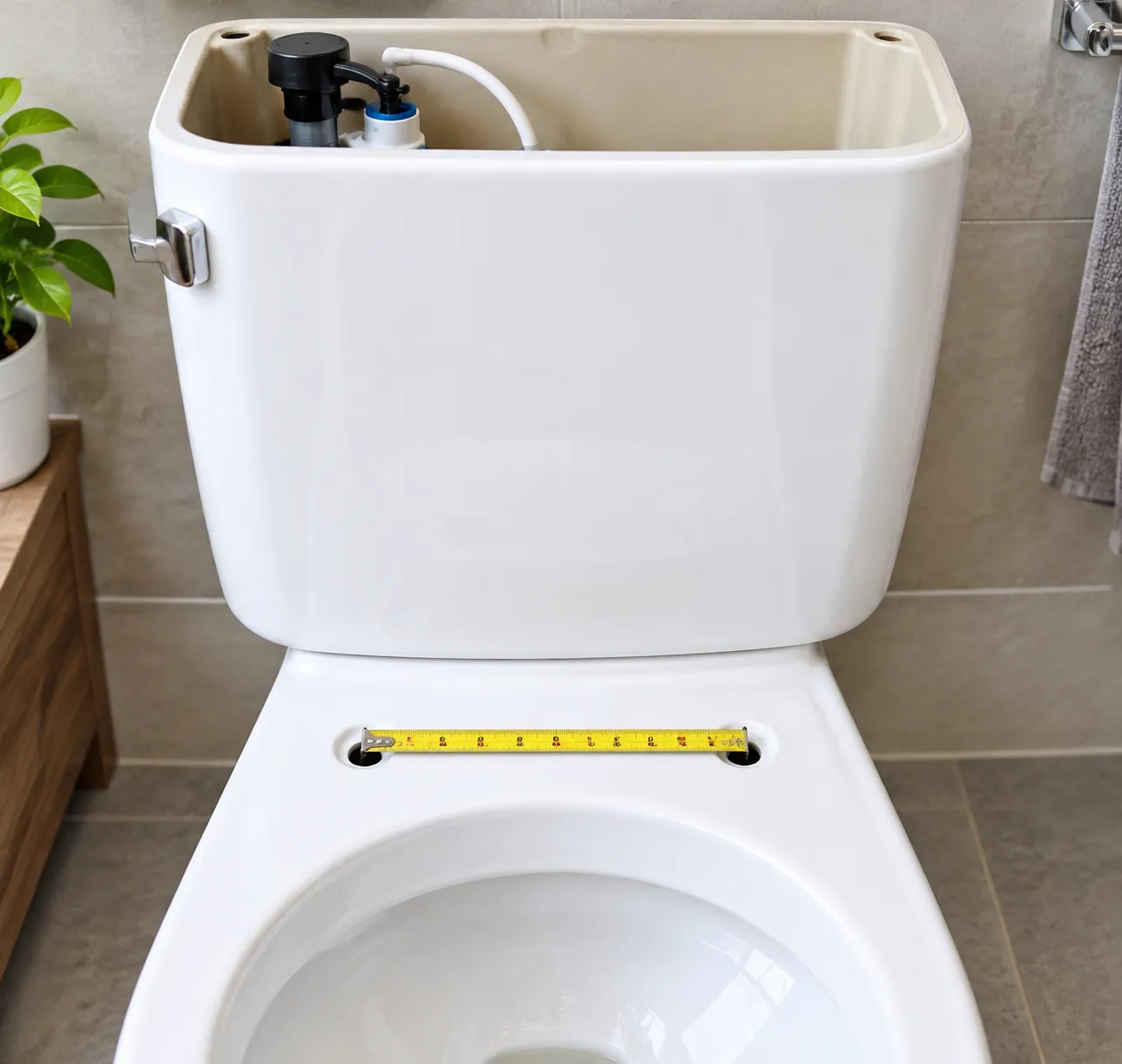
Measuring Tank Bolt Center-to-Center Spacing
To determine if your setup uses standard bolt dimensions, measure the center-to-center distance between the tank mounting holes:
- Drain the tank completely: Turn off the water supply valve, flush the toilet, and sponge out any remaining water.
- Locate the bolt heads: Look inside the tank or underneath the mounting flange on the rear of the bowl.
- Measure the spread: Place a tape measure at the exact center of the left bolt hole and extend it straight across to the center of the right bolt hole.
- Record the measurement: Most two-piece setups measure roughly 5.5 inches from center to center, though variations from 5 inches to 7 inches exist across different brands.
Determining Flush Valve Drain Hole Sizing
The large center opening at the bottom of the tank accommodates the flush valve plumbing fitting. Determining this size is critical for proper discharge and gasket sealing:
- Measure the inner diameter: Measure directly across the center discharge hole from one inner edge to the other.
- Identify standard sizes:
- 2-inch opening: Standard on traditional and older two-piece toilets (hole diameter measures approximately 2.5 to 2.75 inches to accommodate the valve threads).
- 3-inch opening: Common on high-efficiency modern models (hole diameter measures approximately 3.5 to 3.75 inches).
Matching Tank Hole Layouts with Bowl Inlet Design
A successful replacement requires that the hole pattern in the tank aligns perfectly with the water inlet and mounting holes on the toilet bowl platform:
- Check the bolt configuration: Verify whether the bowl requires a standard two-bolt spread or a triangular three-bolt mount.
- Verify gasket seating: Ensure the area surrounding the bowl’s water inlet allows the tank-to-bowl gasket to compress evenly without overlapping the bolt holes.
- Evaluate replacement options: While a universal toilet tank fits many standard two-bolt bowls, checking these layout dimensions guarantees proper alignment and eliminates the risk of cracked porcelain or persistent leaks.
Choosing the Right Replacement Tank or Gasket Kit
Finding the correct hardware comes down to knowing how your components align. While many homeowners ask if the tank holes in two piece toilets are standard width, differences in bolt spread and discharge openings mean you cannot simply grab any off-the-shelf kit. Matching the exact dimensions of your bowl ensures a watertight, reliable seal.
Selecting Universal vs. Brand-Specific Tank Gaskets
The tank-to-bowl gasket creates the critical seal between the tank drain and the bowl inlet. Choosing between a universal style and an OEM replacement depends on the setup:
- Universal Gaskets: Typically made of soft, pliable sponge rubber designed to compress across slight profile variations. They work well for standard 2-inch and 3-inch flush valves with flat mounting surfaces.
- Brand-Specific Gaskets: Engineered with unique bevels, ridges, or extra thickness required by proprietary models. Using a flat universal gasket on a contoured bowl inlet often leads to persistent slow leaks.
- Hardware Matching: Always pair the gasket with the correct plumbing fitting hardware, including corrosion-resistant brass or stainless steel bolts and heavy-duty rubber washers.
| Gasket Type | Best For | Key Advantage |
|---|---|---|
| Standard Sponge Rubber | Flat, standard 2-inch flush outlets | Broad compatibility across standard bowls |
| High-Efficiency Dual-Bevel | Modern 3-inch to 4-inch rapid flush valves | Handles higher water volume and pressure |
| Contoured OEM Fit | Proprietary bowl designs with molded recesses | Guarantees exact factory compression depth |
Finding a Compatible Replacement Tank for Your Bowl
Replacing only the tank requires careful verification of mounting dimensions before purchasing:
- Verify the Center-to-Center Distance: Measure the exact spacing between the tank mounting holes on your existing bowl (typically 5.5 inches for standard setups).
- Match the Flush Valve Diameter: Ensure the replacement tank discharge port (2-inch or 3-inch) aligns directly over the water intake hole on your bowl.
- Check the Footprint and Clearance: Even if a universal toilet tank matches the bolt spread, verify that the rear wall clearance and the tank base shape sit evenly on the bowl platform without rocking.
Common Installation Pitfalls and How to Avoid Leaks
Most tank installation issues stem from improper hardware tension and alignment errors. Keep these practices in mind during assembly:
- Avoid Overtightening: Porcelain is brittle. Tighten mounting bolts evenly from side to side, alternating a few turns at a time until the tank rests firmly on the bowl without rocking. Never force bolts with power tools.
- Layer Washers Correctly: Always place the rubber washer inside the tank directly against the porcelain before inserting the bolt. The metal washer and nut go on the exterior underside.
- Keep the Gasket Centered: Double-check that the large center gasket does not twist or slide out of position when lowering the tank onto the bowl.
- Inspect the Plumbing Fitting: Replace worn supply lines and inspect the fill valve shank to prevent secondary leaks around the water inlet hole.