Understanding the Basics: Smart Toilet vs. Bidet Seat
Upgrading your bathroom hygiene starts with a simple choice: adding an electronic seat to your existing setup or investing in a completely unified system. Both options deliver superior cleansing compared to traditional toilet paper, but their design, functionality, and installation requirements differ significantly.
What Is a Bidet Seat?
A bidet seat is a specialized, standalone attachment designed to replace your current traditional toilet seat. It mounts directly onto your existing ceramic bowl, connecting directly to your home's water supply and, in most modern versions, a standard GFCI electrical outlet.
Key characteristics include: Targeted Cleansing: Features extendable spray nozzles providing a warm water wash alongside precise water pressure control. Retrofitted Design: Compatible with most standard round or elongated bowls without altering bathroom plumbing architecture. Accessible Upgrade: Delivers advanced personal hygiene features at a fraction of the cost of a full fixture replacement.
What Is an Integrated Smart Toilet?
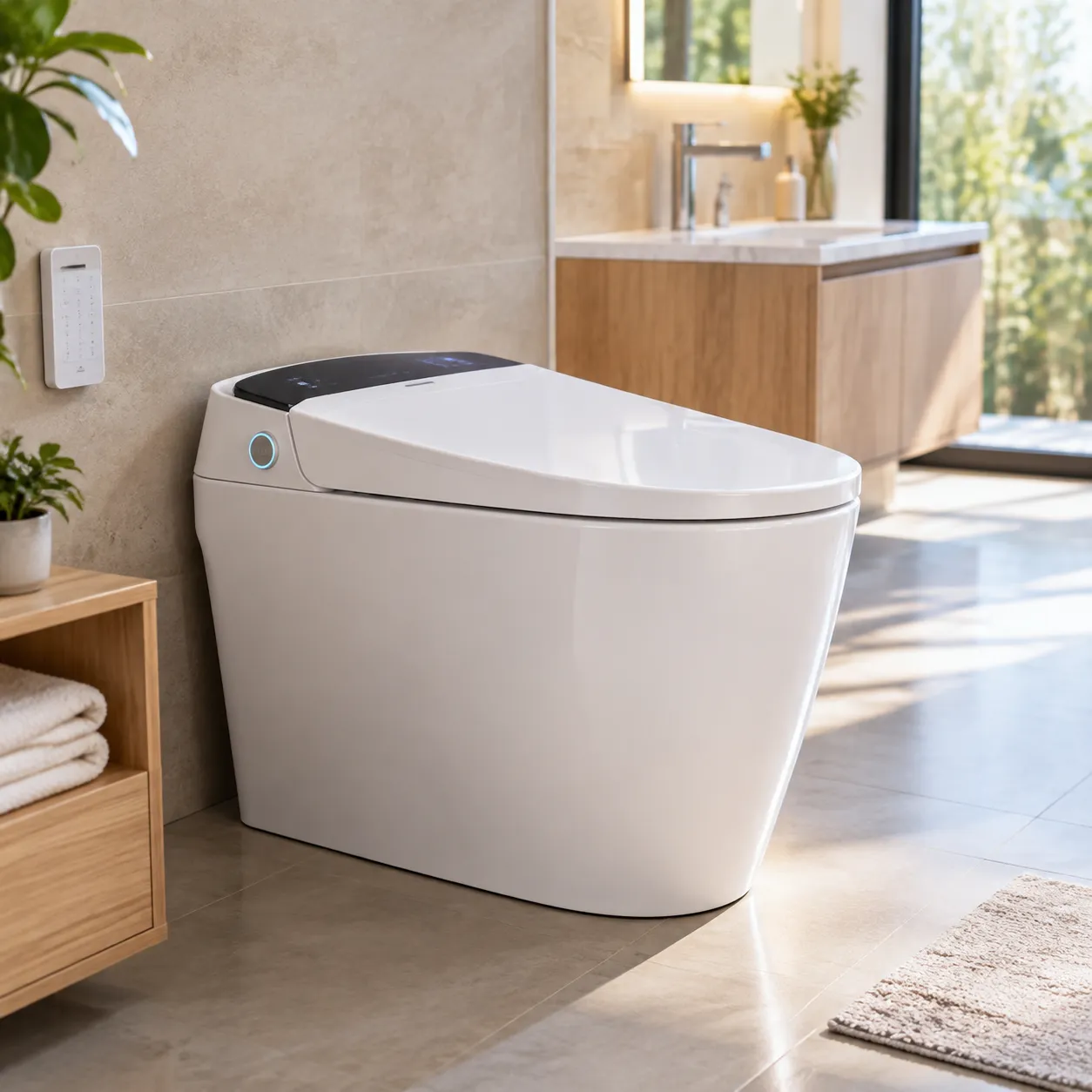
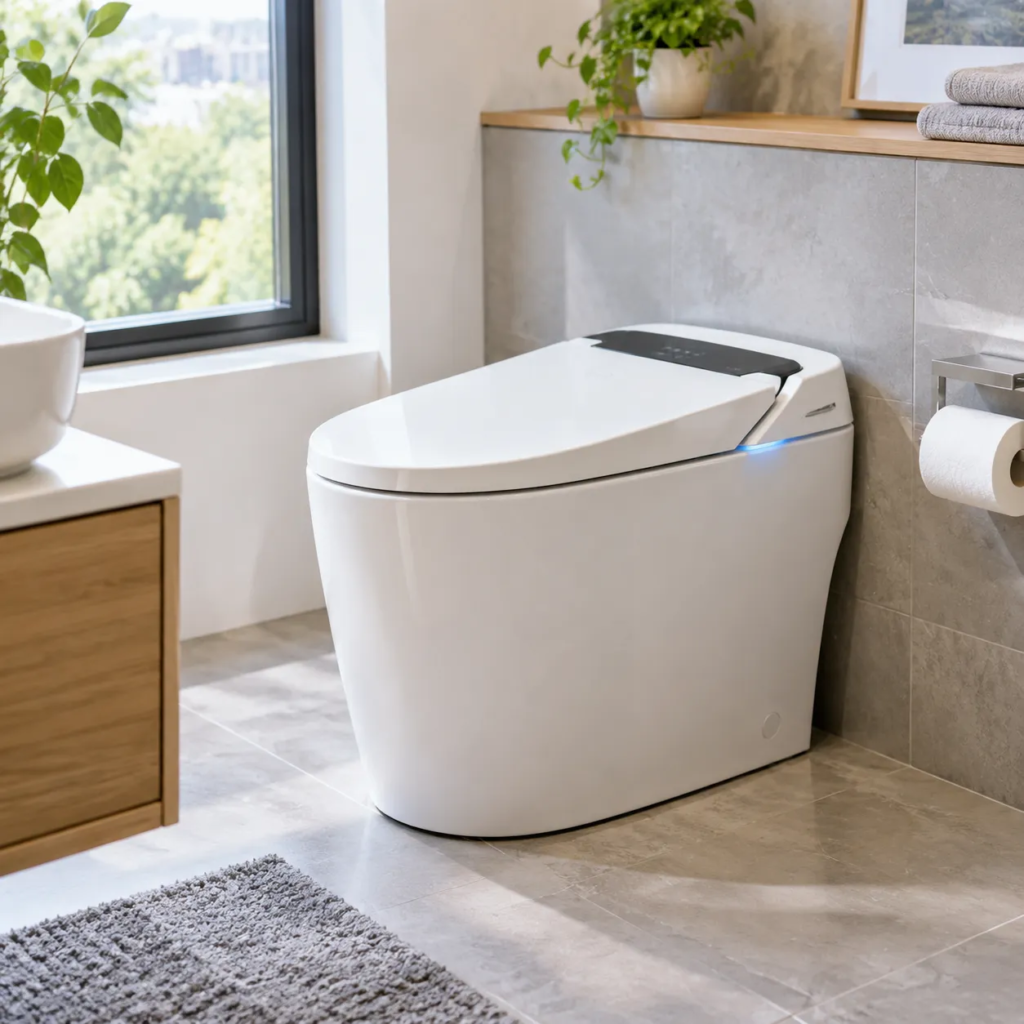
An integrated smart toilet is an all-in-one luxury fixture where the ceramic bowl, flushing mechanism, and electronic bidet technology are engineered as a single, seamless unit.
Key characteristics include: Unified Aesthetics: Tankless or concealed-tank profiles offer a modern, minimalist footprint. Automated Convenience: Equipped with built-in sensors for hands-free auto-open, auto-close, and automatic flushing. Fully Embedded Systems: Hidden water lines and electrical connections create a clean, clutter-free bathroom space.
Core Differences at a Glance
| Feature | Bidet Seat | Integrated Smart Toilet |
|---|---|---|
| Fixture Type | Add-on attachment | Complete all-in-one fixture |
| Installation | DIY-friendly (under 1 hour) | Professional plumbing/electrical required |
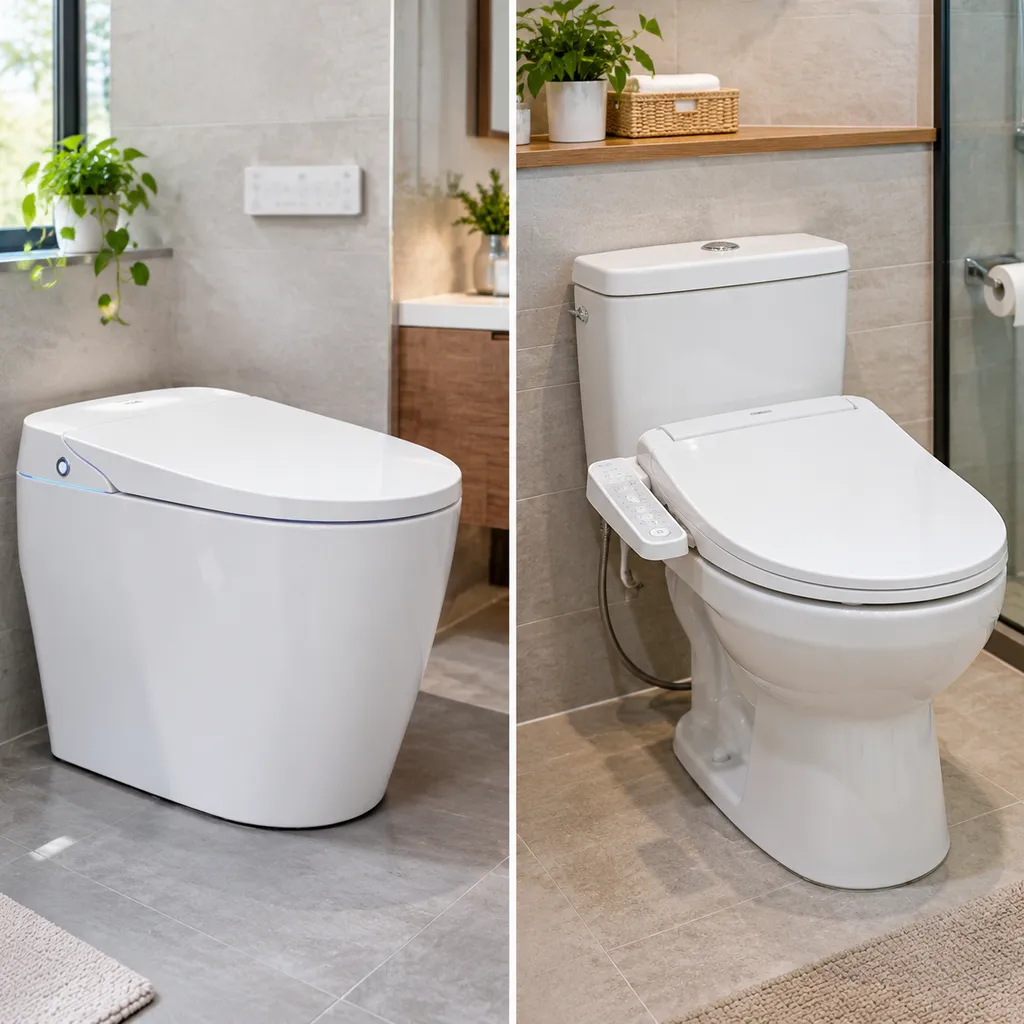
| Visual Footprint | External cords and visible hose lines | Fully concealed connections and streamlined body |
| Flushing Mechanism | Uses existing manual flush system | Built-in smart/automatic flushing mechanisms |
| Primary Advantage | Cost-effective and portable | Premium design and seamless functionality |
Bidet Seat Overview: Features, Pros, and Cons
An electronic bidet seat is the fastest way to upgrade your daily bathroom routine without replacing your entire fixture. It mounts directly onto your existing bowl, delivering targeted hygiene and modern comfort at a fraction of the cost of a full unit.
Key Features and Functionality
Modern bidet seats pack essential cleansing technology into a streamlined attachment:
- Warm Water Wash: Instant or tank-heated water streams with adjustable temperature settings.
- Water Pressure Control: Multi-level pressure adjustments for personalized cleansing modes, including rear and feminine wash.
- Heated Seating: Ergonomic seats with adjustable warmth settings for immediate comfort.
- Warm Air Dryer: Built-in drying systems that significantly reduce toilet paper consumption.
- Self-Cleaning Nozzles: Retractable stainless steel or antimicrobial plastic wands that rinse before and after every use.
| Feature Category | Standard Bidet Seat Capabilities |
|---|---|
| Cleansing | Front/rear wash, oscillating spray, water pressure control |
| Comfort | Multi-level seat warming, warm water wash, air dryer |
| Operation | Side-mounted control panel or wireless wall remote |
| Hygiene | Automatic nozzle sterilization, slow-close lid |
Pros: Affordability and Easy Installation
When comparing a smart toilet vs bidet seat, the seat version provides unmatched value and convenience:
- Budget-Friendly: You get high-end hygiene features without paying for a completely new ceramic fixture.
- DIY Installation: Installs in under 30 minutes using standard plumbing connections and basic household tools.
- Renter-Friendly: Easily removable without damaging the existing plumbing, allowing you to take it with you when you move.
- Broad Compatibility: Fits most standard round and elongated porcelain bowls on the market.
Cons: Design and Functionality Limitations
While functional, bidet seats come with noticeable trade-offs compared to a fully integrated smart toilet:
- Aesthetic Clutter: Visible power cables, water supply hoses, and raised rear housings can look bulky on traditional bowls.
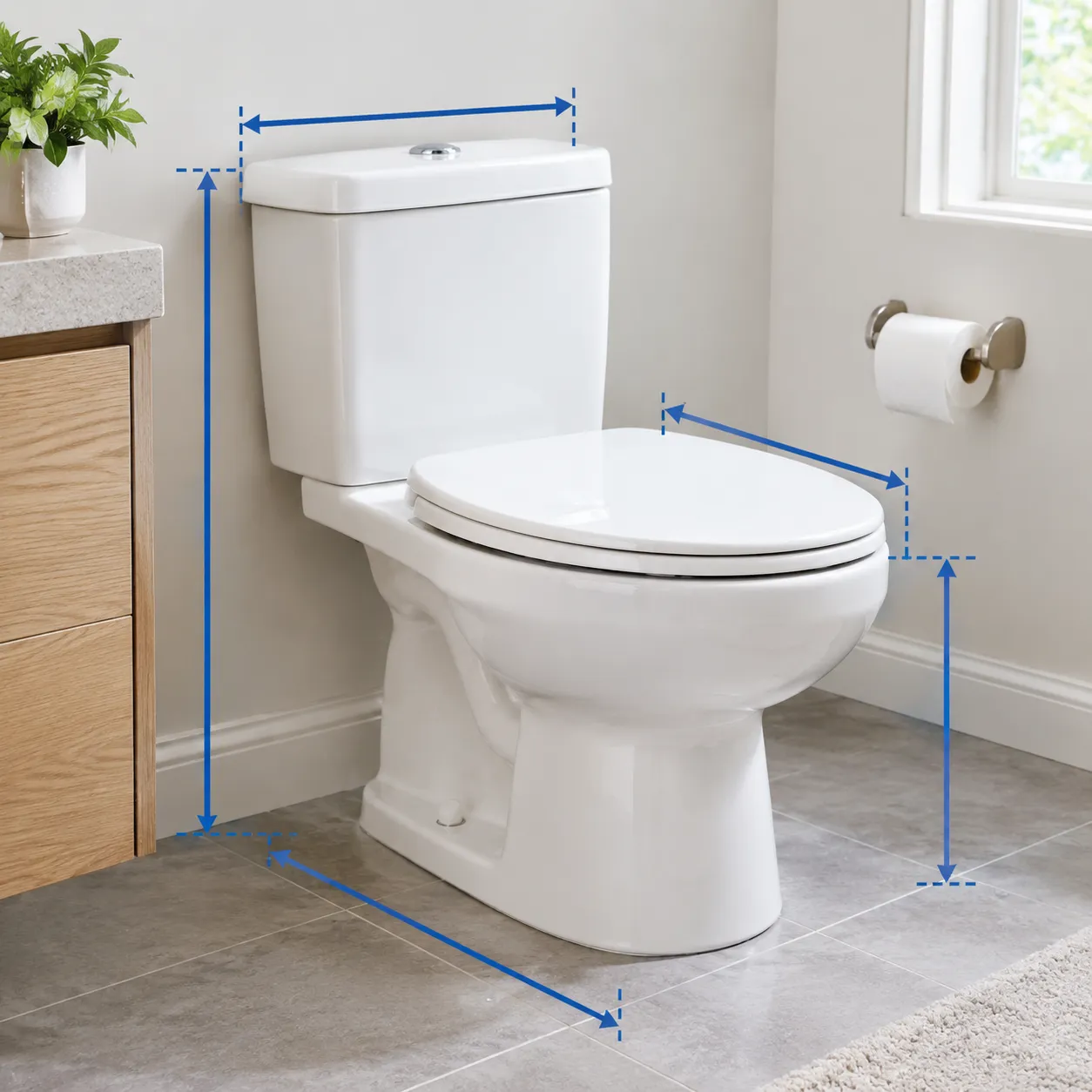
- Fit Inconsistencies: Slight overhangs or gaps may occur if the seat dimensions do not perfectly match the toilet rim.
- Manual Flushing: Most add-on seats cannot trigger an automatic flush, requiring you to handle the tank lever manually.
- Power Access Required: Requires a nearby GFCI electrical outlet, which may involve running extension cables if your bathroom lacks close wall power.
Smart Toilet Overview: Features, Pros, and Cons
An integrated smart toilet combines the ceramic bowl and advanced cleansing technology into a single, cohesive fixture. When evaluating a smart toilet vs bidet seat, full smart units represent the high-end benchmark for modern bathroom luxury and automation.
| Feature Category | Integrated Smart Toilet Capabilities |
|---|---|
| Cleansing System | Instant warm water wash, oscillating/pulsating spray, nozzle self-sanitization |
| Operation | Hands-free sensors, remote control, automatic flush |
| Comfort | Multi-level heated seating, warm-air drying, active deodorizer |
| Form Factor | Tankless or streamlined ceramic design with hidden connections |
Advanced Features and Luxury Options
A premium integrated smart toilet goes far beyond basic hygiene by providing an automated, high-touch experience:
- Precision Cleansing: Dynamic water pressure control pairs with instant heating systems to ensure consistent temperature and spray strength.
- Touchless Automation: Built-in motion sensors automatically open the lid upon approach, trigger a quiet siphon flush upon departure, and close the unit seamlessly.
- Sanitary Enhancements: Electrolyzed water systems and UV light modules continuously sanitize the wand and bowl after every cycle.
- Ambient Additions: Integrated nightlights, programmable user presets, and built-in carbon air filters neutralize odors instantly.
Pros: Premium Aesthetics and Integrated Tech
- Sleek, Unified Design: Unlike bolt-on seats, these units have no awkward overhangs, mismatched colors, or visible water lines.
- Superior Ergonomics: The low-profile, tankless form factor maximizes floor space and delivers a clean, architectural finish.
- Fully Synchronized Controls: Sensors, flushes, and wash cycles operate through a centralized processor, creating reliable and quiet automation.
- High Property Value: Installing a modern smart toilet elevates bathroom functionality and enhances overall home resale appeal.
Cons: High Cost and Complex Installation
- Significant Upfront Price: Total investment is substantially higher than buying an add-on attachment.
- Demanding Installation: Requires removing the existing toilet entirely, aligning specific rough-in measurements, and running a dedicated GFCI electrical line.
- Service and Maintenance: Repairing integrated electronic components requires specialized parts and professional plumbing support compared to standard standalone fixtures.
Side-by-Side Comparison: Smart Toilet vs. Bidet Seat
When choosing between a smart toilet vs bidet seat, breaking down how each option performs across daily use, budget, and setup is essential. Here is a direct comparison of what to expect:
| Feature / Factor | Bidet Seat | Integrated Smart Toilet |
|---|---|---|
| Initial Investment | Low to Moderate | High to Luxury |
| Installation Difficulty | Easy DIY (15–45 minutes) | Professional Installation Recommended |
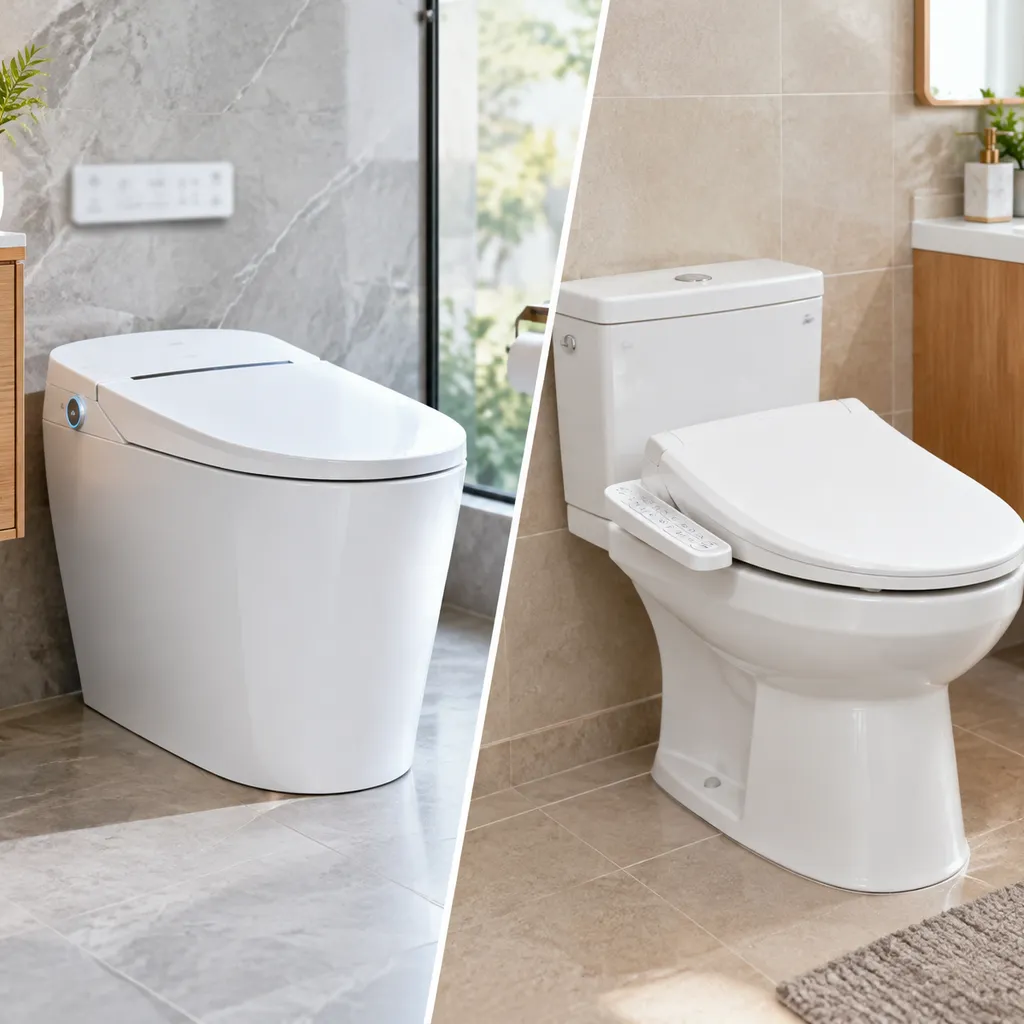
| Design Integration | Add-on attachment over existing bowl | Seamless, all-in-one fixture |
| Water & Spray Features | Warm water wash, water pressure control | Multi-mode wash, automated pressure & angle presets |
| Electrical Needs | Standard nearby GFCI outlet | Dedicated GFCI circuit often required |
| Space Footprint | Fits existing toilet dimensions | Compact, often tankless or low-profile |
Price and Total Budget
Budget is usually the primary deciding factor when comparing a smart toilet vs bidet seat:
- Bidet Seat: Offers the highest return on investment. It turns your current porcelain throne into a high-tech hygiene station without replacing the whole fixture or paying high labor rates.
- Integrated Smart Toilet: Represents a full fixture upgrade. In addition to the higher unit price, factor in professional installation costs for plumbing and electrical work.
Installation and Plumbing Requirements
The physical setup varies significantly depending on the route you choose:
- Bidet Seat Setup: Mounts directly onto standard elongated or round bowls. Plumbing consists of a simple T-valve connected to your existing water shutoff valve. Most installations take less than an hour with basic hand tools.
- Smart Toilet Setup: Involves removing the old toilet entirely, securing the new base to the flange, and aligning the rough-in dimensions. Because of integrated electronics and automated flushing systems, precise water line connections and a dedicated electrical outlet behind the unit are essential.
Design, Space, and Aesthetics
Visual appeal and bathroom layout play a major role in the overall feel of your space:
- Bidet Seats: While modern designs are relatively slim, they remain an add-on. You will see an external water hose and power cord connecting to the side of the fixture.
- Smart Toilets: Built with a unified, modern aesthetic. The cords and supply lines stay completely concealed within the ceramic housing. Many models feature sleek, tankless profiles that visually expand compact bathrooms and modern powder rooms.
Maintenance, Lifespan, and Energy Usage
Keeping your unit running efficiently over time comes down to routine care and component longevity:
- Cleaning & Care: An integrated smart toilet often features rimless bowl engineering, auto-flushing, and pre-misting bowl coatings that minimize manual scrub time. Bidet seats require regular removal from the mounting plate to wipe down the porcelain surface underneath.
- Hygiene Technology: Both options deliver self-cleaning nozzles, adjustable warm water wash settings, and water pressure control for clean, hands-free operation.
- Power & Longevity: High-end units utilize instantaneous water heating, drawing electricity only during active wash cycles. If a standalone bidet seat ever wears out, replacement is quick and modular; a smart toilet is an enduring fixture engineered for long-term bathroom integration.
Which Should You Choose? Buying Guide for Different Needs
Choosing between a smart toilet vs bidet seat comes down to your living situation, your renovation goals, and how much you want to spend upfront. Both options provide an upgrade to daily hygiene with features like a warm water wash and customizable water pressure control, but they serve very different living spaces and project scopes.
| Feature / Scenario | Add-On Bidet Seat | Integrated Smart Toilet |
|---|---|---|
| Best For | Renters, tight budgets, quick upgrades | Full remodels, new builds, luxury suites |
| Installation | DIY in under 30 minutes | Professional plumbing and electrical setup |
| Portability | Easy to remove and take when moving | Permanent fixture |
| Aesthetic | Functional add-on to existing ceramic | Sleek, seamless, tankless design |
Best Options for Budget Shoppers and Renters
If you live in a rental property or want to upgrade your hygiene routine without a major renovation, a bidet seat is the practical choice:
- Non-Permanent Installation: You can mount a bidet seat on your existing toilet bowl and remove it when your lease ends without damaging the plumbing.
- Cost Efficiency: You get core luxury functions—such as instant heating, adjustable nozzles, and water pressure control—at a fraction of the cost of a full unit.
- Minimal Tool Requirements: Most seats install with standard household tools and connect directly to your existing shutoff valve.
Best Options for Bathroom Remodels and Luxury Homes
For comprehensive bathroom overhauls or new construction, an integrated smart toilet delivers a cohesive, high-end experience:
- Streamlined Design: An integrated smart toilet eliminates the bulky external tank, creating a clean, modern aesthetic that saves visual and physical space.
- Unified Technology: Features like auto-open lids, foot-sensor flushing, built-in deodorizers, and self-cleaning UV nozzles are fully engineered into a single, cohesive ceramic unit.
- Long-Term Property Value: A fully integrated unit serves as an architectural upgrade that elevates the overall design and appeal of modern residential spaces.
Key Considerations Before Buying
Before making a final purchase, evaluate these essential practical factors:
- Power Supply: Both bidet seats and integrated units require a nearby GFCI electrical outlet to power warm water wash systems and heated seats.
- Bowl Compatibility: Standard bidet seats require you to measure your current toilet to ensure a proper fit (elongated vs. round bowl shapes).
- Plumbing and Water Pressure: Integrated smart toilets often require specific water line clearance and minimum dynamic water pressure to operate their direct flush valves properly.
- Maintenance Access: Check whether the model allows quick nozzle detachment and easy filter replacement to ensure reliable long-term performance.
Frequently Asked Questions
Can a bidet seat fit on any standard toilet?
Most bidet seats easily fit standard two-piece toilets, whether you have an elongated or round bowl profile.
- Compatibility Check: Measure the distance between the mounting holes and the front edge of the tank before purchasing.
- Exceptions: Toilets with unusual French curves, concealed skirted designs without top-mount access, or certain one-piece setups may require specific adapter plates or dedicated compatible seat models.
Do bidet seats and smart toilets require electrical outlets?
An integrated smart toilet always requires a dedicated GFCI electrical outlet near the base to power advanced electronics, auto-flushing, and instant warm water wash systems.
- Electric Bidet Seats: Require a standard 120V GFCI outlet nearby to run features like heated seats, warm-air dryers, and digital water pressure control.
- Non-Electric Bidet Seats: Connect directly to the existing water supply line and operate purely on water pressure without any electrical wiring.
Are smart toilets worth the extra cost over bidet seats?
When weighing a smart toilet vs bidet seat, the higher investment in an integrated unit is worth it if you are remodeling and want a streamlined, minimalist bathroom aesthetic. A complete smart toilet eliminates bulky external hoses, provides seamless auto-flush technology, and offers a truly cohesive fixture. If your primary goal is personal hygiene and functional comfort on a practical budget, an add-on bidet seat provides the essential washing features at a fraction of the cost.