
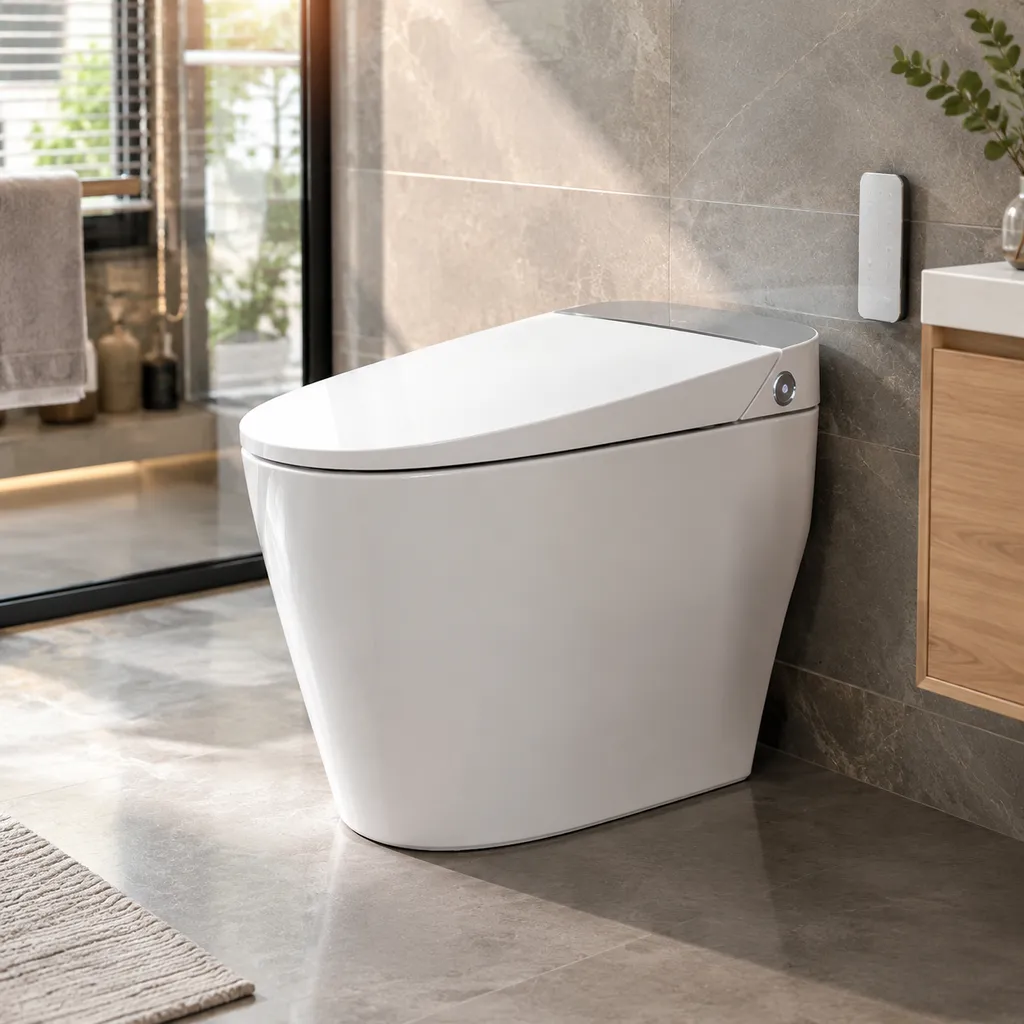
Overview
Core Sensor Technologies in Modern Smart Toilets
Upgrading to an advanced smart toilet with sensors eliminates contact points, streamlines bathroom hygiene, and elevates personal comfort. We build our units with dedicated, multi-tier sensor modules engineered to recognize natural user movements while eliminating false triggers.
Radar and Microwave Proximity Sensors
Traditional motion sensors often struggle with blind spots and slow response times. Our smart toilets utilize high-frequency radar and microwave detection for seamless touchless lid opening:
- Precise Approach Detection: Senses your approach within a 3-foot range to smoothly lift the lid automatically.
- Smart Motion Discrimination: Distinguishes between someone walking past the doorway and a user approaching the bowl directly.
- Auto-Close Timer: Detects when you step out of range and gently lowers the lid and seat after a preset delay.
Infrared Seat Occupancy Sensors
Reliable skin and pressure detection prevents accidental activation and ensures full operational safety.
- Skin-Contact Verification: Built-in infrared arrays confirm actual occupancy before enabling bidet wash or drying functions.
- Anti-Misfire Safety: Prevents accidental wand spraying or heating when the seat is vacant or cleaned.
- Dynamic Departure Tracking: Signals the system to initiate the cleaning and flushing cycle the moment you stand up.
Foot-Kick Sensor Mechanisms
For completely hands-free operation without bending down, our base-mounted foot sensor provides effortless mechanical control:
- Dual-Action Command: A single tap with your foot lifts the lid; a second tap raises the seat for standing use.
- Touchless Flush Trigger: Initiates a full bowl flush via foot interaction without requiring remote or button contact.
- Low-Profile Placement: Recessed cleanly near the floor to prevent accidental foot contact during routine walking.
Ambient Light Sensors for Automatic Nightlights
Navigating the bathroom in the dark should never require harsh, waking overhead lights.
- Photosensitive Activation: An integrated light-dependent resistor (LDR) detects low ambient room light and turns on an interior bowl glow.
- Energy-Efficient Soft Illumination: Emits a gentle, glare-free LED light directly into the bowl for safe nighttime guidance without disturbing your sleep cycle.
Essential Comfort Features in an Advanced Smart Toilet with Sensors

We build smart bathroom fixtures around daily usability. An advanced smart toilet with sensors takes the guesswork out of personal hygiene by managing water, temperature, and airflow automatically based on real-time user detection.
Touchless Automatic Flushing Based on Departure Timing
- Departure Detection: The integrated seat sensor tracks when you stand up and initiates a full or partial flush after a 3-second delay.
- Hands-Free Hygiene: Eliminates the need to touch flush handles, keeping surfaces sanitary.
- Dual-Flush Optimization: The system measures seated duration to determine whether a liquid or solid flush volume is required, saving water on every cycle.
Dynamic Bidet Wand Positioning and Instant Warm Water
- Multi-Position Nozzle: The stainless-steel wand adjusts its reach across multiple spray settings for precision washing.
- Instant Ceramic Heating: Continuous water heating delivers constant warm water at your selected temperature without sudden cold bursts.
- Oscillating and Pulsating Modes: Targeted water pressure cycles back and forth for thorough, gentle cleansing.
Instant Warm Air Drying with Automated Shutoff
- Custom Airflow Temp: Multi-level heat settings quickly reduce moisture without rough toilet paper.
- Automated Shutoff: Sensor-driven safety shuts the blower off immediately once you rise from the seat, preventing wasted electricity.
Automated Heated Seat with Energy-Saving Standby
- Instant Warmth: Built-in heating elements maintain consistent surface temperatures across customizable heat levels.
- Eco Standby Mode: When the bathroom is unoccupied, the system lowers the seat temperature to an energy-saving baseline, heating up instantly upon proximity detection.
| Comfort Feature | Sensor Trigger | Everyday Benefit |
|---|---|---|
| Touchless Auto Flush | Departure timing (3s delay) | Hands-free operation & water conservation |
| Instant Warm Water Bidet | Occupancy & position sensors | Continuous warm wash tailored to user build |
| Warm Air Dryer | Seating engagement / auto-off | Complete paperless drying with zero wasted power |
| Smart Heated Seat | Proximity detection | Eliminates cold shocks while reducing idle power draw |
Automated Hygiene and Self-Cleaning Systems

I design our advanced smart toilet with sensors to handle the dirty work automatically. By using built-in sensors to track every stage of use, the unit runs targeted cleaning cycles before, during, and after each visit.
Pre-Wetting Bowl Mist Sensor
- Active Surface Protection: The moment you sit down, proximity sensors trigger an automatic pre-mist bowl hygiene cycle.
- Waste Adhesion Prevention: A light spray of water coats the ceramic glaze, creating a slick barrier that stops waste from sticking.
- Less Manual Scrubbing: Keeps the bowl cleaner between flushes without requiring harsh chemical cleaners.
Automatic UV Wand Sterilization
- Dual-Cycle Sanitizing: The system engages UV nozzle sterilization automatically before extending and immediately after retracting.
- Deep Bacterial Elimination: Ultraviolet light targets the stainless steel wand surface to neutralize bacteria and microbes.
- Hands-Free Peace of Mind: Operates entirely in the background without any manual button presses required.
Built-In Catalytic Deodorizer
- Instant Seating Activation: The infrared seat sensor activates the deodorizing carbon filter toilet system the second skin contact is detected.
- Active Odor Extraction: An internal fan pulls air from inside the bowl through an activated carbon and catalytic filter.
- Direct Air Neutralization: Neutralizes bathroom odors at the source rather than just masking them with artificial scents.
Anti-Scale Automatic Nozzle Rinse and Purge Cycles
- Freshwater Flush: The wand runs a high-pressure self-rinse cycle using fresh water before and after every bidet spray.
- Anti-Scale Purge: Regular purge sequences clear standing water from the internal lines, preventing mineral buildup and scale formation.
- Consistent Flow: Keeps the internal mechanics clean and ensures smooth, hygienic water flow for the long haul.
Installation Requirements for an Advanced Smart Toilet with Sensors
Installing an advanced smart toilet with sensors requires planning for both electrical supply and plumbing compatibility. Below are the core technical specifications needed to ensure safe operation and optimal flushing performance.
Quick Reference Specs
| Component | Standard Requirement | Practical Consideration |
|---|---|---|
| Electrical Supply | 110V–120V dedicated GFCI outlet (15A/20A) | Position 12–16 inches above floor level, within 3 feet of unit |
| Dynamic Water Pressure | 30 to 50 PSI (0.2 to 0.35 MPa) minimum | Tankless models need steady direct-line flow for strong jet flushing |
| Rough-in Distance | Standard 12-inch (305 mm) rough-in | Measure from finished wall to center of closet flange |
| Emergency Power | 9V battery or built-in DC backup pack | Enables manual flush operation during power outages |
Key Installation Steps to Check
- GFCI Outlet Positioning: Ensure a dedicated GFCI outlet is placed to the left or right of the toilet base to prevent cord strain and protect against moisture contact.
- Dynamic Water Flow Check: Tankless smart toilets draw water directly from the main line. Verify that your supply line provides adequate flow (minimum 5 gallons/minute) to support the automated flush cycle.
- Flange & Floor Compatibility: Use standard 3-inch or 4-inch waste flanges with a level subfloor to prevent sensor misalignments caused by uneven seating.
- Battery Backup Setup: Install the integrated 9V emergency battery pack into the designated access compartment so the manual flush button functions even during blackout conditions.
Advanced Smart Toilet with Sensors vs. Standard Bidet Seat
Choosing between a dedicated advanced smart toilet with sensors and an add-on bidet seat comes down to how much automation, performance, and clean design you want in your space. Here is how both options stack up in real-world use.
| Feature / Metric | Integrated Smart Sensor Toilet | Add-On Bidet Seat |
|---|---|---|
| Design Integration | Sleek, tankless smart toilet combo with concealed lines | Bulkier profile, visible cords, sits on top of existing porcelain |
| Sensor Accuracy | Radar motion sensor toilet tech with precise range tuning | Basic infrared sensors, higher chance of false triggers |
| Waterproofing Rating | Full-body IPX4 or IPX8 moisture protection | Basic splash resistance, exposed seam vulnerabilities |
| Lid Automation | Automatic open close lid sensor plus foot sensor operation | Mostly manual, motorized lids are slower and rarer |
| Flush Integration | Built-in touchless auto flush toilet system | Requires a separate mechanical kit or manual lever flush |
| Upfront Cost | Higher initial investment | Lower entry price |
Design Integration and Aesthetic Footprint
- All-in-one profile: A fully integrated unit hides all supply hoses and electrical connections inside the ceramic housing, eliminating visual clutter.
- Compact footprint: Removing the bulky external gravity tank frees up several inches of floor space, making small bathrooms feel open.
- Add-on limitations: Retrofit seats always add height to the back of your existing bowl, often creating hard-to-clean gaps where dust collects.
Sensor Reaction Speed and False-Trigger Prevention
- Advanced detection: Integrated units use multi-zone microwave and radar sensors that differentiate between someone walking past and someone stepping up to use the unit.
- Instant response: The automatic open close lid sensor activates smoothly on approach, while an integrated foot kick sensor flush gives you hands-free control without bending down.
- Basic seat sensors: Standard add-on bidet attachments rely on simple infrared beams that can trigger unexpectedly when you reach for a towel or walk near the vanity.
Long-Term Durability, Waterproofing, and Repairability
- Built for wet environments: Integrated units feature seamless ceramic-to-composite transitions rated up to IPX4 or IPX8 waterproofing, protecting the internal logic boards from steam and cleaning sprays.
- Component accessibility: High-grade smart units utilize modular internal valves and sealed sensor blocks, making part swaps straightforward without replacing the entire fixture.
- Wear resistance: Standard bidet seats flex slightly under shifting body weight over time, which can stress the plastic mounting brackets and crack internal water seals.
Upfront Cost vs. Long-Term Water and Paper Savings
- Reduced paper reliance: High-efficiency heated wash cycles paired with automated warm air drying eliminate regular toilet paper use by over 90%.
- Optimized water consumption: The sensor-driven flush engine calculates the exact water volume needed based on dwell time, using significantly less water per flush than conventional gravity tanks.
- Total value: While an all-in-one smart fixture demands more capital upfront, it eliminates the need for future seat upgrades, cuts plumbing maintenance, and delivers a fully unified hands-free bathroom technology experience.
Troubleshooting and Sensor Maintenance Tips for Your Advanced Smart Toilet with Sensors

Keeping an advanced smart toilet with sensors running smoothly comes down to basic upkeep and a few quick calibration tweaks. When the sensors stay clean and properly set, you avoid almost all common operating glitches.
Cleaning Sensor Windows Without Surface Damage
The optical and infrared windows need a clear line of sight to detect movement accurately. Scratched or clouded sensor covers lead to erratic performance.
- Use microfiber only: Wipe the sensor zones with a soft, damp microfiber cloth. Avoid paper towels, abrasive pads, or rough sponges.
- Stick to mild cleansers: Use warm water mixed with a drop of neutral soap. Never spray harsh bleach, ammonia, or aerosol bathroom cleaners directly onto the sensor housing.
- Dry immediately: Buff the area dry with a separate clean cloth to prevent mineral deposits from evaporated tap water.
Adjusting Proximity Sensor Range in Compact Bathrooms
In smaller layouts, a radar motion sensor toilet might open the lid every time you walk past the doorway. You can dial in the detection zone quickly:
- Lower the sensitivity level: Access the range settings via the remote control to shorten the detection distance from the default setting down to a closer range (typically 1 to 2 feet).
- Reposition foot sensors: If your unit features a foot kick sensor flush or touchless lid trigger, ensure the floor area directly underneath remains clear of bath mats or laundry baskets that might block the beam.
Fixing Phantom Flushes and Delayed Lid Responses
If the seat opens sluggishly or triggers a touchless auto flush toilet cycle with nobody around, use these direct fixes:
| Issue | Probable Cause | Quick Fix |
|---|---|---|
| Phantom Flushing | Steam buildup or direct sunlight hitting the sensor | Wipe down the sensor face; adjust bathroom lighting or shift blinds to reduce direct glare. |
| Delayed Lid Opening | Dust accumulation on the radar sensor | Clean the sensor cover thoroughly; check remote pairing settings. |
| Unresponsive Foot Sensor | Low ambient lighting or physical obstruction | Clear floor debris; confirm the base sensor window is free of moisture buildup. |
Maintaining Nozzle Mechanics and Inline Water Filters
Hard water scale can jam the internal mechanics and weaken the spray pressure over time.
- Swap inline water filters: Replace the external sediment and carbon filter every 4 to 6 months to stop mineral buildup before it reaches internal valves.
- Run manual nozzle extensions: Extend the wand via the maintenance button and wipe the shaft with a soft brush dipped in diluted white vinegar.
- Clear scale from the tip: Inspect the nozzle head monthly to ensure water ports remain clear, ensuring the automated rinse cycle works at full pressure.
FAQs: Advanced Smart Toilet with Sensors
Will household pets accidentally trigger the motion sensors?
Most radar motion sensor toilet units are tuned to recognize human-sized mass and approach angles.
Cats and small dogs: Rarely trigger the auto-lid unless they jump directly onto the seat or walk immediately across a low-mounted foot sensor operation beam.
Large dogs: Walking closely past the bowl might occasionally wake the proximity sensor. If this becomes an issue, we recommend adjusting the sensor detection distance or height settings on your unit.
How do you flush an advanced smart toilet during a power outage?
We design modern units to remain fully functional when the power cuts out:
Built-in battery backup: Most models feature an emergency 9V or lithium smart toilet battery backup flush compartment underneath the base or inside the side housing.
Mechanical side buttons: A physical manual button allows direct valve release without needing live AC power.
Gravity bucket flush: As with standard toilets, pouring a bucket of water directly into the trapway will still clear waste mechanically.
Can you disable specific sensors for manual remote control?
Yes. Every automated function can be toggled off individually depending on your preference:
Auto-lid opening: Switch to manual mode if your bathroom layout is tight and triggers unwanted openings.
Motion sensor flush: Deactivate departure flushing to rely strictly on the wireless remote or side knob.
Foot kick sensor flush: Turn off the lower beam entirely via the remote control interface.
How much electricity does a smart toilet consume monthly?
Energy draw is minimal because modern units use tankless on-demand heating rather than storing hot water continuously:
Average monthly usage: Roughly 15 to 30 kWh per month under normal household conditions.
Eco mode savings: Utilizing built-in smart eco-presets drops seat heating wattage during inactive hours, keeping total operating costs to just a few dollars a month.


