Overview
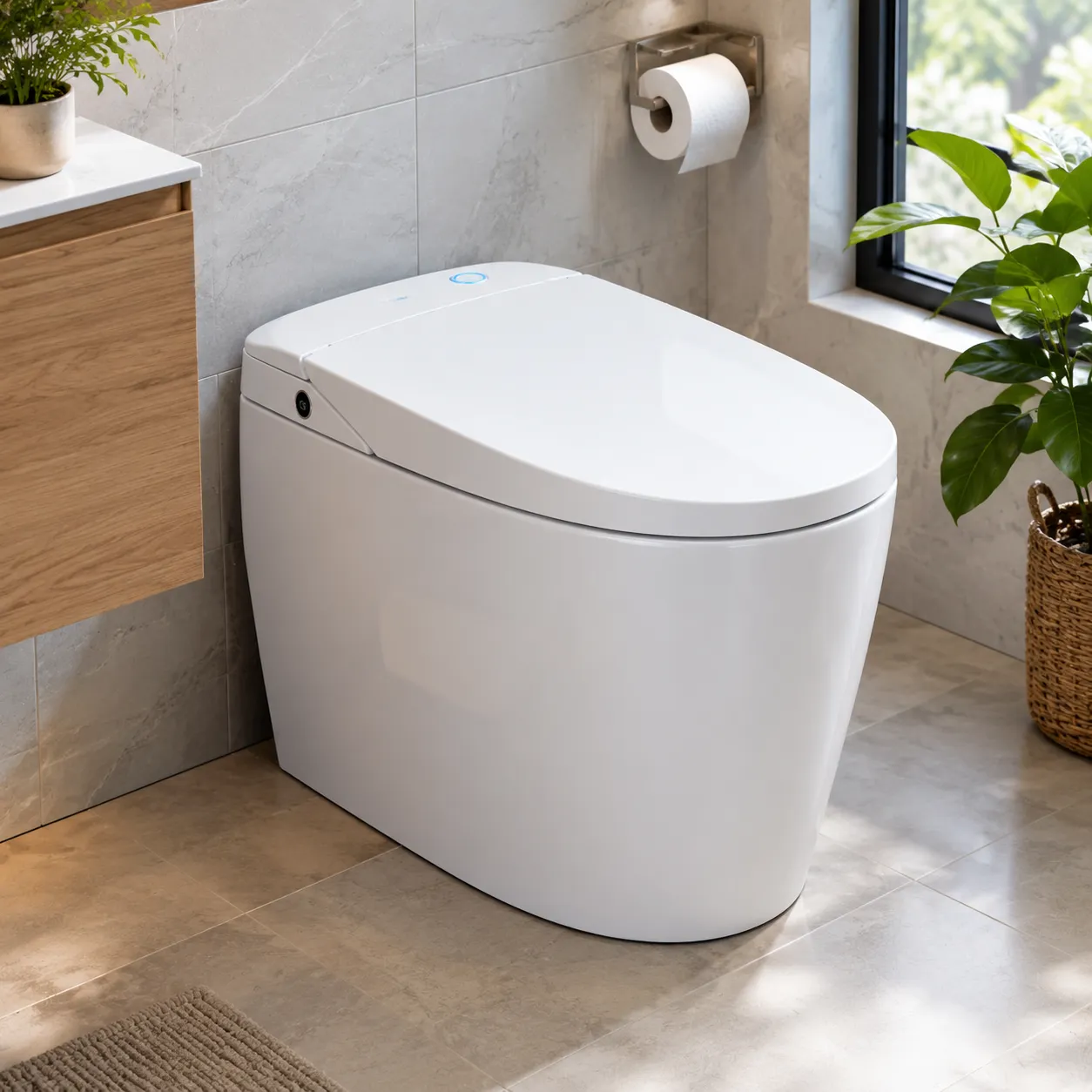
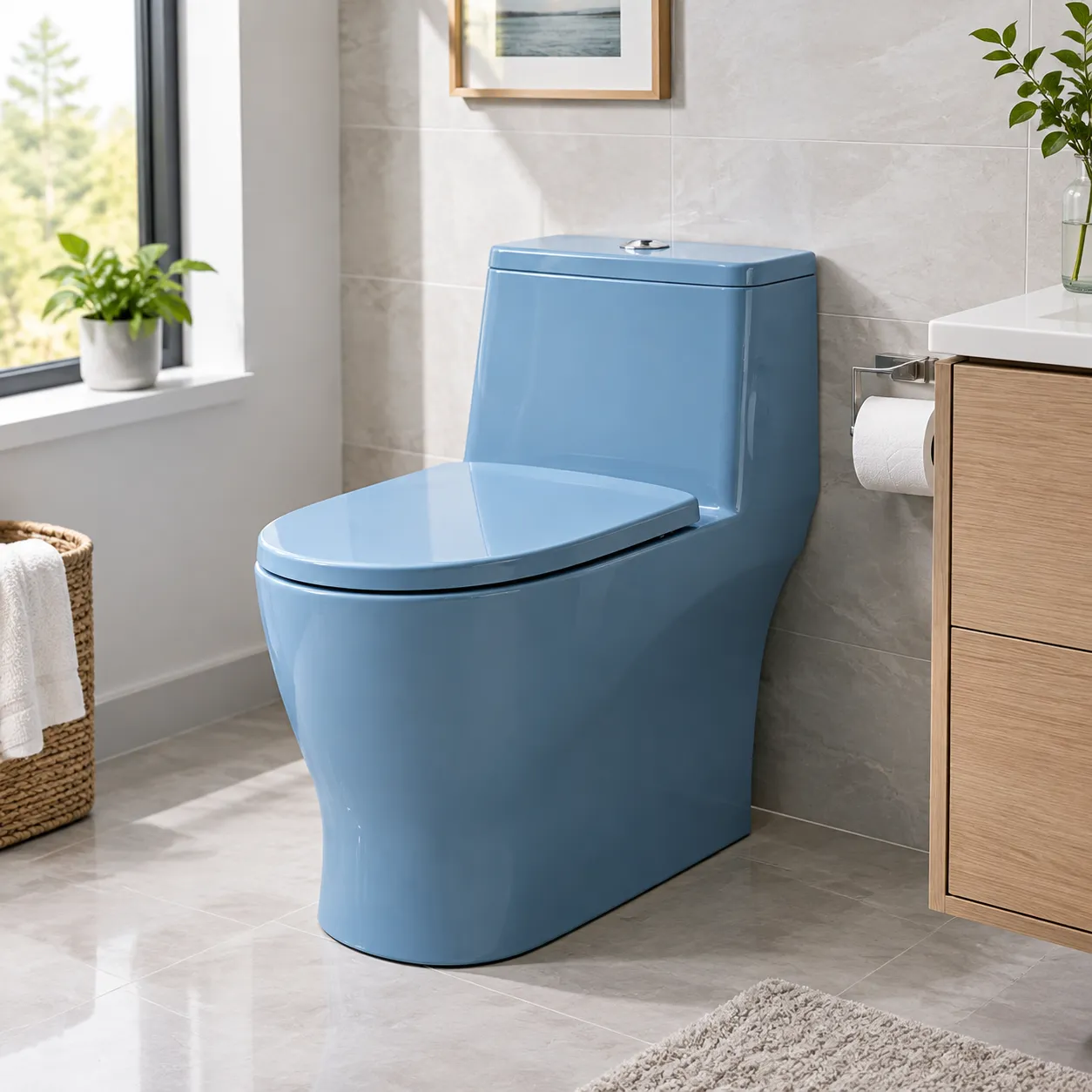
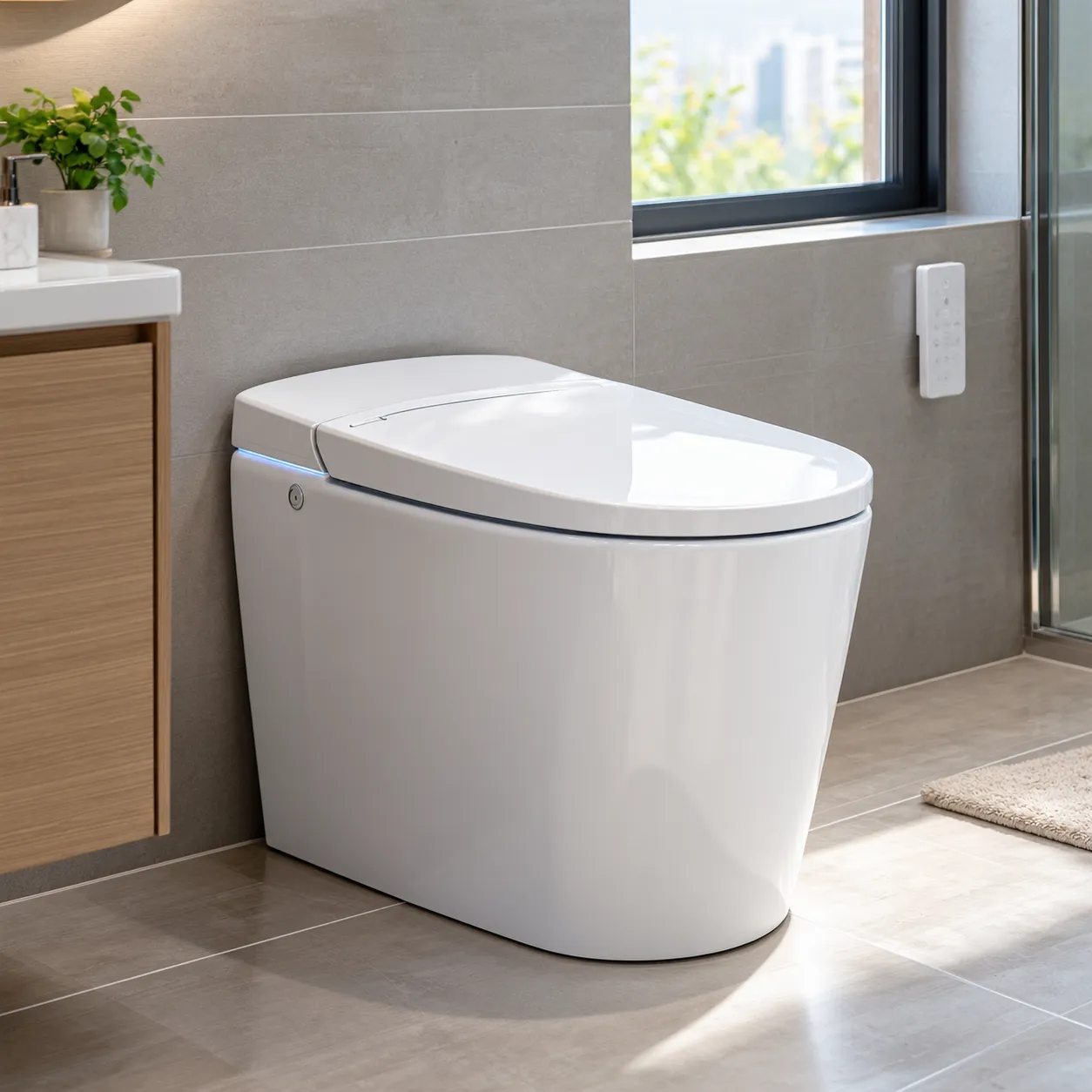
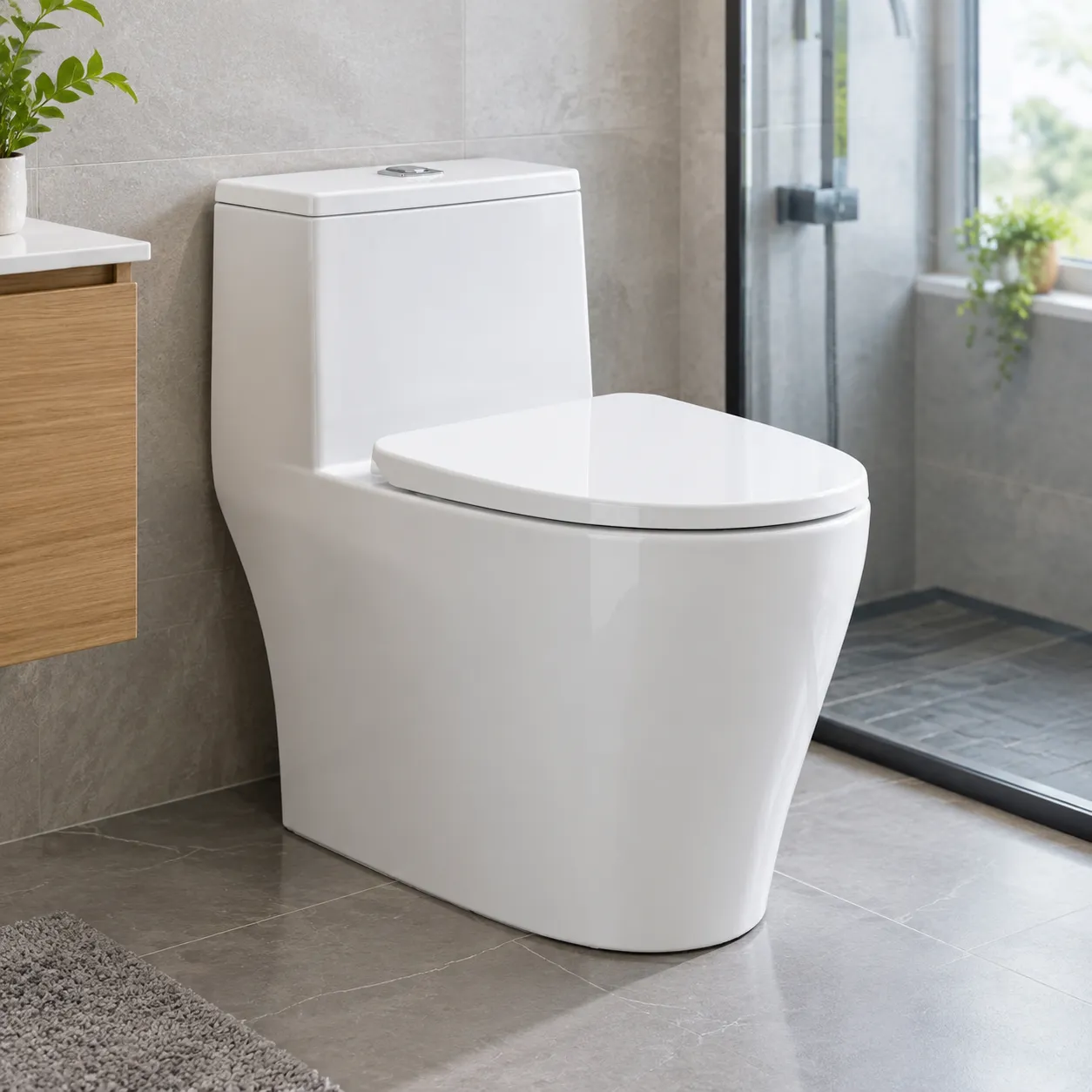
What Is a High Water Flush One Piece Toilet with Hidden Trap?
A high water flush one piece toilet with hidden trap combines maximum waste-clearing power with a sleek, low-maintenance architectural design. By integrating a high-performance flushing engine into a single ceramic mold with an enclosed trapway, this setup solves the two biggest bathroom frustrations: weak, clogging flushes and hard-to-clean exterior nooks.
Core Mechanics of High-Volume Flushing Systems
We engineer these units to deliver immediate clearing force right when you trip the lever. The high-volume mechanics rely on optimized hydrodynamics rather than just wasting water:
- Larger Flush Valves: Rapid-discharge 3-inch or 4-inch valves release water into the bowl significantly faster than traditional 2-inch valves.
- Direct Siphon Jet Action: A dedicated water jet at the bottom of the bowl pushes waste directly into the channel while bowl-rim jets scour the walls.
- Higher Water Surface Area: A generous resting water spot keeps the bowl clean, locks down sewer odors, and primes the siphon for an instant, heavy-duty pull.
How a Concealed or Skirted Trapway Works
Standard toilets feature an exposed, S-shaped waste pipe on the sides that collects dust, grime, and moisture.
- The Outer Skirt: Smooth ceramic skirts encase the entire discharge pathway, creating flat, vertical side walls that wipe down in seconds.
- Fully Glazed Internal Channel: Inside the skirt, the concealed trapway is engineered with a continuous, glass-smooth glaze. This frictionless interior prevents paper snags, mineral build-up, and waste resistance during high-velocity flushes.
Key Benefits of Skirted One-Piece High-Flow Toilets
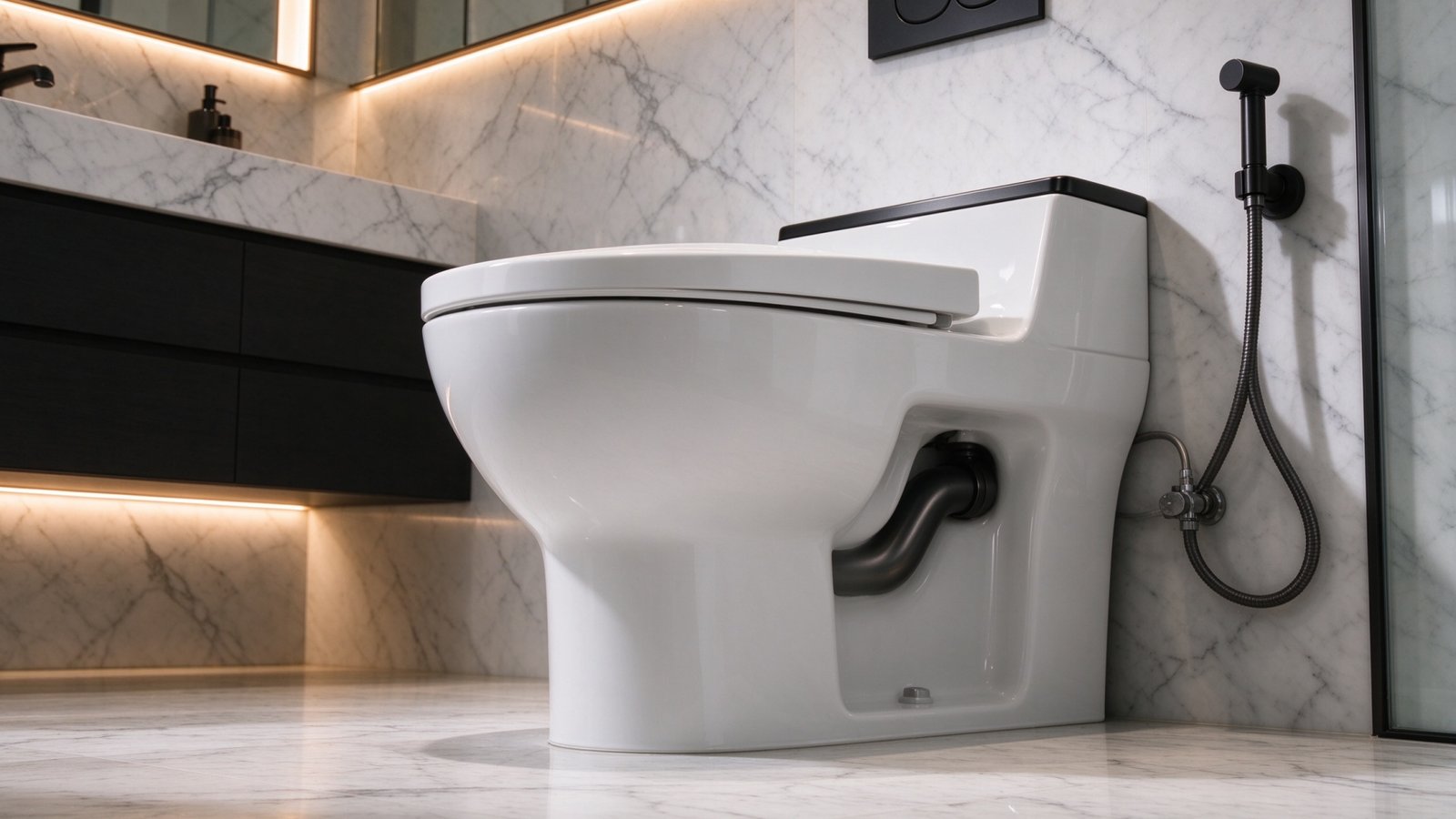
Upgrading to high water flush one piece toilets with hidden trap systems solves the two biggest frustrations we deal with in residential plumbing: persistent clogs and hard-to-clean bowl contours. Combining a high-volume flush engine with a seamless apron exterior delivers measurable advantages in cleanliness, performance, and day-to-day maintenance.
Single-Flush Waste Removal and Clog Prevention
A high-volume flush system delivers the kinetic force required to evacuate bulk waste immediately.
- Bulk waste clearing: Generates a rapid siphon jet that pulls waste through without requiring double flushing.
- Fully glazed trapway: Eliminates friction points where paper and solids snag, ensuring a clog free toilet with hidden trap reliability.
- Consistent flow velocity: Pushes water evenly through the siphon channel to maintain full extraction power on every cycle.
Effortless Cleaning with Flat-Sided Aprons
Traditional exposed trapways feature snaking, dust-collecting curves that require awkward scrubbing. An easy clean skirted toilet encases the entire plumbing channel behind smooth ceramic walls.
- No hidden crevices: Flat side panels allow for a single-pass wipe down.
- Stain-resistant glazing: Inhibits bacteria and mineral scale from bonding to outer or inner surfaces.
- Seamless one-piece casting: Removes the unhygienic gap between the tank and bowl where grime typically accumulates.
Hidden Plumbing and Minimalist Styling
The clean exterior lines of a concealed trapway toilet instantly modernize the entire bathroom space.
| Feature | Standard Two-Piece Commode | Skirted One-Piece High-Flow Model |
|---|---|---|
| Trapway Style | Exposed, contoured pipes | Flat, fully enclosed skirt |
| Cleaning Speed | 5–10 minutes (detailed scrubbing) | Under 60 seconds (simple wipe down) |
| Visual Footprint | Bulky, industrial profile | Sleek, minimalist style geometry |
| Leak Risk | Gasket failure between tank and bowl | Zero tank-to-bowl seam leaks |
| Flush Reliability | Often requires repeat flushes | Single-action heavy-duty clear |
Superior Odor Control and Higher Resting Water Spot
A larger, deeper high water line toilet bowl directly impacts overall bathroom hygiene.
- Active odor seal: Deep standing water blocks sewer gas backup directly at the rim throat.
- Reduced bowl staining: A wide water surface area catches waste before it contacts dry porcelain, reducing streak marks and routine brush work.
- Instant surface rinse: High-volume entry jets sweep across the entire interior perimeter simultaneously, leaving zero residue behind.
Essential Buying Factors for High Water Flush One Piece Toilets with Hidden Trap
Choosing the right high-performance commode requires balancing raw flushing power with everyday ergonomics and local efficiency standards. When we evaluate and test skirted one-piece toilet designs, we focus on four critical mechanical and physical specifications:
Flush Volume and GPF Ratings: Power Meets Regulation
Finding the sweet spot between high-flow waste removal and water conservation comes down to Gallons Per Flush (GPF):
1.6 GPF (High Water Volume): Delivers maximum bulk waste evacuation and a deeper resting water line. Ideal for areas without strict low-flow mandates.
1.28 GPF (High Efficiency): Meets WaterSense standards while utilizing engineered hydro-jets to match the power of traditional high-volume flushes.
Dual-Flush Options: Offers a 1.1 GPF light flush for liquids and a full 1.6 GPF dump for solids, giving you control over water usage without sacrificing performance.
Trapway Diameter: Glazed 2-Inch to 2-1/8-Inch Pathways
The internal diameter and finish of a concealed trapway dictate clog resistance:
Fully Glazed Interior: A smooth, vitreous glaze applied inside the channel prevents waste and toilet paper from catching on raw porcelain surfaces.
2-1/8-Inch Wide Passages: Upgrading from standard 2-inch channels drastically reduces friction, allowing heavy-duty flushes to clear solid waste in a single cycle.
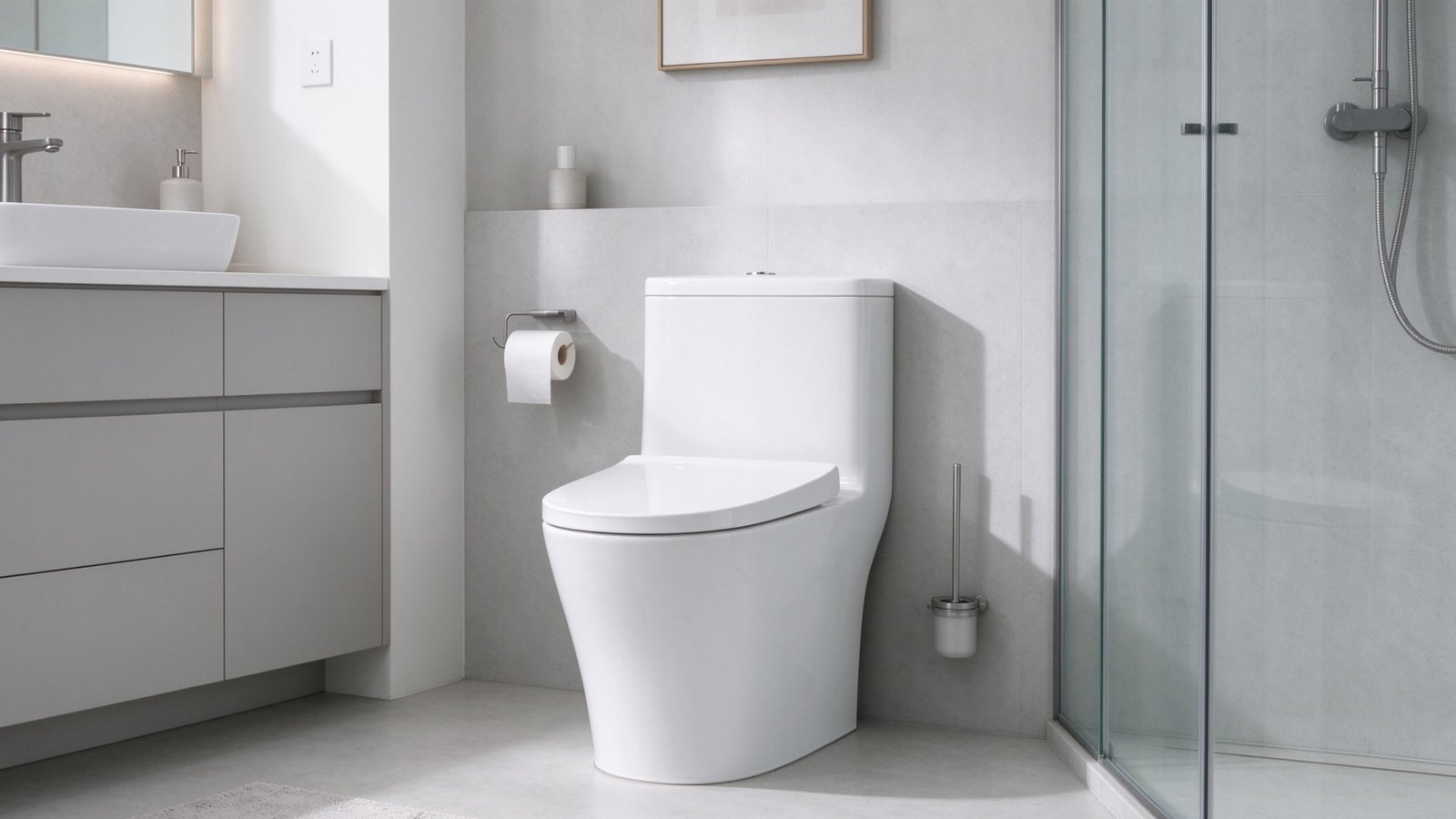
Flush Valve Size: 3-Inch vs. 4-Inch Rapid Release Valves
Standard legacy commodes use 2-inch flush valves, but a high-velocity toilet relies on larger openings to drop water quickly into the bowl:
3-Inch Flush Valves: Release water at twice the speed of traditional valves, creating an instant, powerful siphon jet.
4-Inch Rapid Release Valves: Unleash an aggressive, high-pressure cascade that scrubs the bowl walls and pushes waste through the skirted base with zero hesitation.
Bowl Shape and Height: Finding the Right Fit
Ergonomics and available bathroom floor space determine the ideal bowl configuration:
Elongated Bowls: Provide extra sitting room and a larger water surface area, enhancing odor containment and user comfort.
Compact Round Bowls: Best for tight powder rooms where space between the toilet and vanity is limited.
Comfort Height (16.5 to 18 Inches): Chair-height seating that makes sitting and standing easier on the knees and back.
Standard Height (14 to 15 Inches): The traditional low-profile option, suitable for households with small children.
Best Flushing Technologies for High Water Flush One Piece Toilets with Hidden Trap
Choosing the right powerful flushing mechanism is critical when pairing high water volume with a smooth concealed trapway. In our testing lab and real-world installations, we look for engine designs that drive bulk waste through the bends without wasting energy or splashing over the rim.
Here are the top-performing flushing systems built for a modern skirted one piece toilet:
1. Single-Flush Gravity High-Velocity Systems
Gravity remains the most dependable design on the market. By pairing an oversized flush valve with an optimized siphon jet, these setups deliver a massive rush of water in under two seconds.
- Fast Dump Rate: Drops water instantly into the bowl to trigger a rapid, deep siphon.
- Direct Jet Action: A dedicated lower jet pushes waste directly into the fully glazed trapway.
- Zero Complex Moving Parts: Simple to maintain, quiet to operate, and highly durable.
2. Double-Cyclone and Tornado Rimless Flush Mechanics
A tornado flush skirted toilet replaces standard rim holes with dual or single high-pressure side nozzles.
- Centrifugal Water Action: Creates a high-speed whirlpool that scours the entire bowl surface.
- Rimless Hygiene: Eliminates the hidden under-rim ledge where mineral scale and bacteria accumulate.
- Maximized Water Energy: Channels all water volume along the bowl walls before pulling everything down the drain.
3. Pressure-Assisted Flushing for Heavy-Duty Performance
For commercial settings or high-traffic homes, pressure-assisted units provide the absolute strongest flush available.
- Compressed Air Power: Traps air inside a sealed internal vessel as the tank fills, releasing water under pressure.
- Instant Waste Removal: Blasts through dense waste without requiring double flushes.
- High Water Line Maintenance: Keeps the standing bowl water high to minimize stains.
4. Dual-Flush Systems with High-Power Solid Waste Mode
Dual-flush mechanisms provide flexibility by balancing conservation with a high-capacity bulk waste cycle.
- Half-Flush Option: Uses reduced volume for liquid waste to save water daily.
- High-Power Solid Mode: Releases full tank capacity through a wide valve to clear the trapway completely.
- Push-Button Actuation: Sleek top-mounted buttons that integrate seamlessly with minimalist tank lids.
Flush Technology Comparison
| Flushing System | Flush Mechanism | Best Use Case | Clog Resistance |
|---|---|---|---|
| Gravity High-Velocity | Siphon jet + oversized valve | Everyday residential use | High |
| Tornado / Cyclone | Dual-nozzle centrifugal swirl | Easy cleaning & bowl scouring | High |
| Pressure-Assisted | Air-pressurized internal tank | Heavy-duty & commercial traffic | Maximum |
| Dual-Flush Power | Variable-volume release valve | Water conservation with power on demand | Moderate to High |
Installation and Rough-In Guide for Hidden Trapway Models
Installing high water flush one piece toilets with hidden trap designs requires a bit more precision than setting a standard unit. The flat, seamless exterior creates a clean look, but it also alters how you access mounting bolts and water connections. Here is our direct, field-tested guide to getting your installation right on the first try.
Measuring Standard 12-Inch, 10-Inch, and 14-Inch Rough-Ins
Getting the rough-in measurement right is critical, as a skirted one piece toilet offers zero wiggle room against the back wall.
- Measure from the finished wall: Always measure from the drywall or tile surface—never the baseboard—straight to the center of the floor drain bolts (closet flange).
- 12-Inch Rough-In (Industry Standard): The vast majority of concealed trapway models fit a standard 12 inch rough in skirted toilet layout.
- 10-Inch and 14-Inch Rough-Ins: If you are working with an older home or tight renovation space, verify your exact offset before ordering. A standard 12-inch skirted model will not slide onto a 10-inch rough-in because the solid porcelain back will hit the wall before the drain lines up.
Handling Tight Side Clearances with Skirted Side-Access Holes
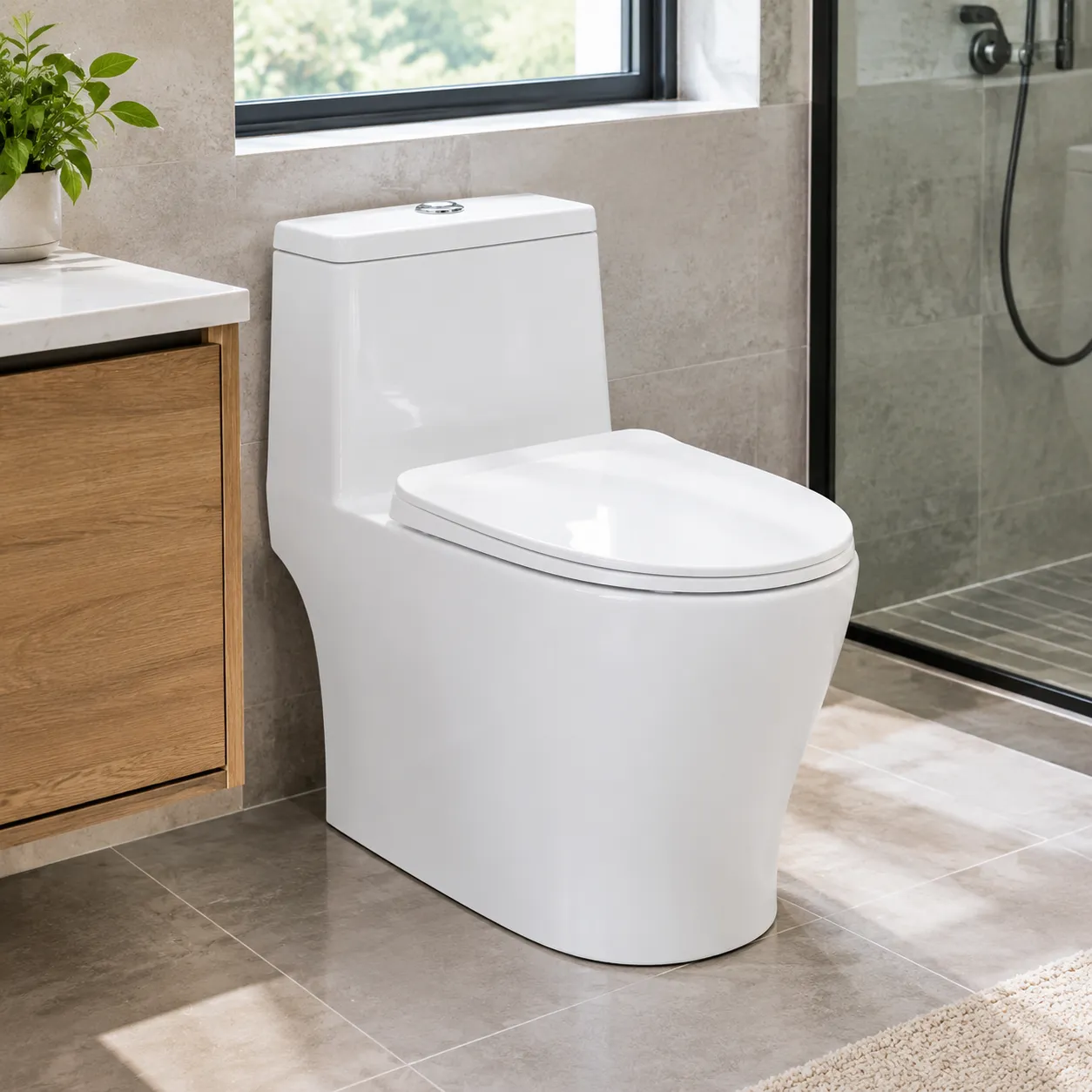
Because a concealed trapway toilet covers the traditional floor bolt channels with smooth porcelain walls, reaching the mounting hardware requires a specific approach:
- Side-Access Portals: Many skirted toilets include discreet side cutouts with color-matched caps. We recommend using a ratcheting box wrench to tighten the floor bolts through these small openings without scraping your knuckles.
- Floor Bracket Systems: Some modern models use independent floor brackets. You bolt the bracket to the flange first, slide the seamless bowl over it, and secure it through external side screws.
- Dry Fit First: Always test-fit the toilet over the flange without the wax ring to confirm that the skirt sits completely flat on the finished floor.
Connecting Hidden Water Supply Lines and Top-Mount Seat Bolts
The enclosed profile leaves minimal space behind the bowl, making sequencing the most important part of the job.
- Pre-Attach the Water Line: Connect a flexible braided stainless steel supply line to the fill valve before lowering the heavy one-piece bowl onto the wax ring. Reaching behind a fully seated skirted toilet to hand-tighten a water line in a tight bathroom is nearly impossible.
- Check Shutoff Valve Clearance: Ensure your wall shutoff valve sits at least 6 to 8 inches to the left of the center line to avoid colliding with the wide skirted base.
- Install Top-Mount Seat Bolts: A clog free toilet with hidden trap has no open underside to hold a standard wing nut. Use top-fixing expansion bolts or rubber blind-hole fasteners, which drop directly into the top of the bowl and tighten securely from above.
Maintenance and Troubleshooting for High Water Flush One Piece Toilets with Hidden Trap
Maintaining a high water flush one-piece toilet with a hidden trap is straightforward, but keeping its powerful flushing mechanism running at peak performance requires specific care. Over the years, we have tested and maintained hundreds of skirted models. Here is our direct, hands-on guide to troubleshooting common issues and preserving your unit's finish.
Safe Cleaning to Protect the Ultra-Smooth Trap Glaze
The stain-resistant glazing inside a fully glazed trapway ensures waste slides out smoothly without sticking. Using the wrong chemicals can strip this protective layer and cause chronic clogging.
- Avoid abrasive scrubbers: Use soft-bristle silicone or nylon toilet brushes. Stiff wire brushes scratch the ceramic glaze.
- Skip in-tank bleach tablets: Drop-in chemical pucks corrode rubber flappers, warp silicone seals, and void manufacturer warranties.
- Use mild, pH-neutral cleaners: Warm water mixed with mild liquid dish soap or baking soda safely cleans the bowl and the seamless skirted exterior without degrading the finish.
Fixing Weak Flushes, Low Bowl Water Levels, and Slow Fill Valves
When a heavy-duty flush commode starts losing its power, the cause is usually a simple calibration issue inside the tank:
- Adjust the Tank Water Level: Ensure water reaches within 1/2 inch to 1 inch below the top of the overflow pipe. Lower water volume reduces siphon velocity. Turn the adjustment screw on top of the fill valve clockwise to raise the water line.
- Inspect the Refill Tube: If your bowl water level sits too low, verify that the small rubber refill tube is securely clipped inside the overflow tube. If it slips out, the bowl will not fill properly between flushes.
- Check Flapper or Tower Chain Slack: A loose chain prevents the 3-inch flush valve from opening fully, cutting the flush short. Adjust the chain so it has only about 1/2 inch of slack.
- Clean the Fill Valve Diaphragm: Hard water debris can clog the fill valve cap, leading to slow or noisy tank refills. Turn off the water supply, remove the valve cap, and flush out accumulated sediment.
Preventing Mineral Buildup in High-Pressure Rim Jets
Limescale, calcium, and mineral deposits choke the rim jets and siphon jet holes over time, reducing rinse coverage and flushing power.
| Problem | Cause | Quick Fix |
|---|---|---|
| Incomplete Bowl Rinse | Clogged perimeter rim jets | Pour warm white vinegar down the overflow tube, let it sit for 30–60 minutes, then scrub the jet openings with a small nylon brush. |
| Weak Siphon Pull | Mineral buildup in the bottom siphon jet | Use a handheld mirror and an Allen wrench or wire hanger to gently clear scale directly out of the bottom jet port. |
| Water Constantly Running | Mineral scale on the flush valve seal | Wipe down or replace the silicone seal at the base of the flush canister to re-establish a tight, leak-free seal. |
Frequently Asked Questions: High Water Flush One Piece Toilets with Hidden Trap
Does a hidden trapway make a toilet harder to install?
Installing a concealed trapway toilet takes slightly more patience than a standard open-trap model, primarily due to weight and access:
Heavier casting: The seamless ceramic skirt adds extra weight, so having an extra pair of hands helps with alignment.
Side-access bolts: Tight side pockets require reaching behind the skirt to tighten floor bolts, though many modern designs now feature top-mounted installation kits.
Standard plumbing: It connects directly to standard 12-inch rough-in flanges with standard wax rings or rubber seals without requiring special plumbing adapters.
Why is a higher water level in the bowl better for flushing?
A higher resting water line in the toilet bowl significantly upgrades day-to-day performance:
Instant waste immersion: Submerging waste immediately locks in odors and stops materials from adhering to dry porcelain.
Cleaner bowl surface: Reduces streaks and cuts down the need for repetitive brush scrubbing.
Stronger siphon action: A filled bowl creates immediate head pressure, allowing the siphon jet to pull waste out rapidly the moment the flush valve opens.
Are one-piece skirted toilets less prone to leaking than two-piece toilets?
Yes. A skirted one piece toilet eliminates the most common failure point found in residential bathrooms:
No tank-to-bowl bolts: Two-piece toilets rely on rubber washers and bolts securing the tank to the bowl, which degrade and leak over time.
Single ceramic mold: The tank and bowl are fused into a single unit, eliminating tank gasket leaks entirely.
How do I unclog a one-piece toilet with a fully skirted trapway?
The smooth outer skirt covers the plumbing on the outside, but the internal mechanics remain accessible from inside the bowl:
Flange plunger: Use a standard beehive or flange plunger over the drain hole to force water through the fully glazed trapway.
Toilet auger: For stubborn clogs, feed a protective rubber-sleeved toilet auger directly into the drain without worrying about scratching the outer skirt.
Hot water and dish soap: Pouring warm water down the drain helps clear soft organic blockages through the smooth interior pathway.